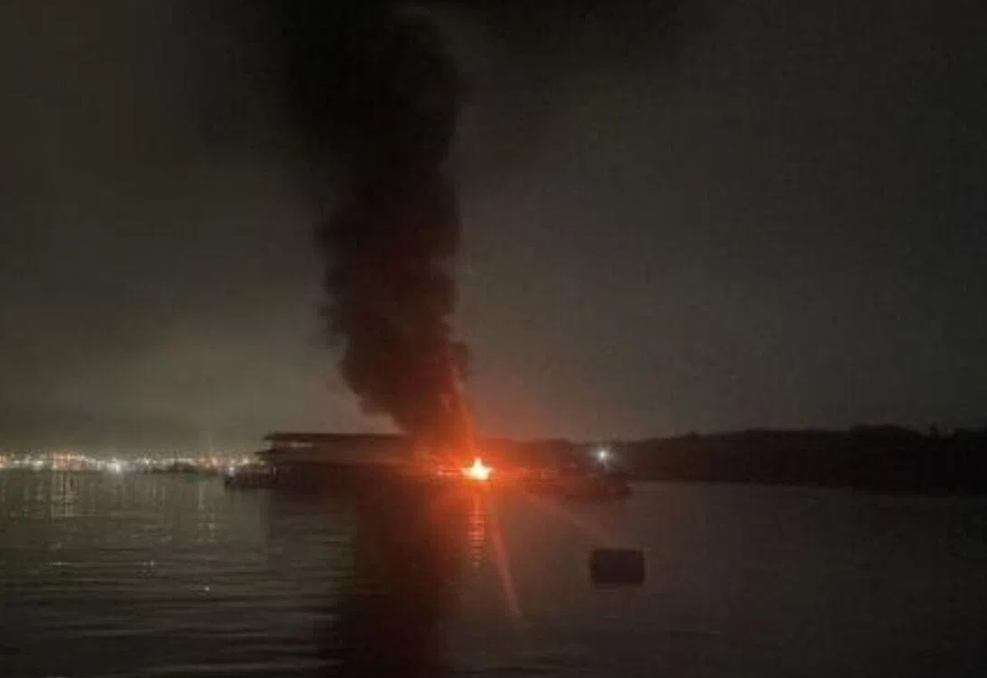
A devastating fire swept through floating aquaculture operations near Pulau Ubin off Singapore's northeastern coast on June 24, leaving one farm owner facing losses exceeding S$120,000 and raising fresh concerns about the vulnerability of intensive farming operations to extreme weather events. The Singapore Civil Defence Force received the alert at approximately 8.10pm and deployed marine vessels along with assistance from nearby operators to combat the blaze, which ultimately spread across multiple facilities before being extinguished after several hours of intensive firefighting efforts.
Investigators have determined that a lightning strike hitting the solar panel installation on one of the farms most likely sparked the conflagration. The electrical discharge during what appears to have been a severe thunderstorm provided sufficient energy to ignite materials on the facility, subsequently allowing the fire to propagate to two neighbouring farms anchored in the same area off the Lorong Halus jetty. The affected installations operate in relatively close proximity to Pulau Ketam, a location that experiences regular thunderstorm activity during the region's monsoon seasons.
The incident underscores a critical operational vulnerability for Singapore's aquaculture sector. One farm proprietor revealed that previous lightning-related damage to solar panels had been contained successfully because staff were stationed on-site and could respond immediately to emerging threats. However, the absence of personnel during the June 24 incident proved catastrophic, allowing a manageable electrical fault to escalate into a major structural and financial catastrophe. This pattern highlights how the economics of intensive fish farming—which often necessitates minimal staffing to maintain profitability—can inadvertently increase operational risk during severe weather conditions.
The material destruction documented by farm operators reflects the comprehensive nature of the damage inflicted. Beyond the solar panel array itself, the fire consumed critical infrastructure including generators that power aeration systems, feed dispensing equipment essential for daily livestock management, and structural components of the floating platforms themselves. A fishing vessel used for maintenance and harvesting operations was also consumed, representing a significant capital loss. At minimum three fish traps—specialised equipment for selective harvesting—were destroyed entirely, and an indeterminate quantity of fishing nets suffered damage sufficient to impair their functionality.
The environmental consequences extended beyond immediate property destruction. According to the farm owner's assessment, the damaged netting allowed at least half of the entire fish stock held across the affected farms to escape into surrounding waters. The loss of cultured fish into Singapore's coastal ecosystem presents complications for both the farming operation and local marine management authorities, particularly given that farmed species may outcompete native populations or introduce disease into wild populations if they establish breeding populations.
A particularly frustrating dimension for the affected proprietor involves the absence of insurance coverage for this incident. The farm owner indicated an inability to lodge a claim with commercial insurance providers, a situation that reflects either policy exclusions for weather-related damage or the prohibitive expense of comprehensive coverage for aquaculture operations in Singapore. This insurance gap means the entire financial burden of recovery—estimated at S$120,000 for one facility alone—falls entirely upon the business operator, potentially affecting viability and future investment in safety infrastructure.
The response from relevant authorities demonstrates the multi-agency coordination that Singapore mobilises for marine emergencies. Beyond the primary firefighting efforts by the SCDF, the Maritime and Port Authority of Singapore deployed specialised marine vessels equipped for water-based fire suppression operations. The Airport Emergency Service, which maintains rapid-response capabilities in the Changi area adjacent to the incident zone, also contributed personnel and equipment. Critically, private operators from neighbouring fish farms voluntarily participated in containment efforts, illustrating how tight-knit and interdependent aquaculture clusters in confined waters must cooperate for mutual survival.
For Malaysia's aquaculture sector, this incident carries instructive implications. Malaysian fish farming operations, particularly those concentrated in coastal regions and utilising similar floating cage technology, face comparable risks from tropical thunderstorms and monsoon-season lightning activity. The incident demonstrates that renewable energy installations on aquaculture facilities—increasingly common as operators seek to reduce operational costs and carbon footprints—require robust surge protection and maintenance protocols. Malaysian farm operators may need to reassess insurance arrangements and ensure that weather-related damage is adequately covered, rather than accepting uninsured risk as a cost of business.
The broader context involves Singapore's ongoing efforts to enhance domestic food security through expanded local aquaculture production. The government has promoted intensive fish farming as a pathway toward reducing reliance on imported seafood, with operations like those affected by the June 24 fire serving as components of this strategic objective. However, incidents such as this underscore the tension between maximising production density and maintaining operational resilience. Regulators and operators alike must carefully calibrate staffing levels, technological redundancy, and emergency response capabilities to ensure that concentrated farming operations can withstand the climatic stresses inherent to tropical Southeast Asia.
The Singapore Civil Defence Force confirmed that no injuries resulted from the incident, despite the intensity of the fire and the number of personnel involved in response efforts. The Fish Farmers Association of Singapore and Singapore Food Agency were contacted for additional perspectives on industry implications, though neither organisation had issued public statements at the time of reporting. The incident will likely prompt a broader industry conversation about standardised safety protocols for floating farms, particularly regarding electrical systems on facilities that operate continuously in a saltwater environment where corrosion and weather exposure present ongoing technical challenges.

