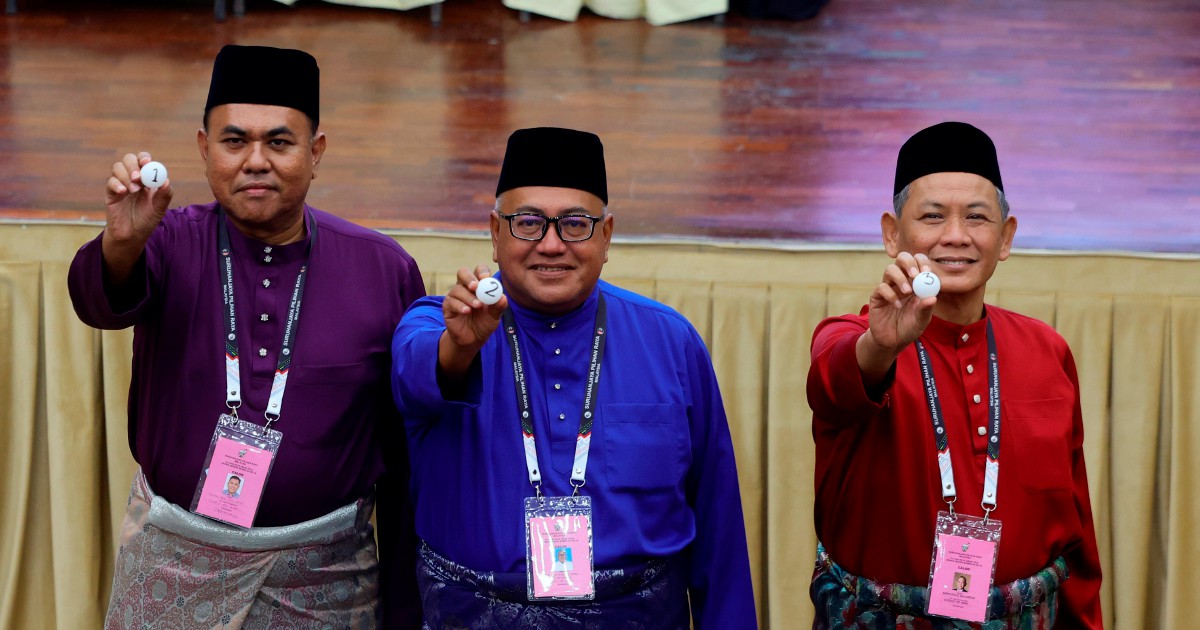
Datuk Seri Aminuddin Harun, the caretaker Menteri Besar of Negri Sembilan, has candidly assessed the electoral landscape facing him in the Linggi state constituency, characterising the contest as a closely matched affair that could plausibly swing either way. Speaking in Port Dickson, Aminuddin indicated that despite the historical association of Linggi with Barisan Nasional, the upcoming state election has injected significant unpredictability into what might otherwise have been considered a safe seat for the coalition.
The acknowledgement from Aminuddin represents a departure from the customary optimism that sitting chief ministers typically project during campaign periods. Rather than projecting confidence rooted in incumbency or past electoral dominance, he has offered an unusually candid appraisal that suggests the traditional political arithmetic in Negri Sembilan may be shifting. The "50-50" characterisation reflects both the competitive nature of contemporary Malaysian electoral contests and the specific pressures bearing on his personal constituency.
Linggi has long functioned as a Barisan Nasional stronghold, contributing to the coalition's control of Negri Sembilan's state government. However, the national political realignment that accelerated following the 2022 general election, combined with local grievances and shifting voter demographics, has rendered even historically secure seats vulnerable. Aminuddin's honesty regarding the tightness of the race may stem from on-the-ground feedback indicating erosion of the coalition's traditional support base.
The timing of Aminuddin's comments proves significant, coming as Negri Sembilan prepares for a state election that observers view as consequential for the broader regional political configuration. The performance of Barisan Nasional in this heartland state will carry implications beyond Negri Sembilan's borders, potentially influencing perceptions of the coalition's electoral viability across the broader Malaysian federation. A weakened showing would invite questions about the coalition's capacity to defend its remaining strongholds.
For Aminuddin personally, retaining the Linggi seat carries heightened significance given his position as caretaker Menteri Besar. Electoral defeat in his own constituency would substantially undermine his authority and prospects for returning to the chief minister's office following polling day. The symbolic weight of a chief minister losing his own seat extends beyond mere parliamentary mathematics—it signals a fundamental loss of local confidence.
The Linggi constituency encompasses diverse communities with distinct concerns, ranging from urban Port Dickson residents to semi-rural areas. Managing these varied constituencies requires balancing industrial and port-related development priorities with agricultural and heritage preservation concerns. Aminuddin's capacity to articulate coherent responses to these divergent needs may prove decisive in translating nominal Barisan strength into actual votes.
Negri Sembilan's political landscape has undergone notable evolution since the 2018 general election upset. While the state subsequently fell back under Barisan stewardship, the intervening years have witnessed sustained pressure on the coalition's traditional voter coalitions. Younger voters, increasingly sceptical of long-established political arrangements, have demonstrated greater receptiveness to alternative options. This generational shift may disproportionately affect urban constituencies like Linggi's Port Dickson segment.
The national opposition has evidently identified Negri Sembilan as presenting promising opportunities for territorial gains. Opposition strategists likely perceive constituencies such as Linggi as winnable propositions, provided they can consolidate their support and overcome Barisan's organisational advantages. The presence of competitive opposition campaigns in traditional Barisan strongholds creates the pressure reflected in Aminuddin's sober assessment.
Aminuddin's characterisation of the Linggi race as genuinely competitive may also represent a calculated strategic communication. By downplaying expectations and acknowledging challenges, he potentially accomplishes several objectives simultaneously: preparing constituents for the possibility that a closely contested election reflects legitimate competition rather than organisational failure, motivating his campaign machinery to redouble efforts, and deflecting criticism that might arise if the result proves tighter than pre-election polling suggested.
The Negri Sembilan election occurs against the backdrop of broader conversations regarding the stability and trajectory of Malaysian politics. The outcome will provide fresh evidence regarding whether Barisan Nasional has successfully arrested the erosion of support that peaked during the 2018 upheaval, or whether the coalition continues confronting structural headwinds that limit its capacity to dominate state-level contests as it historically has. For constituencies like Linggi, the result will demonstrate whether regional economic development and administrative competence suffice to overcome the desire for political change that animates significant voter segments.
As Negri Sembilan prepares to vote, Aminuddin's measured assessment of his own electoral prospects serves as a barometer of broader competitive conditions. The tension between Barisan's continued organisational resources and the new political dynamics reshaping Malaysian electoral behaviour will determine whether the Linggi seat remains with the caretaker Menteri Besar or transitions to opposition control. The coming election will provide clarity on whether the coalition's traditional strongholds retain the resilience to withstand contemporary political pressures.

