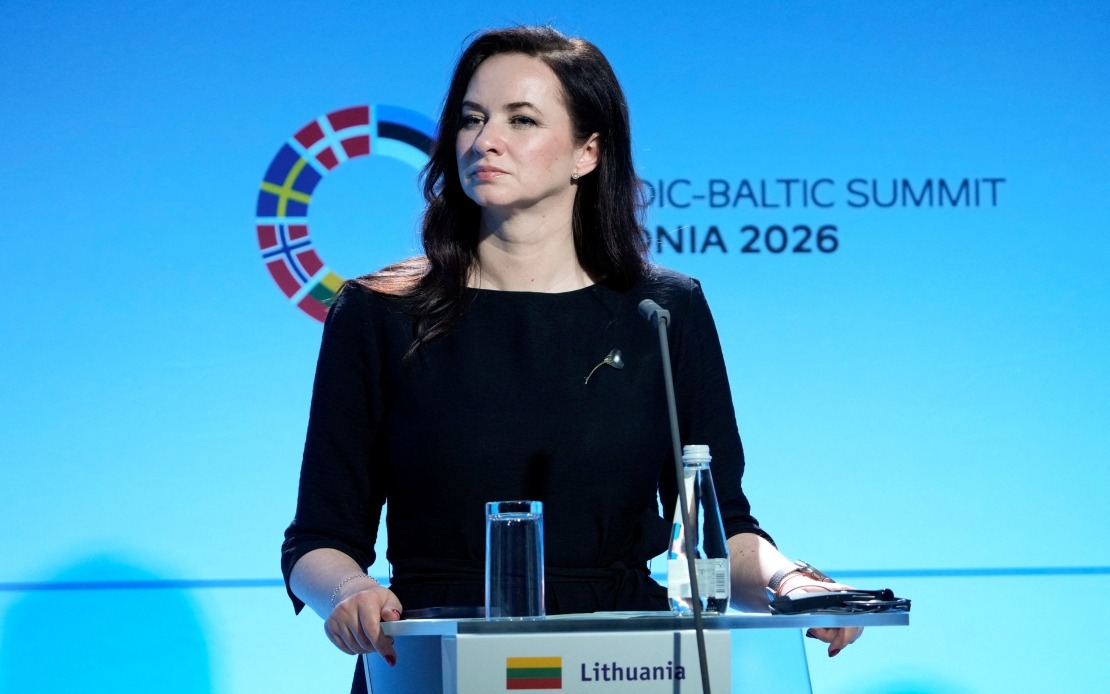
Lithuanian Prime Minister Inga Ruginiene announced her government's resignation on Tuesday, June 23, setting off a formal process that will see President Gitanas Nauseda begin nominating a successor to lead the Baltic nation. The resignation reflects internal shifts within the ruling coalition and comes less than a year after the previous government took office, highlighting the fluidity of Lithuania's current political landscape.
Under Lithuania's constitutional framework, President Nauseda now holds a 15-day window to propose a prime ministerial candidate to the Seimas, the country's unicameral parliament. The nominated individual must then secure legislative approval before taking office. This deliberate timeline, built into Lithuanian law, allows for careful deliberation rather than rushed decision-making during transitions of executive power.
Mindaugas Sinkevicius, who chairs the ruling Lithuanian Social Democratic Party, is widely anticipated to receive the presidential nomination and ultimately assume the premiership. His elevation would represent continuity with the current governing structure, as the Social Democrats maintain their position as the dominant force in Lithuania's political establishment. Political observers view his candidacy as the probable outcome, barring unforeseen parliamentary resistance.
Should Sinkevicius secure parliamentary confirmation, his responsibilities would include assembling a functioning Cabinet within 15 days of assuming office. He would then present the new government's policy programme and governing agenda to lawmakers. An additional 15-day period would follow for submitting the complete ministerial lineup for final parliamentary approval, ensuring that each key appointment undergoes scrutiny before implementation.
The departure of Ruginiene's administration marks a significant juncture in Lithuanian governance. This represents the third distinct coalition government formed by the Social Democrats since parliamentary elections in late 2024, revealing a pattern of frequent restructuring within the governing majority. Such volatility reflects deeper challenges in maintaining stable coalitions across multiple legislative sessions, a recurring issue in multi-party democracies throughout Central and Eastern Europe.
The previous government, led by Prime Minister Gintautas Paluckas, ended when he resigned last year, and Ruginiene's Cabinet subsequently took office in August. The relatively brief tenure of successive administrations raises questions about the durability of current coalition arrangements and the underlying factors driving coalition realignments. For regional observers in Southeast Asia, Lithuania's experience demonstrates how coalition politics can generate governance instability even in established democracies with strong institutional frameworks.
President Nauseda formally accepted the resignation and instructed the outgoing government to continue operations in a caretaker capacity pending the establishment of a successor administration. This arrangement ensures continuity of essential governmental functions and prevents administrative gaps during the transition period. The caretaker government will handle routine operations but refrain from initiating major policy decisions or structural changes that rightfully belong to an incoming administration with fresh parliamentary backing.
During its final meeting on Tuesday morning, the Cabinet unanimously approved the resignation resolution, demonstrating an orderly and coordinated withdrawal from office. Ruginiene used the occasion to reflect on her government's accomplishments, asserting that despite encountering substantial difficulties throughout its tenure, the administration had achieved outcomes worthy of recognition. Such remarks, though customary during leadership transitions, underscore the balance between acknowledging departures and maintaining governmental credibility in the eyes of the public and international partners.
The chain of resignations and coalition reformations in Lithuania carries implications for how coalition governments manage stability in the Baltic region. For Malaysia and other Southeast Asian nations observing parliamentary systems, the Lithuanian experience offers insights into the fragility of multi-party coalitions and the necessity for robust institutional mechanisms to manage transitions. The constitutional provisions ensuring presidential oversight and parliamentary confirmation of new administrations provide safeguards against arbitrary power shifts, though they cannot eliminate underlying coalition tensions.
Lithuania's recent political volatility also reflects broader challenges facing Central European governments as they balance domestic priorities with security concerns stemming from regional geopolitical tensions. Coalition partners may disagree on economic policy, social spending, or foreign policy directions, particularly regarding security cooperation and NATO commitments. These underlying disagreements periodically surface, prompting coalition recalibrations and, ultimately, the resignation of administrations unable to maintain cohesion.
For international observers and Lithuania's partners, including fellow NATO members and European Union colleagues, the governmental transition presents both continuity and uncertainty. The Social Democrats' retention of governing authority suggests policy direction will remain largely consistent, yet the departure of specific ministers and reshuffling of Cabinet positions may introduce changes in implementation approaches across various sectors. Such transitions require careful monitoring, particularly given Lithuania's strategic importance in European security arrangements.