The Malaysian Fisheries Development Authority (LKIM) is stepping up infrastructure investment along the country's coastlines, having deployed RM2 million since the previous financial year towards the repair, upgrade and construction of fish landing jetties. The initiative reflects a strategic push to modernise the nation's fishing infrastructure and create tangible economic benefits for fishing communities who depend on reliable landing facilities to access markets and sustain their income.
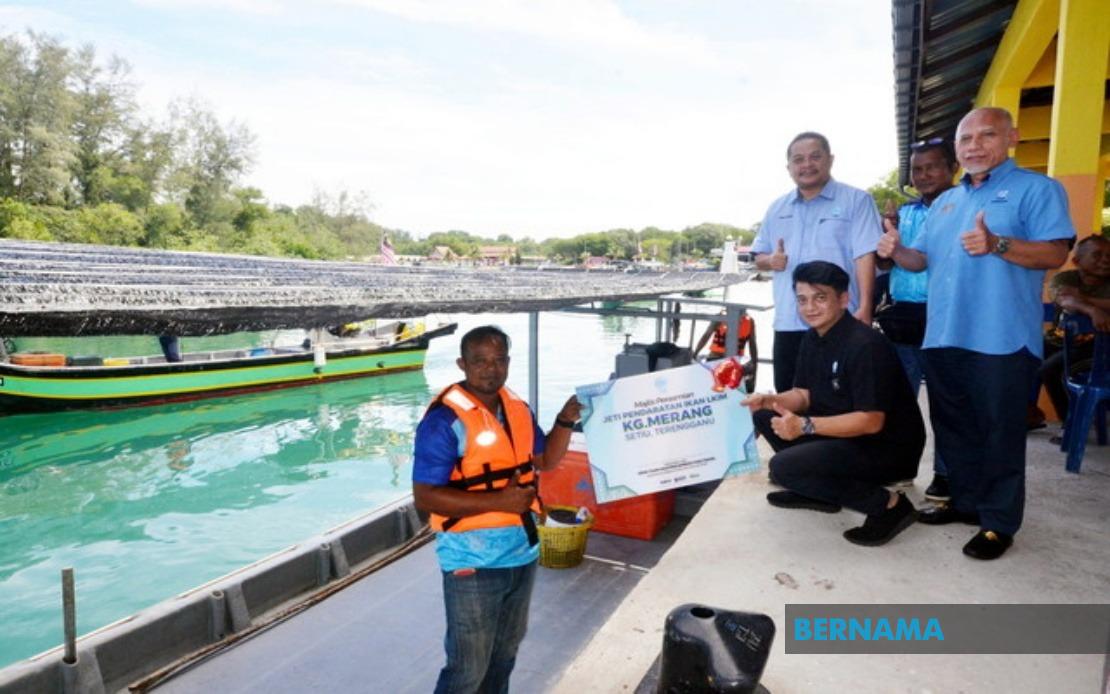
LKIM chairman Muhammad Faiz Fadzil revealed that the authority completed construction of a new fish landing jetty in Merang this year, with two additional projects underway in Perak and Labuan currently navigating documentation and procurement phases. He officiated the formal handover of the Kampung Merang Fish Landing Jetty, marking a concrete milestone in the broader infrastructure programme. However, Muhammad Faiz acknowledged that existing financial commitments fall short of the nation's fishing infrastructure needs, calling on the government to consider enhanced budget allocation for the coming year to accelerate jetty development across additional regions.
The scope of LKIM's infrastructure stewardship is substantial. The authority currently oversees 372 fish landing jetties nationwide alongside 48 fisheries complexes and ports, positioning it as the custodian of critical assets that connect Malaysia's fishing communities to commercial markets. This extensive portfolio underscores the authority's commitment to sustaining the country's fisheries sector amid evolving operational demands and safety considerations.
The Kampung Merang facility itself represents a significant local investment and upgrade. Constructed at a cost of RM500,000, the modern concrete structure replaced an ageing wooden jetty that villagers had built but which no longer met contemporary safety and operational standards. The facility commenced operations immediately following the handover ceremony, ready to serve the local fishing population.
The Merang jetty's immediate beneficiaries number 124 fishermen operating 68 boats from the locality. This direct impact demonstrates how targeted infrastructure spending translates into tangible support for individual livelihoods and productive capacity within fishing communities. The facility provides not merely a landing point but a properly engineered asset designed to withstand operational demands and maintain safety protocols.
Baseline data on Setiu's fishing output provides context for the jetty's potential contribution. Current records indicate approximately 243 metric tonnes of fish land annually in the Setiu district, a figure Muhammad Faiz predicted would rise once the new Kampung Merang facility reaches full operational capacity. The projection reflects confidence that improved infrastructure removes constraints to productivity and market access that smaller, inadequate facilities create.
Beyond physical outputs, the jetty represents a systemic shift toward efficiency in the fishing supply chain. Modern landing infrastructure streamlines the process of unloading, handling and preparing catch for market. This operational smoothness directly affects fishermen's ability to reach buyers quickly, secure competitive pricing and reduce post-catch spoilage losses, all factors that meaningfully influence household incomes in fishing-dependent communities.
Muhammad Faiz articulated a fundamental economic principle underlying the investment: fishermen's livelihoods depend on their daily catch, and the path to improved earnings runs through reduced friction in the process of converting that catch into revenue. When landing facilities are inadequate—cramped, unsafe or poorly designed—the transaction costs and delays that accumulate eat into profits and discourage market participation. By contrast, modern jetties with proper infrastructure enable faster turnaround and more efficient market access.
The allocation of RM2 million reflects pragmatic but constrained ambition. The sum allows for meaningful progress—as evidenced by the completed Merang facility—yet remains modest relative to the scale of infrastructure needs across Malaysia's extensive coastline. The chairman's explicit request for enhanced budget support suggests that department leaders recognise the bottleneck constraining expansion and are making the case internally for prioritisation of fisheries infrastructure in future appropriations.
For Malaysian policymakers and development planners, the initiative embodies a strategic insight: fisheries development cannot be divorced from the physical infrastructure that enables market participation. Without reliable landing jetties, cold storage facilities, and transport linkages, even highly skilled and well-resourced fishing communities struggle to convert their catch into sustainable income. The LKIM programme thus represents investment in the foundational prerequisites for fisheries sector growth and rural income stability.
The Perak and Labuan projects currently in procurement represent the next phase of expansion. Their progression through documentation and tender stages will test the authority's delivery capacity and provide another test case for whether infrastructure improvements translate into increased landings and fisher earnings. These additional facilities will extend modern infrastructure benefits beyond the peninsula's west coast and into the east coast and federal territory contexts.
Looking across Southeast Asia, Malaysia's approach aligns with regional recognition that primary sector productivity—including fishing—depends critically on adequate public infrastructure. Countries across the region confront similar challenges: ageing landing facilities, safety concerns, and capacity constraints that limit fishermen's market access and income potential. The Malaysian example may offer useful templates for regional peers considering infrastructure investment strategies in their own fisheries sectors.
Moving forward, the sustainability of the programme hinges on securing recurring budget support and demonstrating measurable returns in terms of increased landings, market efficiency gains, and fisher income improvement. Should data from Merang and subsequent projects validate the correlation between infrastructure quality and fishing productivity, the case for expanded future investment will strengthen considerably, potentially positioning enhanced fisheries infrastructure as a priority within broader rural development agendas.

