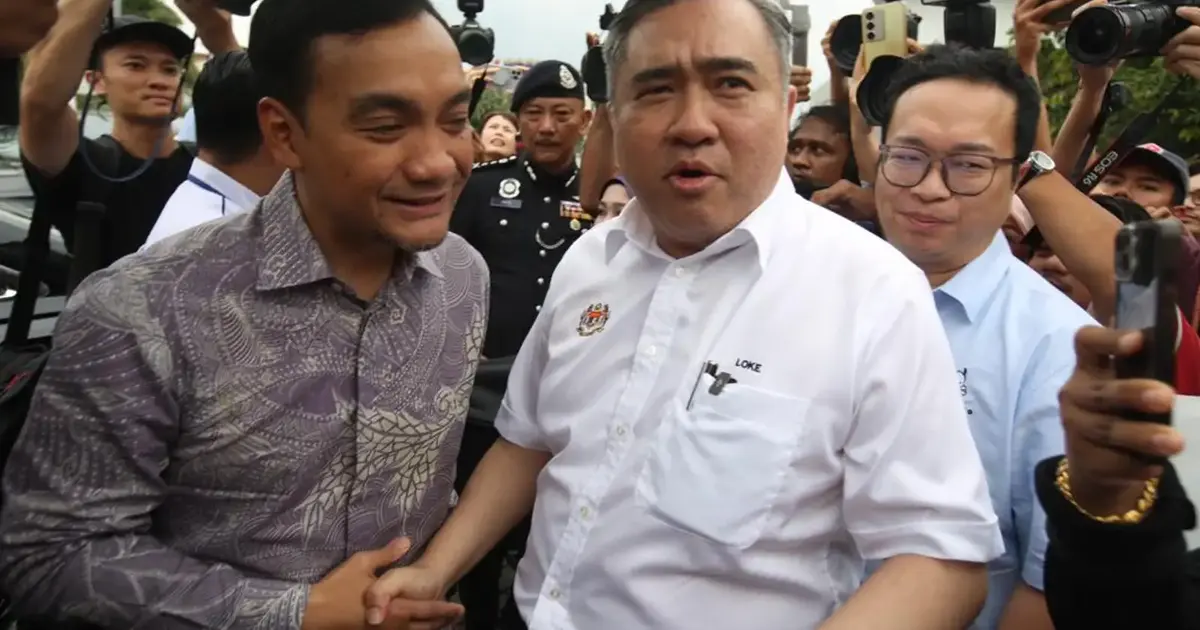
Transport Minister Anthony Loke and Johor Menteri Besar Onn Hafiz came together publicly for the first time since their recent social media clash, presenting a facade of political civility at an official ministry event. The carefully choreographed encounter signalled both leaders' intent to manage coalition tensions behind closed doors rather than allow disputes to fester in the public sphere, a pragmatic approach reflecting the delicate balance within Malaysia's multi-party governance structure.
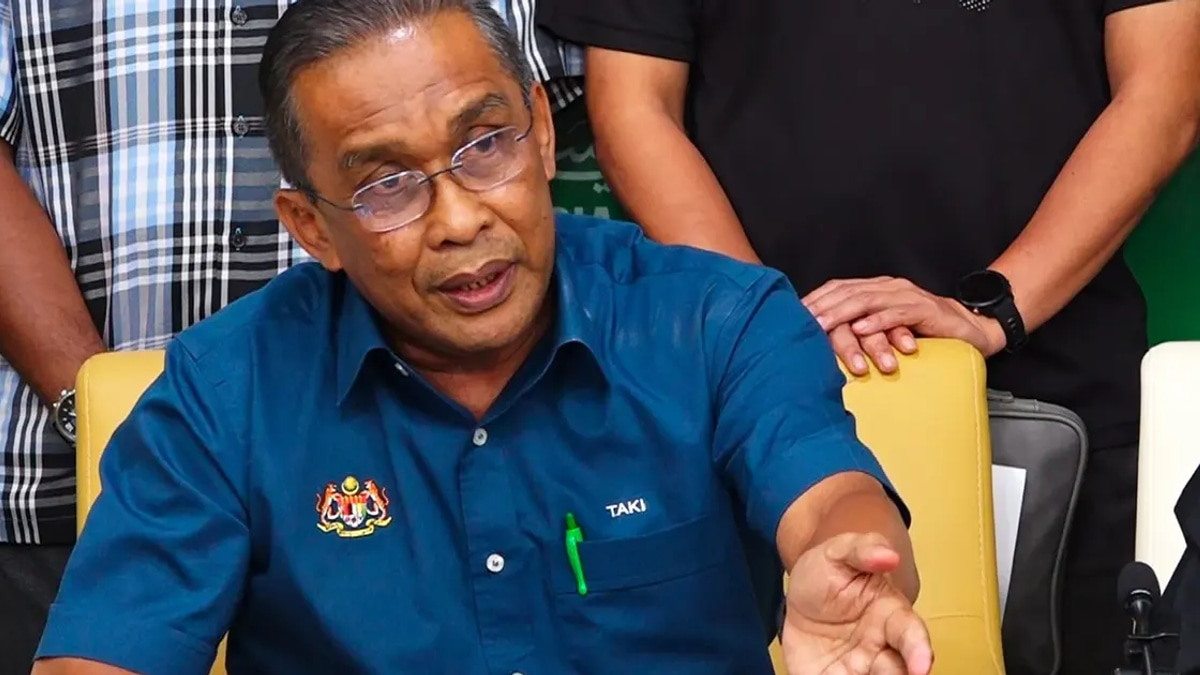
Onn Hafiz seized the opportunity to deliver a pointed remark directed at the DAP leader during his speech at the transport ministry function. The Johor chief executive referenced his schedule adjustments, noting that he had reorganised his commitments after receiving a last-minute invitation to the event. The comment, delivered with measured tone, served as a subtle acknowledgement of the friction between the two leaders while maintaining sufficient plausible deniability to avoid escalating the dispute into outright confrontation.
The underlying message in Onn Hafiz's remarks carried implications about protocol and respect for state leadership's time. By highlighting the rushed nature of the invitation, the Johor MB subtly highlighted the distinction between federal and state authority, a recurring tension point in Malaysian politics where state governments sometimes feel deprioritised by federal ministries despite their constitutional importance. This dynamic has proven particularly sensitive in Johor, where Onn Hafiz commands significant state-level authority and commands respect within his own political sphere.
Previous disagreements between Loke and Onn Hafiz had played out across social media platforms, creating what observers described as an unusual spectacle of senior coalition members airing grievances publicly rather than settling matters through established channels. The decision to meet face-to-face at the transport ministry function represented an apparent course correction, suggesting that both politicians recognised the damage that sustained public conflict could inflict on the broader coalition's credibility and effectiveness.
For Malaysian readers, such inter-party frictions within the Pakatan Harapan coalition reflect the broader challenges of managing a multi-ethnic, multi-party political alliance that spans different states and levels of government. Johor's politics carries particular weight given the state's economic significance and its role as a gateway to Singapore, making stability and cooperative governance essential for the region's continued prosperity. Public spats between senior figures can undermine investor confidence and signal weakness to opposition forces.
The transport ministry's engagement with Johor state leadership carries practical importance beyond ceremonial functions. Infrastructure development, public transport coordination, and logistical frameworks require seamless cooperation between federal and state authorities. When personal relations deteriorate, project implementation inevitably suffers, affecting ordinary Malaysians who depend on functioning transport networks, integrated toll systems, and coordinated development initiatives.
Onn Hafiz's decision to attend despite the short notice, combined with his measured critique, suggested a willingness to move past the dispute without surrendering his position or accepting blame. This balancing act reflects the sophisticated political calculus required of state leaders who must maintain relationships with multiple federal ministries while preserving autonomy and defending state interests. The Johor MB's participation validated that despite disagreements, governmental functions remain too important to sabotage through absence or non-cooperation.
Loke's ministry oversees critical portfolio areas including land public transport, aviation, maritime affairs, and logistics coordination. Any sustained deterioration in relations with key state leaders would hamper policy implementation across these sectors. The cordial tone adopted at this event, despite evident undertones, suggests both leaders prioritise functional governance over personal grievances, a calculation that benefits the broader coalition and the electorate depending on these services.
The incident also highlights the intense public scrutiny facing Malaysian politicians, where social media comments can rapidly escalate into political narratives. Both leaders appear to have recognised that allowing their disagreement to dominate news cycles and social discourse serves neither their individual political interests nor their parties' broader electoral prospects. The controlled interaction at the ministry event essentially resets the narrative, allowing both to claim victory while moving forward.
For Southeast Asian observers watching Malaysia's political evolution, such moments reveal the pragmatic maturity of coalition governance. Despite ideological differences and structural tensions between DAP's federal ministry influence and state-level leadership like Onn Hafiz, the political system continues functioning because senior figures can compartmentalise personal conflicts from governmental responsibilities. This capacity for disagreement without institutional collapse distinguishes Malaysia's system from more fragile neighbouring arrangements.
The interaction between Loke and Onn Hafiz ultimately illustrates that Malaysian politics, despite surface-level drama and occasional public disputes, retains sufficient institutional stability to absorb tensions. The willingness to meet, engage, and maintain working relationships despite disagreements suggests that both leaders recognise the cost of coalition breakdown far exceeds the satisfaction of winning individual disputes. For Malaysians concerned about political stability and effective governance, such displays of restraint and professionalism offer reassurance that governmental functions will continue regardless of personal animosities.