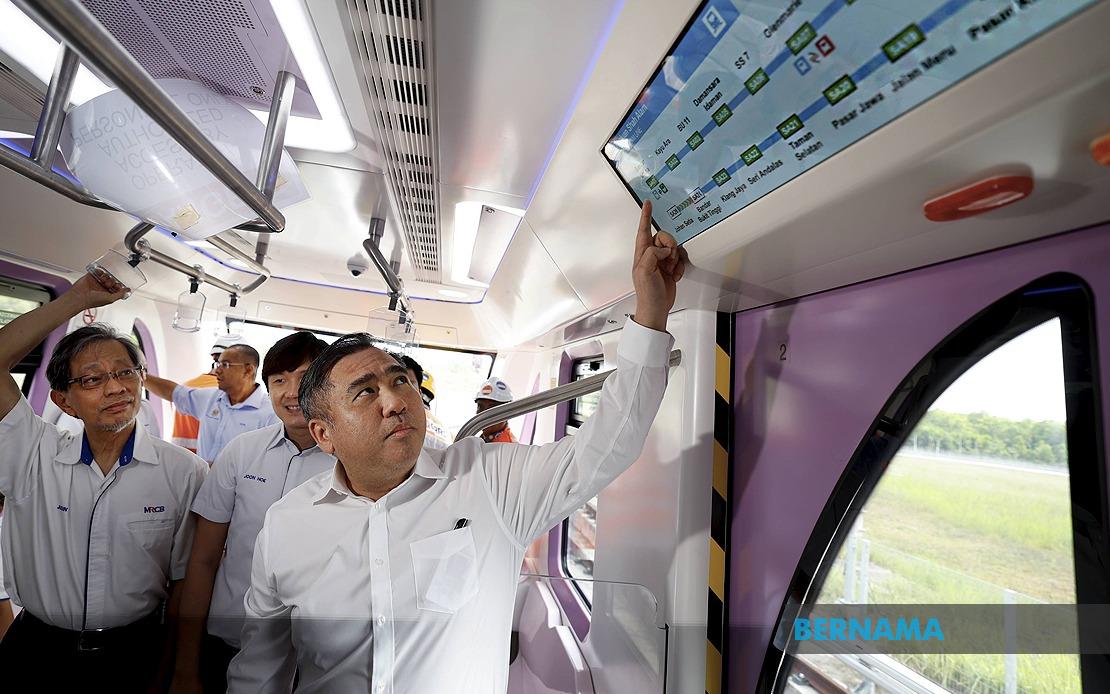
Malaysia's newest urban rail corridor will open to commuters on June 29, Transport Minister Anthony Loke announced on Saturday, marking a major milestone in the country's public transportation expansion. The Light Rail Transit 3 (LRT3), stretching across 37.8 kilometres through Selangor's western zones, will be formally inaugurated by Prime Minister Datuk Seri Anwar Ibrahim the preceding day before entering passenger service. Loke disclosed the timeline while visiting the newly opened Road Transport Department branch at Terminal Bersepadu Selatan, emphasizing the swift transition from ceremonial proceedings to full operational readiness.
The 37.8-kilometre corridor extends between Bandar Utama in the north and Johan Setia in the south, establishing a critical transport artery through some of the Klang Valley's most densely populated and economically vibrant areas. This strategic routing reflects deliberate infrastructure planning aimed at connecting major residential clusters, commercial precincts, and manufacturing zones that have experienced explosive growth over recent decades. The line's geography makes it ideally positioned to alleviate congestion on parallel road networks that have struggled to accommodate the region's rapid urbanization.
Projected demographics suggest the new service will serve approximately two million residents across its operational corridor. This figure underscores the line's potential significance as a commuter solution for a population substantially larger than many Southeast Asian cities. The catchment area encompasses both established urban centres and emerging satellite developments, indicating that ridership will likely encompass diverse commuter patterns—from daily office workers to students and cross-town travellers. Understanding this demographic composition is essential for predicting long-term financial viability and service utilization patterns.
The infrastructure represents significant investment in western Klang Valley connectivity, an objective that has preoccupied transportation planners for years. Prior to LRT3's arrival, residents in Shah Alam and surrounding municipalities relied primarily on road-based transit systems, creating bottlenecks during peak hours and limiting mobility options for those without personal vehicles. The new rail link addresses this gap by providing a dedicated, grade-separated alternative that operates independently of traffic conditions affecting parallel highways and arterial roads. For environmental considerations, the shift from automotive to rail transport promises measurable reductions in vehicular emissions across this heavily trafficked corridor.
The line's design encompasses multiple station stops strategically positioned to serve residential neighbourhoods, shopping complexes, office parks, and industrial facilities. This multi-functional design philosophy maximizes accessibility across different user demographics and journey purposes, moving beyond simple commuter rail toward integrated urban mobility infrastructure. Station placement decisions reflect consultations with local authorities and business communities, suggesting that site selection considered both current demand patterns and anticipated future growth trajectories.
The June 29 commencement date carries significance for the broader Malaysian transport sector and urban development narrative. The project's eventual completion—after experiencing typical delays that plague major infrastructure undertakings across the region—demonstrates renewed government commitment to public transportation investment. For comparison with other Southeast Asian cities, Malaysia's approach of expanding rail networks to underserved suburban corridors mirrors strategies employed in Bangkok, Jakarta, and other regional metropolises confronting similar congestion and expansion challenges.
Loke's announcement came during his visit to inaugurate the new Bandar Tasik Selatan Road Transport Department facility, indicating his role in overseeing multiple transportation infrastructure projects simultaneously. The timing of this announcement—positioned during the opening of another transport-related facility—reflects the interconnected nature of transportation sector modernization across various modes and administrative functions. This broader context suggests sustained government attention to transport infrastructure despite competing budgetary pressures and development priorities.
The Prime Minister's involvement in the official launch ceremony underscores the political significance attributed to the project's completion. Such high-level participation typically signals government confidence in the infrastructure's importance to national development objectives and suggests expectations of positive public reception. The weekend timing of the ceremony allows broader media coverage and potential public participation, maximizing visibility for what officials clearly view as a significant accomplishment worthy of prominent celebration.
For Malaysian commuters and businesses along the corridor, the operational commencement initiates a transitional period requiring familiarization with new travel options, ticketing systems, and schedule integration with existing transport networks. The success of LRT3 will substantially depend on factors beyond infrastructure itself—including affordable fare structures, reliable scheduling, and seamless connections to feeder bus services and existing rail lines. Early operational performance will establish user expectations and long-term patronage patterns that will prove difficult to modify retrospectively.
The expansion of the Klang Valley's rail network reflects broader Southeast Asian urbanization trends requiring coordinated transport investment. As metropolitan areas throughout the region expand outward, the accessibility gap between well-serviced inner areas and developing outer zones creates transportation disparities that impede equitable urban development. LRT3's trajectory from Shah Alam through surrounding municipalities attempts to address this spatial inequality by extending rapid transit access to areas previously dependent on less efficient transport modes.
Operational integration represents another crucial consideration as LRT3 joins existing Klang Valley rail networks. Coordination between LRT3, the older LRT1 and LRT2 lines, KTM Komuter services, and the emerging MRT systems requires synchronized scheduling, fare integration, and station connectivity planning. Passengers seeking to transfer between services need user-friendly systems that minimize confusion and transition times. The Malaysian transit authorities' ability to implement effective integration will significantly influence whether LRT3 functions as an isolated corridor or as a genuinely integrated regional network.
Longer-term perspectives on LRT3 extend beyond immediate commuter convenience to encompass broader urban development patterns. The availability of rapid transit typically catalyzes residential and commercial intensification around station areas, potentially reshaping land use patterns and property values across the corridor. Urban planners and policymakers will monitor whether anticipated transit-oriented development materializes as expected, potentially influencing future infrastructure investment decisions throughout Malaysia's rapidly urbanizing landscape.

