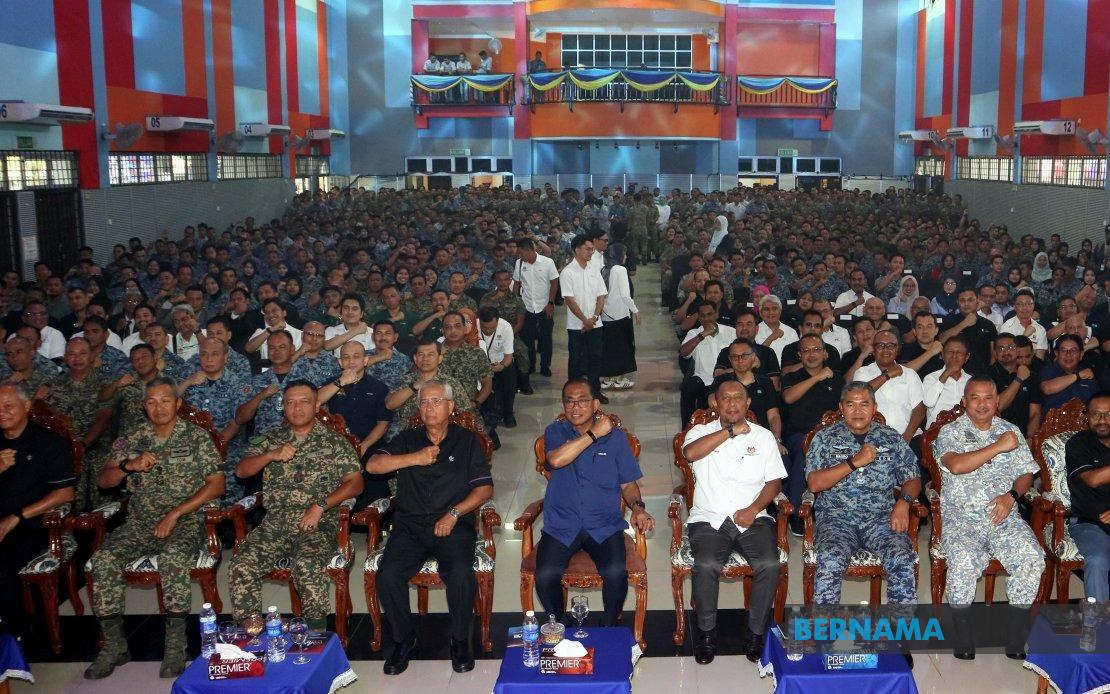
The Armed Forces Fund Board (LTAT) has reached a significant milestone by connecting with 28,500 Malaysian Armed Forces personnel through its Jelajah Wira campaign, demonstrating a sustained commitment to strengthening relationships between the fund's management and the military workforce across the eastern states. The phased nationwide initiative reflects a strategic effort to move beyond traditional fund administration and build meaningful engagement with personnel who contribute substantially to their long-term financial security.
LTAT Chief Executive Mohammad Ashraf Md Radzi outlined the comprehensive nature of this engagement strategy during an event in Kuantan, explaining that the tour has been structured to systematically cover the entire country. This approach enables both the fund's leadership and military contributors to develop a deeper understanding of mutual responsibilities and benefits. By bringing management directly to personnel at operational bases, LTAT addresses a persistent challenge in large institutional schemes: the distance between beneficiaries and decision-makers that can lead to disengagement or misunderstanding about fund operations and value proposition.
A tangible outcome of the campaign is the launch of the LTAT-Affin Debit Card, introduced as a recognition of the armed forces' unwavering commitment to national service. Beyond its practical banking functions, the card symbolises official acknowledgement of military personnel's contributions and serves as a visible token of the fund's appreciation for their discipline and sacrifice. This branding initiative carries particular psychological value for service members who often experience their professional identity as distinctly separate from civilian life, making institutional recognition through such dedicated instruments meaningful to recruitment and retention narratives.
The geographical scope of Jelajah Wira demonstrates comprehensive regional coverage. The campaign encompasses Kem Desa Pahlawan in Kelantan, Kuantan Air Force Base, Kem Seri Pantai (16th Royal Malay Regiment) in Terengganu, Kem Sungai Udang in Melaka, KD Sultan Ismail in Johor, and Kem Mahkota Kluang, also in Johor. This strategic distribution ensures that personnel across diverse military branches and geographic locations have access to engagement events, addressing equity concerns about fund communication and accessibility that could otherwise disadvantage remotely stationed units.
Mohammad Ashraf characterised the initiative as reflecting LTAT's holistic approach to welfare that extends beyond individual contributors to encompass families and communities connected to the armed forces ecosystem. This broadened perspective acknowledges that military personnel's financial security has cascading effects on household stability, children's educational opportunities, and community resilience. For Southeast Asia more broadly, where military welfare systems significantly influence both morale and retention, such comprehensive approaches offer models worth studying.
Personnel responses indicate strong appreciation for the fund's mechanics and returns. Airman I Muhammad Syahmi Mohd Shobri, 23, highlighted the scheme's competitive annual dividends and long-term savings advantages compared to alternative instruments, suggesting that younger military entrants recognise the value proposition despite the 10 per cent monthly contribution rate. For younger servicemen contemplating careers spanning decades, such long-term vehicles address legitimate concerns about post-service financial stability in an era when pension adequacy across government sectors remains contested.
Airman I Muhammad Izzuddin Mohd Hanapi, 25, stressed that LTAT benefits become particularly valuable upon retirement, when accumulated savings combined with consistent annual dividends provide significant financial security. This observation highlights a critical function of military welfare schemes in developing nations: they create a bridge between active service and civilian life, mitigating the economic vulnerability that can accompany military-to-civilian transitions. Given Malaysia's ongoing discussions about defence spending and military modernisation, ensuring servicemen feel financially secure post-retirement reduces attrition and supports retention of experienced personnel.
The event's lucky draw component, which awarded an electric motorcycle to Royal Malaysian Air Force Air Sergeant Haidil Jafar, 39, serves dual purposes: it generates enthusiasm and participation while providing material incentives that enhance event memorability. Such engagement mechanics, though seemingly small, contribute to the broader cultural positioning of LTAT as an institution invested in personnel welfare beyond administrative minimums.
The presence of senior officials including Defence Ministry Secretary-General Datuk Lokman Hakim Ali, LTAT Chairman General Tan Sri Azizan Ariffin, and Investment Panel Chairman Datuk Khairol Anuar Mohamad Tawi underscores the initiative's institutional importance. High-level participation signals that military welfare is not peripheral to defence strategy but integral to personnel management and institutional effectiveness. For Malaysian regional counterparts monitoring best practices in military administration, such visible commitment from defence hierarchies indicates organisational seriousness about servicemen's concerns.
The Jelajah Wira campaign represents a broader shift toward proactive institutional engagement that moves beyond passive fund administration. By systematically visiting military installations and facilitating direct dialogue between management and contributors, LTAT addresses information asymmetries that commonly characterise large pension and savings schemes. For military personnel who often operate in structured hierarchies with limited opportunity for institutional feedback, such accessible engagement mechanisms improve transparency and build institutional trust—factors increasingly recognised as crucial to military effectiveness and social cohesion.
Looking forward, the campaign's success in reaching 28,500 personnel establishes baseline metrics against which future engagement can be measured. As LTAT continues its nationwide rollout, accumulating data about personnel concerns, dividend expectations, and retirement planning needs will inform refinements to the fund's offerings and communication strategies. For Malaysia's broader civil service and military institutions, the Jelajah Wira model offers a replicable template for connecting large institutional schemes with dispersed beneficiaries in meaningful, sustained ways that acknowledge both the financial and psychological dimensions of workplace welfare.

