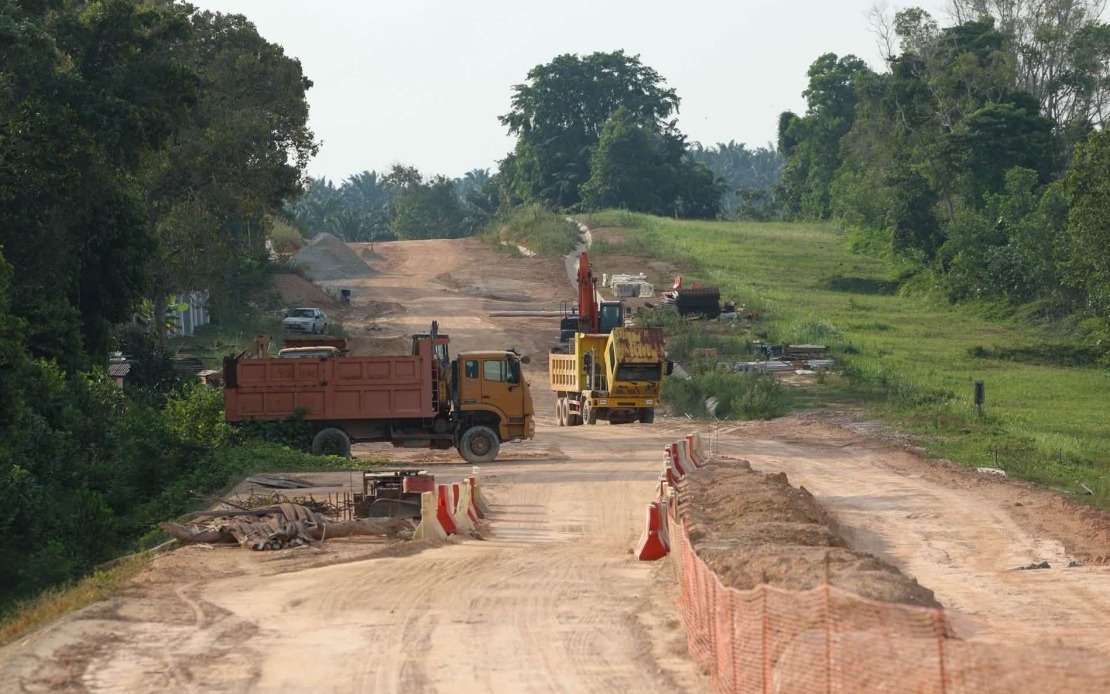
Construction on a new 10-kilometre road network in Port Dickson has surpassed the midway point at 60.57 per cent completion, with works progressing faster than originally anticipated. The initiative to link Lukut with Kampung Sirusa through Kampung Paya and Kampung Bagan Pinang is tracking 43 days ahead of schedule, according to the Works Ministry (KKR), signalling efficient project management in a region where transport infrastructure has long constrained development.
Backed by federal funding through the Ministry of Rural and Regional Development, the RM81.92 million undertaking is set for completion on August 10, 2027. The State Public Works Department (JKR) is executing the scheme, which represents a significant investment in Selangor's port district and reflects broader government efforts to strengthen rural connectivity across the country. For Port Dickson residents and businesses, the project promises tangible improvements to daily mobility and long-term economic prospects.
The scope of work extends beyond simple asphalt laying. The development incorporates comprehensive infrastructure aligned with JKR R2 specifications, encompassing slope stabilisation, modern drainage and sewerage systems, structural installations, and utility provisioning. This multi-faceted approach ensures the new thoroughfare will withstand Port Dickson's tropical climate and heavy rainfall patterns while meeting contemporary engineering standards. Such comprehensive construction protects the public investment and extends the asset's operational lifespan, a lesson learned from earlier infrastructure projects across Malaysia that lacked integrated design.
Deputy Works Minister Datuk Seri Dr Ahmad Maslan visited the construction site in Seremban on July 16 to assess progress firsthand and verify compliance with contractual schedules, technical specifications, and quality benchmarks. These periodic ministerial inspections serve dual purposes: they signal government commitment to timely delivery while allowing officials to identify and resolve bottlenecks before they derail completion dates. Proactive site management of this nature has become increasingly important as Malaysia undertakes numerous infrastructure projects simultaneously.
The strategic significance of this road network extends well beyond connecting two communities. By integrating Lukut, Kampung Paya, Kampung Bagan Pinang, and Kampung Sirusa into a cohesive transport corridor, the project dismantles geographic isolation that has historically limited resident access to essential services and economic opportunity. Shorter journey times to schools, clinics, and Port Dickson's growing tourist attractions represent immediate quality-of-life gains for families in these settlements, while improved safety and comfort standards address persistent infrastructure deficiencies in smaller towns across Southeast Asia.
The development holds considerable implications for Port Dickson's economic trajectory. Enhanced road connectivity typically catalyses business expansion by reducing logistics costs and travel times for traders accessing larger markets. The smoother traffic flows anticipated from this new route should attract entrepreneurs considering warehousing, manufacturing, or tourism ventures in the district, while existing traders benefit from faster goods movement. Government officials explicitly frame the project as an economic catalyst expected to generate employment, facilitate trade growth, and encourage private investment in surrounding areas—outcomes that have proven achievable in similar Malaysian transport infrastructure initiatives.
Tourism particularly stands to benefit. Port Dickson's established resort infrastructure and beach attractions have long suffered from inadequate internal road networks that complicated visitor access and constrained development of secondary attractions. The new road system promises to unlock peripheral economic zones and make the district more competitive against rival coastal destinations. For regional tourism strategists monitoring port town development patterns across Malaysia and Thailand, this project exemplifies how targeted transport investment can reshape local economies within relatively short timeframes.
The 43-day acceleration against the original schedule warrants analysis, as infrastructure projects frequently experience delays rather than advance completion. Several factors likely contribute to this positive trajectory: favourable weather patterns during the initial construction phase, effective contractor performance incentives, and experienced project management oversight. This performance should inform planning assumptions for comparable rural infrastructure schemes elsewhere, though contextual differences between sites mean direct extrapolation requires caution.
Port Dickson's development trajectory reflects broader Malaysian government strategy to strengthen secondary towns and support balanced regional growth. The Federal Government's allocation of RM81.92 million underscores recognition that towns beyond Klang Valley require strategic infrastructure investment to retain populations and prevent unsustainable centralisation. For policymakers across Southeast Asia grappling with uneven development patterns, the Port Dickson approach offers a model: identify underserviced regions with genuine economic potential and deploy targeted, well-designed infrastructure to unlock latent opportunities.
Successful completion of this project by 2027 would position Port Dickson as a more integrated, accessible economic zone within Selangor. The coordinated connectivity between multiple settlements suggests planners envisioned a networked rather than point-to-point solution, encouraging broader-based development rather than concentrating gains in one location. This systems-thinking approach to regional development stands in contrast to earlier projects that sometimes prioritised flagship infrastructure without considering supporting networks.
As construction progresses toward the August 2027 target date, stakeholders across Port Dickson should prepare for transition impacts. Completed road networks frequently alter settlement patterns, property values, and business location preferences. Residents and local authorities benefit from advance planning to manage these secondary effects positively, maximising benefits for existing communities while preventing speculative distortion of property markets.
The Lukut-Kampung Sirusa road project ultimately represents more than infrastructure development—it embodies government commitment to extending modern transport systems to Malaysian communities historically underserved by such investment. With completion tracking ahead of schedule, the initiative demonstrates that well-managed, adequately resourced projects can deliver timely development outcomes. For Port Dickson, the emerging road network promises economic reinvigoration and enhanced quality of life, outcomes increasingly vital as Malaysia pursues inclusive, regionally balanced development patterns across its diverse landscape.

