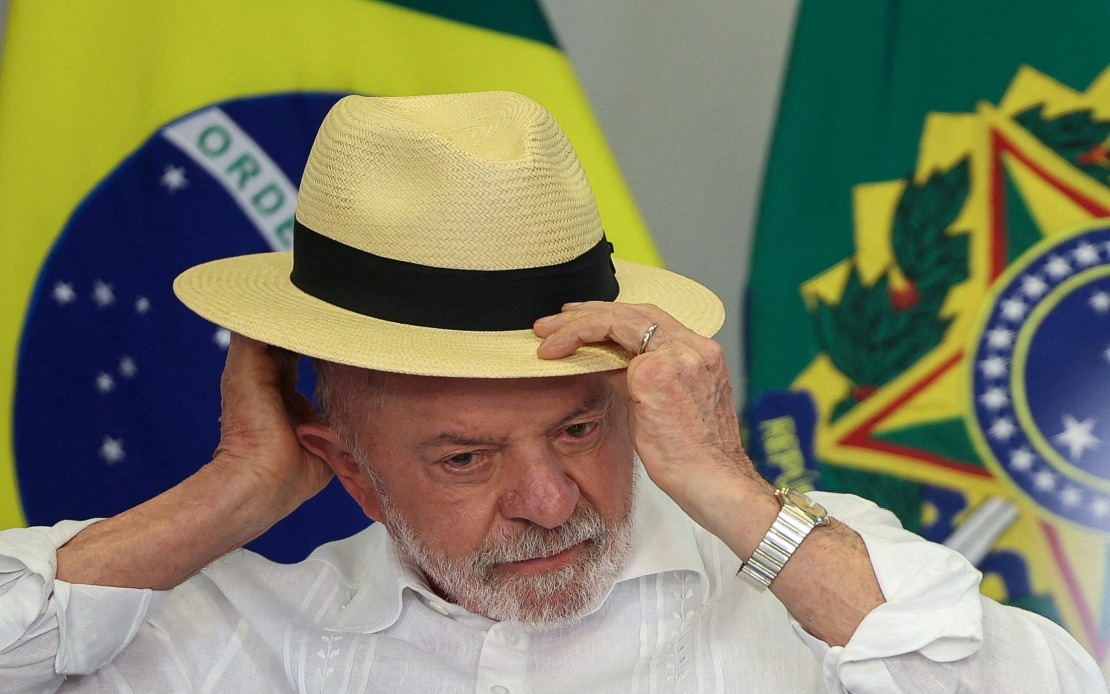
Brazilian President Luiz Inacio Lula da Silva is clinging to a narrow lead over Senator Flavio Bolsonaro as the country heads toward its October presidential election, according to fresh polling data released this week. The Quaest survey, commissioned by Globo media group, found Lula commanding 43 per cent support to Bolsonaro's 40 per cent in a hypothetical runoff scenario—a margin so thin that the two-point margin of error renders the race essentially deadlocked between the two frontrunners.
The latest survey measured voter preferences between August 10 and 13 across a sample of 2,004 Brazilians, marking a subtle shift from earlier soundings. Just five days prior, an identical Quaest poll had shown Lula ahead 44 per cent to 39 per cent in the same runoff matchup, suggesting modest momentum for the ruling president even as his opponent gained ground. These fluctuations underscore the volatile nature of the contest, with neither candidate establishing commanding dominance despite months of campaigning. If no candidate secures an outright majority in the first round, Brazilian electoral law mandates a runoff between the top two finishers—a scenario the polling consistently predicts.
In a first-round voting scenario where multiple candidates remain on the ballot, Lula's support climbs to 38 per cent, substantially ahead of Bolsonaro's 31 per cent showing. However, this commanding gap in a crowded field would almost certainly compress in a head-to-head runoff, as votes for eliminated candidates reallocate. Other potential candidates tested in the poll—Renan Santos and Ronaldo Caiado, each garnering four per cent, and Romeu Zema at two per cent—represent relatively minor figures who would likely consolidate votes toward the two frontrunners rather than mount independent challenges.
Flavio Bolsonaro's emergence as the right's standard-bearer reflects the dramatic reversal of his father's political fortunes. Former President Jair Bolsonaro, who governed from 2019 to 2022, has been rendered ineligible to contest the election after Brazil's superior electoral court determined he abused presidential powers during his tenure. The disqualification followed his conviction in connection with an alleged scheme to overturn his 2022 election defeat to Lula, charges that carried grave constitutional implications and fundamentally altered Brazil's political landscape. With the Bolsonaro family's patriarch removed from contention, his eldest son has inherited the mantle of the right-wing movement, though he carries neither his father's popular mystique nor proven electoral credentials at the national level.
Lula launched his reelection campaign in early August at the Workers' Party convention in São Paulo, framing the contest around distinctly nationalist themes that resonate deeply with Brazilian voters concerned about foreign interference in domestic affairs. The president has weaponized anxieties about external pressure, particularly from the Trump administration, which maintains strong historical ties to the Bolsonaro family. During his campaign kickoff, Lula articulated a vision of Brazil protecting its vast mineral wealth and rare earth resources from foreign predation, signalling determination to resist what he characterizes as neocolonial resource extraction schemes.
The sovereignty messaging carries particular weight given the fraught relationship between the incumbent and the incoming Trump administration. Lula has explicitly warned the American president against election interference, stating in June that Brazil's electoral process constitutes an internal matter requiring absolute Brazilian autonomy, just as American voters expect foreign powers to respect their democratic choices. He extended this sovereignty argument to encompass China and France as well, making clear that Brazil would negotiate any resource access from a position of strength rather than capitulation. This nationalist framing distinguishes his campaign from his opponent's more openly aligned relationship with American conservative circles and the Bolsonaro family's documented proximity to Trump allies.
The tightening trajectory of recent polls suggests Flavio Bolsonaro has succeeded in consolidating right-wing support and mobilizing voters concerned about Lula's first-term governance. However, the incumbent retains the advantage of the presidency itself, allowing him to deploy state resources and apparatus for campaigning purposes while remaining the default choice for voters prioritizing continuity. Lula's institutional advantages—control of government messaging, access to state media, and the capacity to announce popular policies during the campaign period—provide structural benefits that runoff dynamics typically favour.
With approximately two months separating the current moment from the October vote, the race remains genuinely competitive without clear trajectory toward either candidate's victory. The statistical tie in runoff projections means any shift in voter sentiment, major news event, or campaign miscalculation could alter the outcome. Neither candidate possesses what pollsters term a "safe lead," implying both campaigns must execute flawlessly to convert narrow advantages into winning margins. For Malaysian and Southeast Asian observers, this Brazilian election underscores how even established democracies with institutional safeguards confront intense polarization that renders previously dominant political figures vulnerable to sudden disqualification and succession challenges.
The narrowness of Lula's current positioning also reflects broader rightist opposition to his social spending agenda and environmental policies, particularly regarding Amazon preservation. Bolsonaro-aligned voters view Lula's approach as economically constraining and environmentally restrictive toward development interests, while Lula's coalition emphasizes social protection and international climate commitments. This fundamental ideological divide, combined with institutional factors and personality-driven politics characteristic of contemporary Brazil, ensures the election will remain intensely competitive throughout the campaign period and likely extend to a closely contested runoff.

