The luxury fashion world has undergone a curious inversion. For generations, flawless construction, meticulous tailoring and spotless presentation defined haute couture aspiration. Yet in a striking departure from convention, the industry's most prestigious houses now deliberately craft garments that appear weathered, soiled and compromised—commands premium prices for the privilege. This deliberate embracing of imperfection challenges fundamental assumptions about what wealth and refinement communicate through dress.
The phenomenon extends across the industry's leadership. Chanel has reimagined its legendary 2.55 bag in a distorted silhouette that resembles trampling beneath a stiletto heel. Prada's current collections feature yellowish discolouration reminiscent of garments left to age in forgotten storeroom corners. Coach capitalised on the trend so successfully with its "Loved Leather" line—designer language for pre-scuffed accessories—that demand exhausted initial inventory, prompting the brand to release additional iterations in different tones this season. These are not budget alternatives or damaged goods marked down for clearance. These are coveted items commanding waitlists, functioning as status symbols for consumers willing to pay premium prices for intentional deterioration.
The strategic pivot invites reflection on what has shifted in consumer psychology and aspirational values. Historically, displaying immaculate, pristine clothing signalled financial capacity to maintain perfection, access to care services, and distance from labour or wear. The acceptance of degradation suggests a transformation in how wealth expresses itself—perhaps toward authenticity, casualness, or rejection of artificial perfectionism that characterised earlier luxury aesthetics. It simultaneously permits existing wardrobe owners to reframe accumulated damage as inadvertent fashionability rather than necessity or neglect.
Ralph Lauren's Spring 2027 offerings exemplify this contradiction most sharply. The American designer pairs deliberately ripped jeans with formal components—crisp dress shirt, silk necktie, structured waistcoat and tailored blazer—a juxtaposition that would have seemed incoherent mere years ago. The ensemble concludes with white-and-green penny loafers and a camel-toned leather tote, marrying prep school traditions with deliberately compromised denim. This represents not casual styling but calculated provocation through mixing established dress codes with deliberate destruction.
Burberry interprets the weathered aesthetic through stonewashed pink denim, presented as a jeans-and-jacket pairing layered beneath a navy argyle V-neck pullover. The combination articulates what the brand terms "prep-punk"—a collision between refined heritage and deliberately roughened surfaces. Sandro approaches similarly through a cropped vest-and-shorts composition enhanced with rustic metallic studs and rich brown suede trim, suggesting cowgirl romanticism filtered through contemporary fashion houses. Each iteration maintains designer construction standards while compromising visual surfaces, the contradiction itself becoming the commercial proposition.
Earth-toned distressing has emerged as particularly fashionable for Spring/Summer 2027. Louis Vuitton's denim jacket bears deliberate mud-tone splattering and sandy discolouration presented as artful statement pieces. Acne Studios deepens this direction through jeans coated in mud-slick patina paired with intentionally crumpled slim-fit denim jackets, the contrast between structured and deliberately wrinkled surfaces creating calculated visual tension. These are not accidental presentations; technical precision achieves the appearance of negligence.
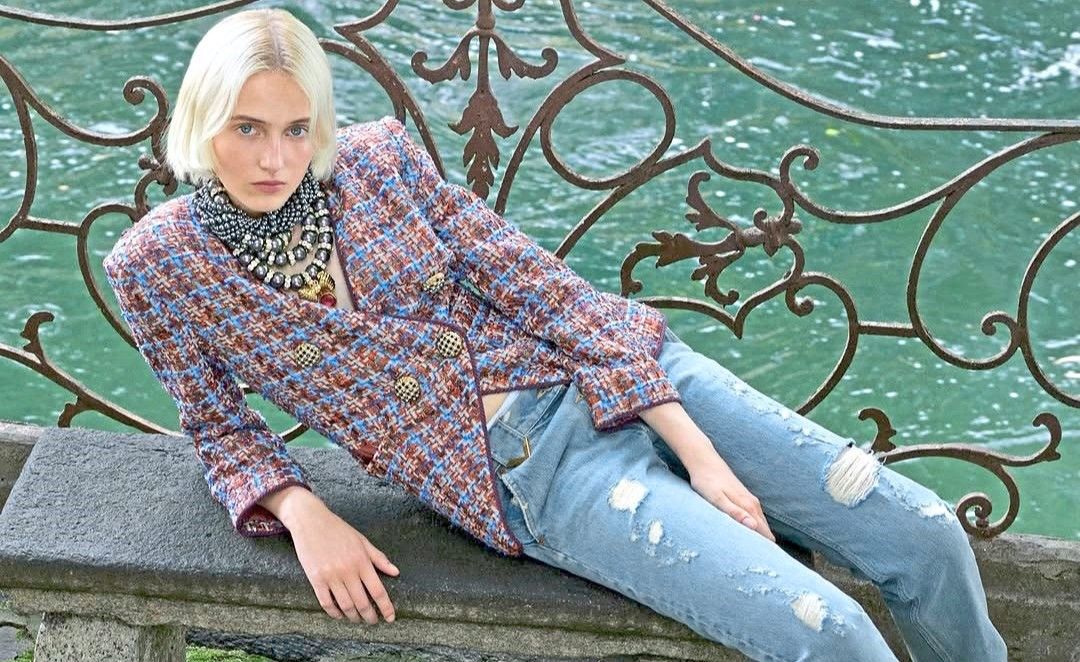
Valentino's Cruise 2027 collection demonstrates how drastically the luxury sector has recalibrated elegance definitions. The Italian house, historically synonymous with buttoned-up refinement and undeniable glamour, now pairs a tweed jacket with gold buttons against shredded denim and accessorises with multi-strand black pearl necklaces and golden studded heels. The composition explicitly states that perfection, as traditionally defined, no longer communicates luxury. Instead, controlled dissonance—the deliberate mixing of refined and destroyed elements—becomes the luxury statement.
For Malaysian consumers and Southeast Asian readers evaluating this trend, the implications warrant consideration. This shift reflects broader generational attitudes toward authenticity, sustainability discourse, and rejection of artificial standards that defined previous luxury frameworks. The trend simultaneously enables practical conversations: rather than discarding worn clothing, damage becomes fashionable, reducing wastage while aligning with sustainability values increasingly important to affluent consumers. However, the premium pricing attached to deliberate destruction also exposes a fundamental luxury paradox—the wealthy pay significantly more for garments designed to appear impoverished, poor or negligently maintained.
The phenomenon extends beyond mere aesthetics into commentary about inequality and display. When high-end consumers pay thousands for garments crafted to resemble distressed, damaged or aged clothing, they engage in an ironic aesthetic consumption. Working populations wear damaged clothing from necessity; luxury consumers wear identical appearances from choice and aspiration. This inversion—paying premium prices to simulate conditions associated with financial constraint—represents either progressive fashion evolution or an uncomfortable statement about contemporary wealth display.
Regionally, the trend carries particular resonance across Southeast Asia's rapidly expanding luxury markets. Malaysia, Singapore, and other regional economic centres host affluent populations increasingly engaged with international fashion consciousness. Understanding these shifts in luxury aesthetics becomes relevant for local retailers, consumers calibrating aspirational purchases, and critics examining what consumption patterns communicate. The embrace of designed imperfection by global luxury houses signals broader cultural permissioning of authenticity over artificial perfection, a philosophical reorientation with consequences extending far beyond clothing into lifestyle, design, and personal presentation standards.
As fashion houses continue developing this direction, questions persist regarding longevity. Will deliberately distressed aesthetics retain desirability, or does the trend represent temporary luxury cycle fluctuation? The extended waitlists and seasonal reissues suggest sustained demand, yet fashion history demonstrates how completely aesthetic values can invert. What remains certain: the luxury industry has decisively rejected the notion that perfection defines high style, replacing pristine tailoring with intentional deterioration as the contemporary marker of refined taste and financial capacity.

