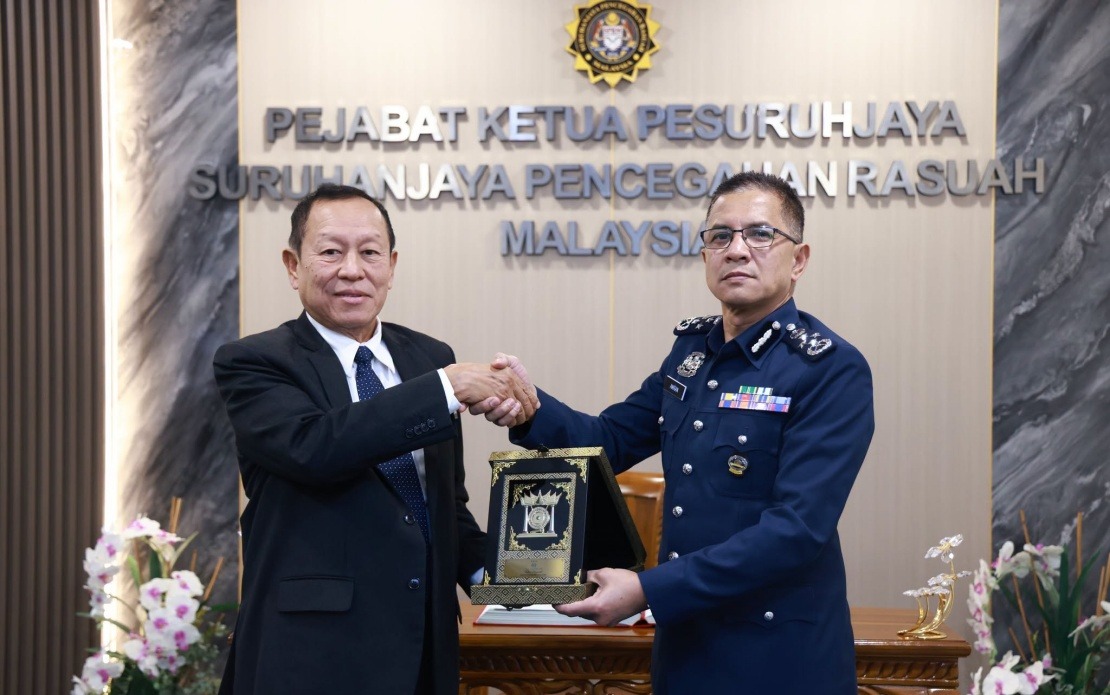
The Malaysian Anti-Corruption Commission and the Royal Malaysian Customs Department have moved forward with plans to create a dedicated task force aimed at strengthening enforcement operations and revenue collection across the nation's key maritime entry points. The collaborative initiative emerged from discussions held at MACC headquarters in Putrajaya, where leadership from both agencies outlined the operational framework for the proposed team.
During the meeting, MACC chief commissioner Datuk Seri Abd Halim Aman and JKDM director-general Datuk Amran Ahmad identified several pressing concerns that have prompted the need for closer coordination. The two organisations recognised that strategic ports represent critical junctures where customs violations, revenue leakage, and corruption risks converge. By pooling resources and expertise, the agencies believe they can mount a more effective response to emerging threats to Malaysia's revenue base and border integrity.
The discussion revealed a complex landscape of illicit practices that have undermined customs operations nationwide. Syndicates have developed sophisticated methods to circumvent tax obligations, ranging from straightforward smuggling operations to more elaborate schemes involving false documentation and misrepresentation of goods. These tactics exploit gaps in existing oversight mechanisms, allowing contraband to move through ports with minimal detection. The collaborative task force is designed to identify and disrupt such networks before they cause further damage to state coffers.
One particularly troubling modus operandi identified by Customs authorities involves the deliberate undervaluation of currency declared at entry points. Individuals bringing cash into Malaysia have been caught declaring significantly lower amounts than what they actually carry, allowing them to move substantial sums while evading scrutiny and potentially facilitating money laundering or other illicit financial activities. Such practices represent not merely tax evasion but potential threats to national security and financial system integrity.
Beyond addressing specific schemes, the partnership also tackles structural challenges within customs administration itself. Officials from both organisations discussed bureaucratic obstacles that slow inspection procedures and create opportunities for corruption to take root. When legitimate customs processes become cumbersome, they inadvertently create incentives for officials to cut corners or accept bribes, and for traders to seek illicit alternatives. The task force proposal acknowledges that reform must address not just external threats but also internal weaknesses in procedure and oversight.
Container management at Malaysian ports emerged as a particular focus area during the strategic meeting. The volume of containerised cargo moving through national ports presents enormous challenges for effective inspection and tracking. Customs authorities have identified significant leakage in this segment, with goods slipping through without proper documentation or duty payment. The proposed task force will prioritise container-related vulnerabilities, implementing enhanced monitoring mechanisms and intelligence-sharing protocols to reduce losses.
The integrity dimension of this collaboration holds particular significance for Malaysia's standing in the international trading community. Ports with inadequate anti-corruption measures attract criminal networks and undermine legitimate businesses that comply with regulations. By visibly strengthening enforcement at its maritime gateways, Malaysia can reinforce its reputation as a jurisdiction that takes border integrity seriously. This has implications for the country's attractiveness as a trading hub and its relationships with international partners.
Both agencies also recognised the importance of cultivating integrity among their own personnel. Customs and anti-corruption officials work in environments where they face constant pressure and temptation. MACC has indicated it will support the task force through educational initiatives and anti-corruption training for Customs staff. This preventive approach acknowledges that external enforcement is only as effective as the integrity of those conducting it. Building a culture of accountability within the agencies themselves forms the foundation for credible enforcement against external violators.
The task force represents a broader trend in Malaysian governance toward cross-agency coordination on complex challenges that no single authority can effectively address alone. Port security and revenue protection involve multiple overlapping concerns—customs compliance, anti-corruption, financial crime, and national security. By creating structures that allow the MACC and Customs to share intelligence, coordinate operations, and align their enforcement strategies, policymakers are moving toward more sophisticated responses to sophisticated problems.
For Malaysian businesses and traders, the establishment of this task force carries mixed implications. Compliant companies benefit from a more predictable regulatory environment and the elimination of corrupt competitors who gain unfair advantages through bribery or smuggling. However, the enhanced scrutiny may initially increase processing times at ports until systems become more efficient. The net result should favour legitimate commerce, as the integrity improvements eventually make port operations more reliable and transparent.
Regionally, Malaysia's move to strengthen port enforcement positions it well within the broader Southeast Asian context, where trade volume and logistics importance continue expanding. Neighbouring countries have similarly grappled with port corruption and smuggling, making Malaysia's joint-agency approach a potential model for regional cooperation. The initiative also addresses concerns raised by major trading partners regarding cargo security and duty compliance along major shipping routes.
The implementation phase will determine whether the task force delivers on its promise. Success requires sustained political support, adequate resource allocation, and genuine operational collaboration between institutions that sometimes operate in silos. Measurable outcomes—recovery of unpaid duties, prosecution of smuggling networks, and reduced corruption complaints—will indicate whether the enhanced coordination translates into tangible improvements in enforcement and revenue collection.

