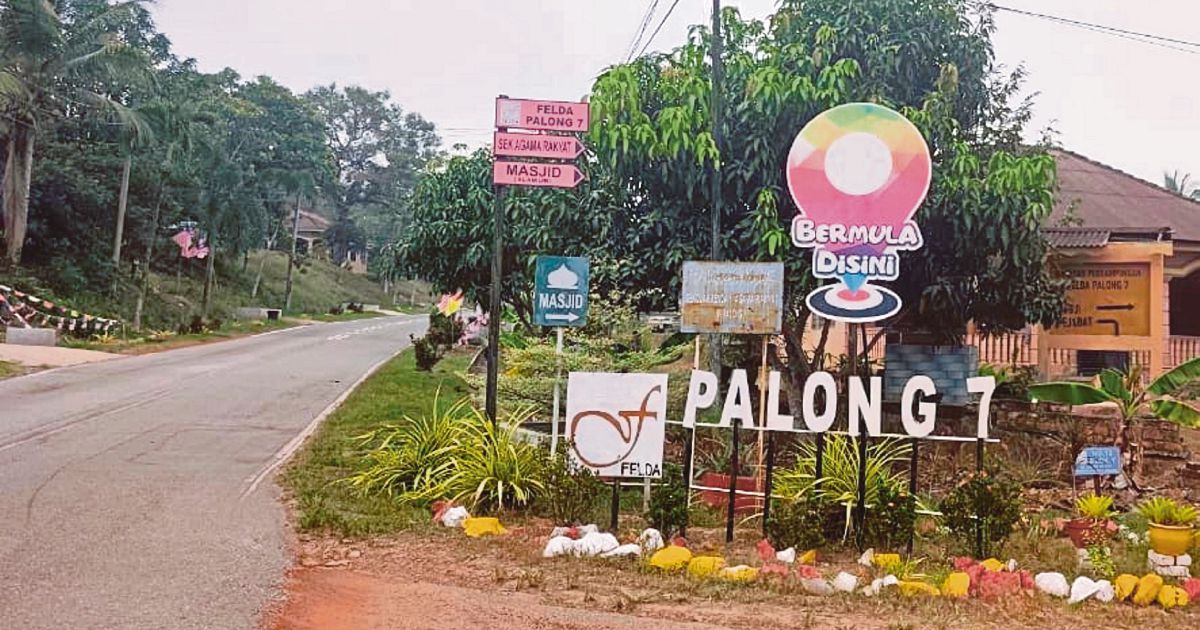
The Malaysian Anti-Corruption Commission (MACC) has initiated a formal review of at least five documents pertaining to alleged administrative and financial irregularities connected to a substantial palm replanting venture at Felda Palong 7, located in Jempol, Negri Sembilan. The project carries an estimated value of RM80 million, representing a significant undertaking within Malaysia's settler scheme framework. This investigation represents the latest in a series of corruption probes targeting Federal Land Development Authority (Felda) operations, an agency that has faced mounting scrutiny over governance and financial management in recent years.
Felda, one of Southeast Asia's oldest land settlement schemes, operates across numerous states and manages substantial agricultural assets on behalf of settler communities. Palong 7, situated in the interior of Negri Sembilan, constitutes one of the authority's established plantation regions. The oil palm replanting initiative under examination is designed to modernise ageing plantation stock through systematic replacement with younger, more productive vegetation. Such programmes are routine within the broader palm industry, yet their execution through government-linked entities necessitates rigorous financial oversight and competitive procurement processes.
The nature of alleged irregularities has not been comprehensively detailed by the MACC, though such investigations into Felda operations typically examine procurement procedures, tender award decisions, project cost allocations, and contractor performance metrics. The decision to scrutinise five specific documents suggests investigators have identified documentation that may contain discrepancies or procedural deviations requiring closer analysis. Given the project's magnitude, even modest cost escalations or inefficiencies could represent substantial financial deviations affecting settler dividends and organisational sustainability.
The timing of this investigation reflects broader institutional pressures on Felda to demonstrate transparent operations. Over the past decade, multiple governance issues have emerged within the settler scheme, including questions surrounding dividend distributions, land utilisation practices, and corporate decision-making processes. These controversies have prompted periodic government interventions and management restructuring. The current probe signals continued vigilance from enforcement authorities regarding how substantial public resources allocated to agricultural development are deployed and monitored.
For Malaysian settlers and their families, project integrity carries direct financial implications. Felda settlers rely substantially on dividend distributions derived from plantation revenues and project efficiency. When capital-intensive initiatives encounter cost irregularities or implementation delays, these directly translate to reduced returns for participant communities. The RM80 million investment represents capital that might otherwise fund dividend payments, social facilities, or operational improvements across the settlement.
The investigation also reflects broader concerns about how government-linked companies manage tender processes and contractor relationships. Malaysia has strengthened anti-corruption frameworks significantly, with the MACC possessing expanded investigative powers and a mandate to examine both public entities and private actors involved in government contracts. The focus on documentation suggests investigators are applying forensic accounting methodologies to reconstruct transaction sequences and identify potential deviations from approved protocols.
Regional observers note that agricultural sector investigations have become increasingly common across Southeast Asia, as countries seek to combat embezzlement and procurement fraud affecting food security and rural development initiatives. Malaysia's approach mirrors comparable efforts in Indonesia and Thailand, where large-scale plantation schemes have similarly encountered governance challenges requiring investigation. The transparency and rigour with which authorities pursue such cases influences investor confidence in government-linked enterprises and affects the broader business environment.
The scope of the MACC's document review remains circumscribed at present. Investigators may expand their examination depending on preliminary findings, potentially requesting additional records from project contractors, financial service providers, and Felda internal divisions. The review process typically involves cross-referencing documentation against approved project budgets, contractual agreements, payment authorisations, and completion certifications. Any identified discrepancies trigger further investigation and potential referral to prosecutorial authorities if evidence of criminal conduct emerges.
Stakeholders within Felda, including management, settlers' representative bodies, and worker unions, will likely scrutinise the investigation's progression closely. The outcome potentially carries implications for project completion timelines, future capital allocation decisions, and confidence in existing governance structures. Investors considering partnerships with Felda-related entities may also monitor proceedings, as investigation outcomes influence perceptions regarding institutional risk management capabilities.
The MACC investigation underscores Malaysia's ongoing commitment to scrutinising resource deployment across government-linked entities, regardless of their agricultural or development orientation. For readers across the region interested in governance standards and anti-corruption enforcement, the Palong 7 case exemplifies the mechanisms through which Southeast Asian nations attempt to reconcile agricultural development imperatives with fiscal accountability. The investigation's conclusions may establish precedents affecting how subsequent large-scale settler scheme projects undergo financial validation and contractor oversight, shaping institutional practices across Malaysia's agricultural sector for years to come.

