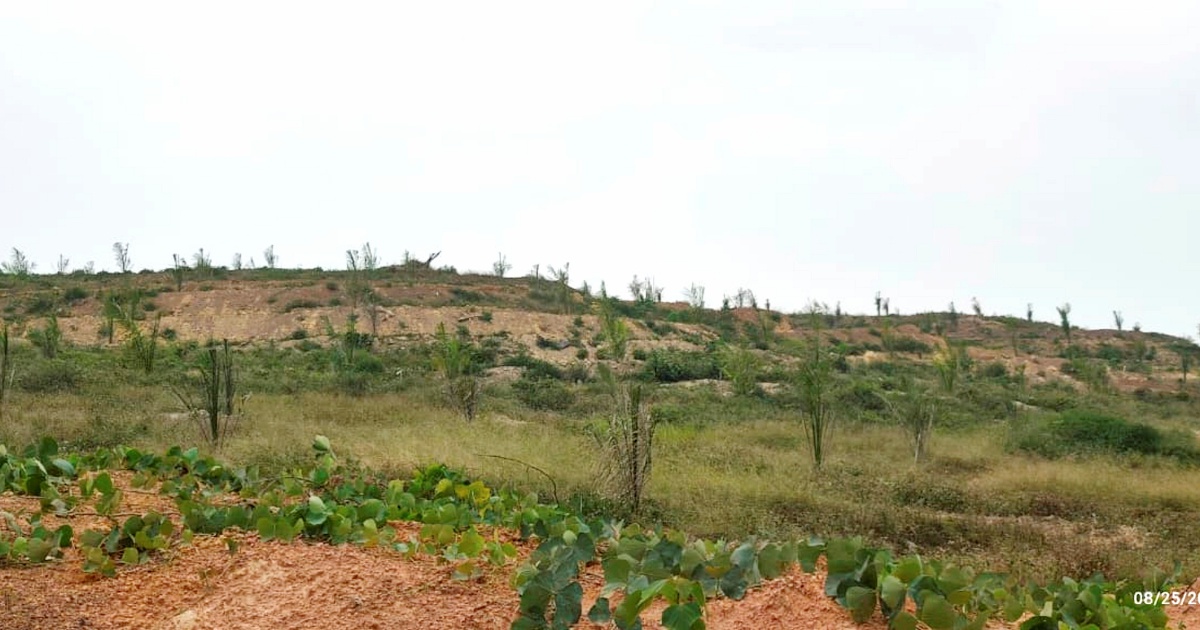
Settlers at Felda Palong 7 in Jempol have formally reported the supply of substandard and non-uniform oil palm seedlings to the Malaysian Anti-Corruption Commission, marking an escalation in long-standing grievances about agricultural inputs affecting the productivity and viability of smallholder farming operations across the settlement.
The complaint underscores a critical vulnerability in Malaysia's plantation agriculture infrastructure, where quality assurance at the nursery and distribution stages directly impacts downstream yields and farm profitability. Non-uniform seedlings—those exhibiting significant variations in size, vigour, health status, and genetic quality—create substantial challenges for farmers attempting to establish consistent crop cycles, manage pest and disease pressure uniformly, and optimize harvesting schedules. This inconsistency imposes hidden costs through increased labour requirements, uneven maturation patterns, and variable bunch quality at harvest.
Felda settlements, which house over 112,000 families across Malaysia managing approximately 792,000 hectares of land, occupy a strategic position in the national agricultural economy and palm oil supply chain. Palong 7, located in the Negeri Sembilan heartland, represents one node in this extensive network where quality degradation at the input stage cascades through the entire production system. The decision by Felda Palong 7 residents to engage the MACC rather than rely solely on conventional complaint channels suggests persistent frustration with established redress mechanisms and possible concerns about procurement irregularities.
Oil palm nursery operations in Malaysia involve complex logistics spanning germination, nursery management, hardening-off, and transportation to field sites. Quality control typically involves monitoring disease incidence, ensuring appropriate genetic uniformity, and verifying health certification before supply. The emergence of poor quality and non-uniformity at Palong 7 indicates potential breakdowns at one or multiple points in this supply chain—whether during production, quality inspections, or logistics. Such failures may reflect systemic weaknesses in supplier accountability, inadequate investment in nursery infrastructure, or insufficient monitoring protocols.
The MACC's involvement in what is fundamentally an agricultural quality issue signals that complainants perceive possible corrupt practices influencing procurement decisions or quality certification. This perspective warrants examination: whether substandard materials were supplied at premium prices, whether quality standards were deliberately overlooked to benefit particular suppliers, or whether cost-cutting measures compromised material specifications. Corruption within agricultural supply chains, though sometimes overshadowed by higher-profile investigations, directly undermines farmer incomes and broader sector competitiveness.
For Malaysia's agricultural sector, seedling quality represents a foundational determinant of sector performance. Oil palm cultivation demands 15-20 years of investment before significant returns materialize, making initial planting decisions critically important. Farmers receiving inferior or inconsistent seedlings face either diminished lifetime yields or necessity to replant at substantial additional cost and lost productive years. Across a 112-hectare settlement block, cumulative losses from compromised seedling quality can reach millions of ringgit over a generational horizon.
The complaint also reflects broader governance questions within Felda's organizational structure. The Federal Land Development Authority, established in 1956 to uplift rural Malay-Muslim smallholders, operates within the federal administration yet functions with considerable operational autonomy. When Felda settlers resort to MACC complaints regarding supply chain management, this indicates that internal governance mechanisms—whether Felda field management structures, settler cooperatives, or Felda headquarters oversight—have either failed to address grievances satisfactorily or lack sufficient independence to investigate procurement irregularities impartially.
Regionally, Malaysia's experience with seedling supply quality carries implications for broader Southeast Asian palm oil production. Several regional nations—Indonesia, Thailand, and Papua New Guinea—face similar smallholder organization challenges and agricultural input supply chain vulnerabilities. Malaysian investigations into procurement failures at scale could generate valuable lessons regarding transparent bidding systems, third-party quality verification, and effective farmer grievance mechanisms that peer nations might adopt.
The international palm oil sector increasingly faces sustainability pressures and supply chain accountability demands from major consuming markets in Europe, China, and India. Quality control failures that force farmers into difficult economic circumstances undermine the sector's social legitimacy. Demonstrating that Malaysian institutions, including the MACC, respond decisively to complaints about agricultural input integrity strengthens the sector's credibility in addressing environmental and social concerns.
For Felda Palong 7 residents specifically, the MACC investigation provides formal documentation of grievances and potential investigative mechanisms unavailable through standard agricultural or Felda administrative channels. Should the commission identify misconduct, it may recommend prosecutions, administrative reforms, financial restitution, or supply chain restructuring. Such outcomes would extend beyond merely compensating affected farmers to potentially reforming procurement systems affecting multiple Felda operations.
The complaint also highlights knowledge asymmetries between individual smallholders and large agricultural institutions. Individual farmers typically lack resources to independently verify seedling quality, genetic purity, or health certification before accepting deliveries. This structural vulnerability necessitates robust, trustworthy institutional quality assurance. When such assurance fails, farmers have limited practical recourse except escalation through formal complaint mechanisms.
Moving forward, addressing the Palong 7 complaint will likely require systemic examination of Felda's nursery supply arrangements, quality certification protocols, and the adequacy of farmer consultation in procurement decisions. Whether findings point to corruption, negligence, or systemic capacity gaps, the investigation represents an opportunity to strengthen institutional accountability within Malaysia's agricultural support systems and reinforce farmer confidence in foundational supply chain relationships.

