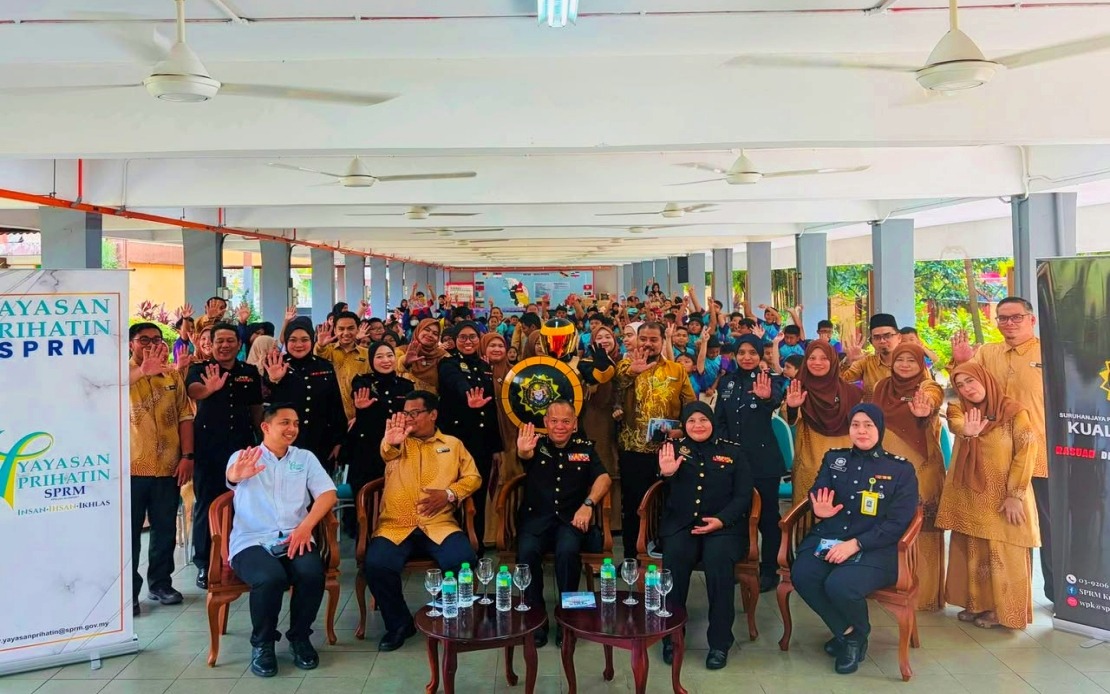
The Malaysian Anti-Corruption Commission's Kuala Lumpur office is intensifying its push to establish anti-corruption culture from the classroom level through the Wira Antirasuah (WAR) initiative, conducted at Sekolah Kebangsaan Jalan Pasar 1 in the capital. This targeted education effort marks a strategic shift toward embedding anti-graft principles in younger citizens before they enter the workforce and public sphere, recognising that foundational values established during formative years significantly influence future conduct and decision-making patterns.
The initiative reflects a deliberate approach by MACC leadership to treat integrity building as a long-term societal investment rather than a reactive enforcement mechanism. Director Mohamad Zakkuan Talib articulated this philosophy during the programme's rollout, positioning early moral education as essential groundwork for developing a generation equipped with the moral backbone necessary to resist systemic corruption. This preventive strategy acknowledges that while enforcement and investigation remain vital, sustainable anti-corruption gains require cultivating ethical citizenship from childhood onward.
Central to the WAR programme's messaging is a redefinition of heroism that resonates with young audiences. Rather than associating ethical conduct with spectacular displays of moral courage, the initiative emphasises that integrity manifests through everyday choices and modest actions. This approach addresses a common disconnect between abstract anti-corruption messaging and the lived reality of pupils, helping them recognise that ethical behaviour encompasses refusing to cheat academically, respecting others' property, maintaining honesty in peer relationships, and honouring commitments made to classmates and teachers. By grounding integrity in relatable scenarios, the programme makes anti-corruption principles tangible and immediately applicable to school life.
The educational design incorporates multiple experiential learning components beyond conventional classroom instruction. Sessions featuring Kaptan MACC, the commission's mascot, provide entertainment value while reinforcing core messages, leveraging the appeal of visual symbolism to maintain pupil engagement. Meanwhile, briefings conducted by MACC's Community Education Branch (PenMas) supply more substantive content, ensuring that interactive activities translate into genuine knowledge acquisition rather than serving purely as novelty diversions. This dual-track approach acknowledges that children absorb information through varied channels and that education efficacy improves when content combines entertainment with substantive instruction.
The establishment of an Anti-Corruption Corner within the school grounds represents a structural innovation, transforming SKJP1 into a permanent hub for integrity-related resources. Rather than delivering isolated awareness campaigns that fade once the programme concludes, this dedicated space provides ongoing access to integrity-related materials for both teaching staff and students. The corner functions as a physical manifestation of institutional commitment to anti-corruption values, signalling to the school community that these principles warrant permanent institutional attention and resources.
Comprehensive support extending beyond purely educational interventions demonstrates MACC's recognition that integrity flourishes within environments meeting fundamental human needs. The Yayasan Prihatin SPRM's donation of smart television technology equips the school with enhanced educational tools that extend beyond anti-corruption content, potentially improving learning outcomes across multiple subjects. Simultaneously, the provision of school aid to 29 pupils from asnaf families addresses economic vulnerabilities that can otherwise drive unethical conduct. This integrated approach acknowledges that desperation and material deprivation frequently undermine ethical decision-making, and that sustainable anti-corruption culture requires attending to basic welfare alongside moral education.
The symbolic integration with national campaigns amplifies the programme's messaging. By coordinating the WAR initiative with Malaysia's Keep Malaysia Clean campaign and aligning activities with National Month celebrations, MACC positions anti-corruption values as integral to national identity and patriotic duty rather than as external impositions. The participation of pupils in special education programmes through hibiscus planting activities ensures inclusive engagement, sending the powerful message that anti-corruption commitments extend across all segments of the school community regardless of abilities or academic performance.
For Malaysia's broader governance landscape, this grassroots approach addresses a persistent challenge: transforming anti-corruption enforcement into cultural transformation. Prosecution of high-profile offenders generates headlines but often leaves underlying systems and individual attitudes intact. By contrast, systematic education of primary school pupils represents an attempt to reshape the ethical foundations from which future decision-makers will emerge. If sustained across multiple schools and year groups, such programmes could theoretically alter Malaysia's corruption trajectory by ensuring successive cohorts of citizens possess stronger internalized resistance to graft.
The initiative also carries implications for Southeast Asian peers confronting similar governance challenges. Malaysia's demonstrated commitment to preventive anti-corruption education through structured programmes may serve as a model for neighbouring nations developing their own institutional approaches. The region has experienced increasing focus on enforcement mechanisms and international cooperation against corruption, yet comprehensive education initiatives remain comparatively sparse. The WAR programme demonstrates that national anti-corruption commissions can extend their mandate beyond investigation and prosecution toward shaping civic culture.
Sustainability represents the critical challenge ahead for the programme's long-term impact. Initial enthusiasm and resource allocation typically accompany programme launches, but maintaining rigorous implementation across years and school cycles requires institutional discipline and sustained funding. MACC's success will ultimately depend on whether WAR evolves into a permanent fixture within Malaysian primary education or remains a periodic initiative dependent on specific champions and budgetary cycles. Schools in Kuala Lumpur and beyond will require continuous technical and material support to embed anti-corruption values effectively.
The MACC's grassroots focus also reflects recognition that corruption persists not through isolated bad actors but through normalised practices often accepted within institutions and communities. By targeting children before such normalisation occurs, the initiative attempts to interrupt the intergenerational transmission of corrupt attitudes. Whether pupils will maintain integrity values amid future pressures toward compromise remains uncertain, yet the investment in early moral education represents a logical prerequisite for any sustainable reduction in Malaysia's corruption burden. The programme ultimately embodies a conviction that nations genuinely committed to eradicating corruption must build that commitment into citizens' foundational values, beginning when those citizens are young enough to be shaped.

