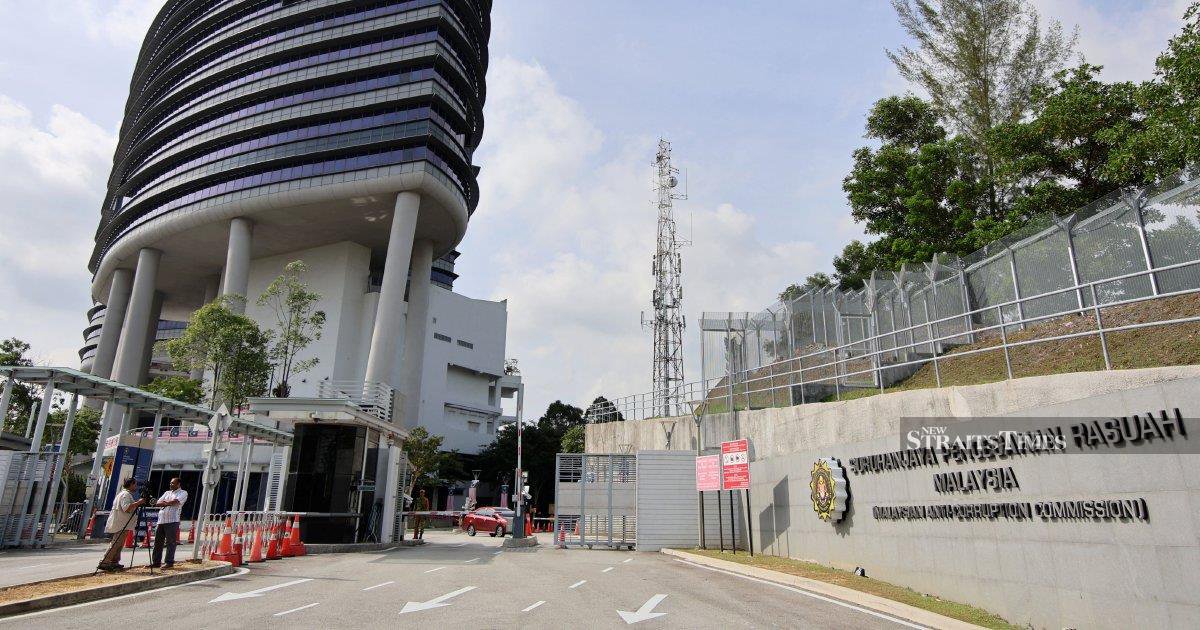
The Malaysian Anti-Corruption Commission (MACC) has mounted a fresh push for enhanced whistleblower protections, appealing directly to the nation's most senior civil servants to treat the safeguarding of informants as a critical governance priority. In communications to ministry secretaries-general and department directors-general, the MACC has framed robust whistleblower frameworks as essential infrastructure for combating corruption while simultaneously lifting Malaysia's performance on the closely watched Corruption Perceptions Index (CPI) by the year 2030.
The timing of MACC's intervention reflects growing recognition that Malaysia's international standing on corruption metrics has stalled, with the country facing intensifying competition from regional neighbours who are taking deliberate steps to strengthen their anti-corruption architecture. The CPI, compiled annually by Transparency International, ranks 180 countries by perceived corruption levels, and Malaysia's position has become a barometer of government effectiveness and investor confidence. A higher ranking is not merely symbolic; it carries tangible consequences for foreign direct investment flows, international trade partnerships, and Malaysia's broader reputation as a stable governance destination in Southeast Asia.
Whistleblower protection mechanisms operate as a critical force multiplier in anti-corruption work. When public servants and private sector employees fear retaliation for exposing wrongdoing, corrupt practitioners operate with virtual impunity, allowing misconduct to fester within institutions. Conversely, robust safeguards that shield informants from dismissal, demotion, harassment, or legal jeopardy create an environment where malfeasance becomes riskier to conceal than to perpetrate. The MACC's emphasis on this principle suggests the commission sees inadequate whistleblower protections as a significant brake on Malaysia's ability to detect, investigate, and prosecute corruption cases.
The appeal to Malaysia's topmost bureaucratic leadership carries strategic weight. Secretaries-general and directors-general control resource allocation, personnel management, and institutional culture within their respective domains. Their buy-in is essential for translating anti-corruption rhetoric into operational reality. If these gatekeepers treat whistleblower protection as peripheral rather than foundational, protective frameworks remain symbolic gestures rather than functioning systems. By directing its plea to these figures, MACC is attempting to secure institutional commitment at the level where it shapes daily practice and resource prioritization.
Malaysia's existing whistleblower architecture includes provisions under the Whistleblower Protection Act 2010 and various internal government protocols, yet practitioners and observers frequently note implementation gaps. Rules on paper do not automatically translate into protected practice when organizational cultures remain hostile to those who report misconduct, when confidentiality is breached, or when informal penalties—such as social ostracism or career stagnation—persist despite formal legal protections. The MACC's intervention suggests frustration with these persistent implementation deficits and an intention to drive cultural and procedural change.
Regional context heightens the urgency of MACC's appeal. Singapore, widely regarded as the region's anti-corruption exemplar, has invested substantially in whistleblower infrastructure and consistently ranks higher on the CPI than Malaysia. Thailand's recent anti-corruption initiatives, despite domestic political volatility, have begun showing measurable effects on international perceptions. Indonesia's anti-corruption commission, while facing its own institutional pressures, has developed sophisticated whistleblower management protocols. For Malaysia to differentiate itself competitively and arrest any perception of backsliding, demonstrable improvements in whistleblower protection are increasingly viewed as non-negotiable.
The 2030 target date embedded in MACC's appeal warrants attention. This horizon provides a decade-long window for incremental reform, yet it also creates accountability markers. If Malaysia's CPI ranking stagnates or deteriorates by 2030, the failure will be attributable in part to whether government institutions heeded MACC's current guidance. Conversely, measurable improvement would validate the anti-corruption strategy and reinforce the credibility of Malaysia's reform narrative internationally.
Implementing effective whistleblower protections entails multifaceted work: establishing clear channels for confidential reporting, guaranteeing investigation independence, shielding informants' identities, prohibiting reprisal mechanisms both formal and informal, and cultivating institutional cultures where raising concerns is valorized rather than penalized. Training programmes for supervisory staff, transparency about investigation outcomes, and periodic audits of implementation fidelity are all components of mature systems. Malaysia's civil service, comprising hundreds of thousands of employees across dozens of agencies, would need coordinated effort to embed these practices systemically.
The private sector angle also merits consideration. While MACC's directive targets government agencies, multinational corporations and large local firms operating in Malaysia increasingly face pressure from international audit standards, investment criteria, and supply chain governance requirements to maintain robust whistleblower channels. Malaysia's ability to compete for high-value foreign investment partly depends on demonstrating that the broader institutional ecosystem—not merely government—takes financial integrity seriously. MACC's appeal, if heeded by civil service leaders, could catalyze a broader private sector response by establishing normative expectations about whistleblower protection.
Critical observers have long noted that anti-corruption rankings, while imperfect, do shape international behaviour and capital flows. A country perceived as corrupt faces higher borrowing costs, lower investment valuations, and reduced access to premium partnerships. For Malaysia, a middle-income nation competing for sophisticated manufacturing and financial services activities, these dynamics matter substantially. Improving the CPI ranking is thus not merely an exercise in international prestige-building; it reflects material economic interests.
The MACC's call will ultimately succeed or fail based on implementation fidelity across Malaysia's sprawling civil service apparatus. Secretaries-general and directors-general now possess explicit guidance on what the anti-corruption authority views as priority. Whether they allocate resources, restructure processes, and reshape organizational cultures accordingly remains the critical variable. The trajectory of Malaysia's CPI ranking through 2030 will largely reflect the decisions made in response to this intervention.

