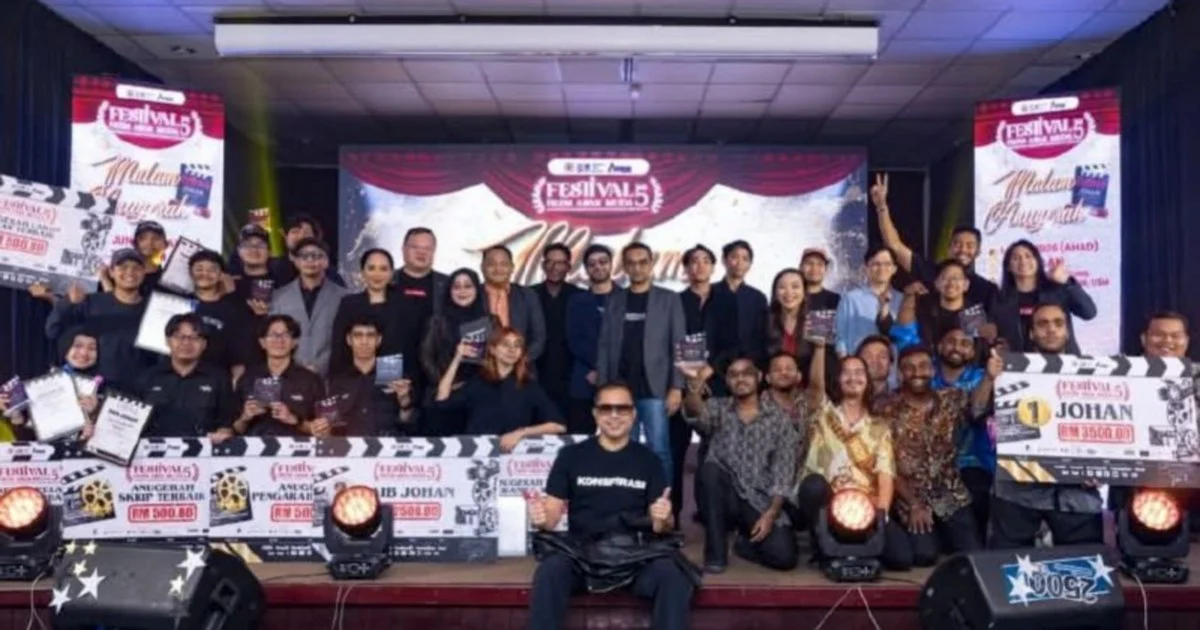
The Malaysian Anti-Corruption Commission (MACC) is deepening its engagement with younger generations by harnessing the medium of film to communicate its anti-corruption message at the 5th Youth Film Festival, held at Universiti Sains Malaysia (USM) in Penang. This strategic partnership represents a shift towards deploying cultural and artistic platforms as tools for institutional accountability and social change, reflecting broader trends in how government agencies now approach public education in the digital age.
For Malaysia, where public trust in institutions remains a persistent challenge and youth voter participation continues to fluctuate, this initiative carries significant implications. Young people today are more likely to engage with social and political issues through creative media rather than traditional lectures or policy documents. The MACC's decision to participate in a youth-focused film festival suggests an acknowledgment that conventional anti-corruption messaging may not resonate effectively with audiences aged 18 to 35, who increasingly consume information through digital and entertainment channels.
The festival provides a natural venue for showcasing narratives that centre on integrity, ethical conduct, and the tangible consequences of corruption within Malaysian society. Films selected for such platforms can depict real-world scenarios—from workplace misconduct to institutional failures—in ways that feel immediately relatable to viewers. This narrative-driven approach often proves more persuasive than abstract principles or statistical evidence, as audiences develop emotional investment in characters facing moral dilemmas.
For Universiti Sains Malaysia, hosting this collaboration underscores the institution's role as more than an academic hub; it becomes a space where civil society, government bodies, and the creative community converge to address pressing social issues. Universities across Southeast Asia have increasingly positioned themselves as platforms for cultural discourse, and this particular festival aligns with that broader institutional evolution. The presence of MACC at such an event also legitimises film-making and storytelling as serious instruments for social policy rather than mere entertainment.
The timing of this initiative is noteworthy. Malaysia has experienced high-profile corruption cases in recent years, including the ongoing legal proceedings related to 1Malaysia Development Berhad (1MDB) and other scandals that have dominated public discourse. In this context, preventive measures targeting youth become strategically important—establishing ethical foundations early may reduce future instances of corruption as today's students transition into civil servants, business leaders, and policymakers. An educated cohort of young adults with ingrained anti-corruption values represents a form of institutional insurance against future systemic failures.
The creative arts offer a particular advantage in this pedagogical endeavour. Unlike regulatory frameworks or enforcement mechanisms, which operate through penalty and deterrence, artistic works can explore the psychological and moral dimensions of corruption. A film might depict not just the act of bribery but its ripple effects on families, communities, and national development. This holistic portrayal helps audiences understand corruption not as an abstract legal violation but as a breach of social trust with measurable human costs.
Regionally, the approach is gaining traction. Other Southeast Asian nations have similarly begun integrating anti-corruption messaging into cultural programming, recognising that transparency and integrity require sustained public engagement beyond government press releases. Malaysia's initiative at USM may serve as a model for peer countries seeking to build institutional credibility among youth, particularly in societies where scepticism towards official narratives runs deep.
The festival's youth-centric focus also matters strategically. Young people who develop critical thinking about corruption early—who learn to recognise red flags and understand systemic vulnerabilities—may become citizens more capable of holding institutions accountable. They represent the demographic most likely to utilise social media and online platforms to expose misconduct or demand accountability from public officials. In that sense, the MACC's investment in film-based education doubles as an investment in future civic participation.
Partnering with a university rather than relying solely on MACC's own communications infrastructure also distributes credibility. USM's academic standing and independence lend weight to the initiative, ensuring it is perceived as an educational endeavour rather than propaganda. This approach acknowledges that messages about integrity carry greater weight when they appear to emerge from trusted institutions with no obvious political agenda.
The 5th Youth Film Festival at Universiti Sains Malaysia therefore represents more than a one-off awareness campaign. It signals a recognition that combating corruption requires cultural as much as legal intervention, and that reaching young Malaysians effectively demands engagement on their own terms—through stories, aesthetics, and emotional resonance rather than top-down directives. As Malaysia continues navigating institutional reforms and rebuilding public confidence, initiatives that embed anti-corruption values into the cultural fabric may ultimately prove as significant as legislative amendments or enforcement actions.
Looking ahead, the success of this collaboration may determine whether similar film-based initiatives become regular features of anti-corruption strategy in Malaysia and across the region. If the festival generates substantive discussion, produces compelling films about integrity, and measurably shifts attitudes among participating students, it could inspire broader institutional adoption of creative media as a policy tool. Such an outcome would reflect a maturation of how Southeast Asian governments approach accountability—not as an enforcement problem alone, but as a cultural challenge requiring imaginative solutions.