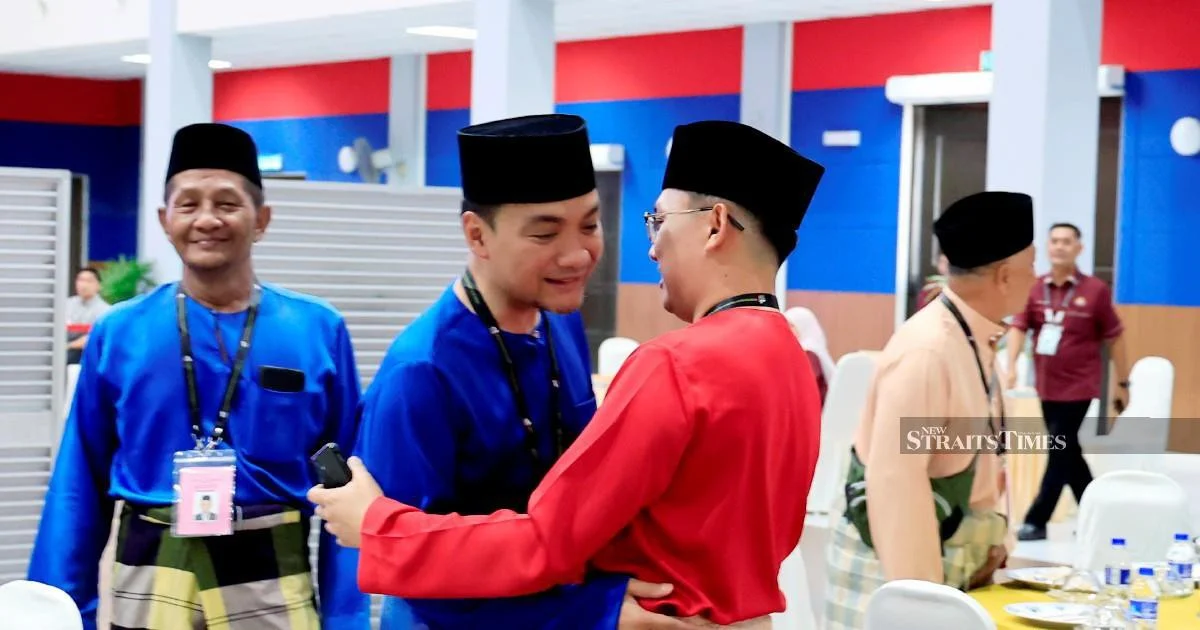
The Machap constituency in Johor's southern heartland is set for a direct contest between two rival coalitions, crystallising what observers view as a pivotal clash in the upcoming state election. Caretaker Menteri Besar Datuk Onn Hafiz Ghazi, representing Barisan Nasional, will defend his parliamentary seat against Pakatan Harapan's candidate Nur Hafiz in what appears to be the focal point of the campaign for state leadership. The absence of a third major contender transforms Machap into a binary choice for voters, lending the seat outsized significance beyond its immediate constituency boundaries.
Onn Hafiz's position as caretaker Menteri Besar elevates the symbolic weight of his personal electoral outcome. As the sitting chief minister of Johor, his victory or defeat will serve as a barometer for the broader state-level sentiment, influencing how observers interpret the election's overall direction. The state's political establishment has historically revolved around personalities and local power bases, meaning a contest for the state's top administrator carries implications that ripple across Johor's governance and coalition dynamics. Should Onn Hafiz lose his own seat, it would represent a stunning reversal regardless of overall state election results, undermining his legitimacy in any subsequent coalition negotiations.
Pakatan Harapan's decision to field Nur Hafiz demonstrates the opposition alliance's strategic focus on contesting seats they believe are winnable rather than spreading resources thinly across constituencies. This concentrated approach suggests confidence in Nur Hafiz's viability as a challenger or a genuine opportunity to dislodge a vulnerable incumbent. The choice also reflects broader calculations about which constituencies represent PH's best prospects in a Johor election where voter sentiment has historically favoured Barisan Nasional's established machinery and support networks.
The straight fight format eliminates the unpredictability introduced by spoiler candidates or multi-way contests. Voters in Machap will face a clear choice between continuity under Barisan Nasional's stewardship versus a potential change of direction under Pakatan Harapan's alternative vision. This clarity can paradoxically increase the stakes, as swing voters cannot default to middle-ground alternatives. Local observers note that such binary contests tend to produce higher turnout, as both coalitions mobilise supporters more aggressively when the winner-takes-all logic becomes transparent.
For Barisan Nasional, retaining Machap remains critical to maintaining control over Johor's state legislature. The coalition's dominance in the state has traditionally depended on delivering solid victories in seats like Machap, which benefit from strong ground organisation and patron-client networks built over decades. Any slip in traditionally secure constituencies signals erosion in the party machinery that could cascade through other contests. Conversely, Pakatan Harapan's challenge represents an attempt to crack what has historically been fortress territory, testing whether recent shifts in urban and suburban sentiment extend into constituencies like Machap.
The confirmation of a straight fight also settles uncertainty that might have persisted had multiple candidates competed. Campaign strategies can now crystallise around direct comparison of the two contenders' records and visions. Both Onn Hafiz and Nur Hafiz will face intensified scrutiny regarding their qualifications, policy platforms, and suitability for elevated positions. This heightened accountability reflects the no-escape-route nature of a two-candidate contest where local issues cannot be obscured by national narratives or third-party noise.
Machap's constituency profile matters considerably for understanding this contest's dynamics. The seat encompasses both urban and rural populations with varying economic interests and political sensibilities. Recent demographic shifts in Johor have seen younger, better-educated voters increasingly questioning Barisan Nasional's dominance, while older and traditional rural constituencies maintain historical loyalty to the ruling coalition. Onn Hafiz must navigate these contrasting constituencies while Nur Hafiz seeks to consolidate PH's advantage among newer and more volatile voter segments.
The timing of Machap's confirmation comes as campaigns across Johor enter their decisive phase. Election calendars and nomination procedures create momentum that parties capitalise on through intensive ground operations, media saturation, and leadership visits. A straight fight permits both campaigns to concentrate resources on a single rival rather than dispersing efforts across multiple opponents. This efficiency translates into more aggressive campaigning, sharper messaging, and potentially higher-impact ground mobilisation that will influence not just Machap's outcome but set the tone for surrounding constituencies.
Regionally, the Machap contest holds implications beyond Johor's borders. Johor remains Malaysia's second-most-populous state, and its political direction carries symbolic weight for opposition movements across the peninsula and across the South China Sea. A Barisan Nasional victory would underline the coalition's continued capacity to retain control in economically significant states, while a Pakatan Harapan upset would suggest that electoral volatility transcends the peninsula's more predictable metropolitan centres. Political observers in Kuala Lumpur, Penang, and beyond will scrutinise Machap's result as one indicator of whether opposition momentum can penetrate traditionally conservative eastern Johor.

