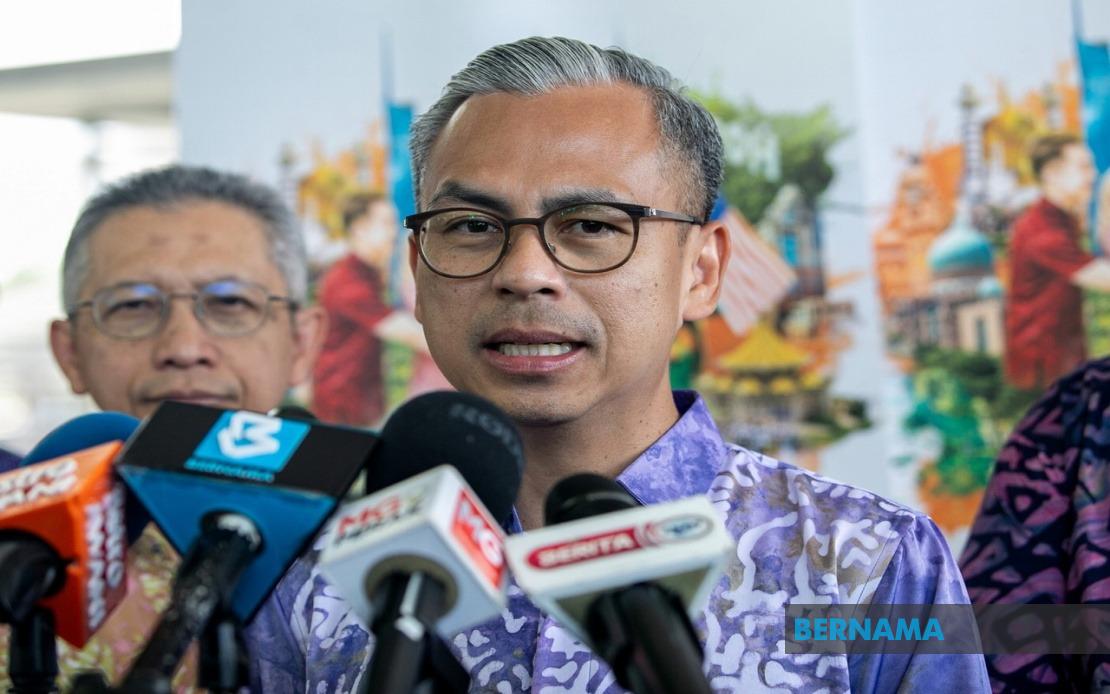
The government has unveiled its central message for next year's National Day and Malaysia Day festivities, positioning shared prosperity at the heart of the nation's development narrative. Announced at an event in Ipoh on July 19, the 'Malaysia MADANI: Kesejahteraan Dinikmati' (Malaysia MADANI: Shared Prosperity) theme encapsulates what Communications Minister Datuk Seri Fahmi Fadzil described as a fundamental commitment—that Malaysia's progress must be experienced by all citizens, not concentrated among the privileged few. Prime Minister Datuk Seri Anwar Ibrahim officially launched the 2026 National Month and Fly the Jalur Gemilang campaign at the Sultan Azlan Shah Ministry of Health Training Institute in Tanjung Rambutan, signalling the government's determination to embed this philosophy across the nation's major civic celebrations.
Fahmi's articulation of the theme extended beyond surface-level economic metrics, instead framing shared prosperity as a comprehensive vision spanning multiple dimensions of national life. The concept encompasses not merely GDP growth or aggregate wealth creation, but rather tangible improvements in living standards, genuine equality of opportunity and mechanisms ensuring that developmental gains distribute fairly across society's strata. This broader interpretation suggests the government recognises that prosperity measured solely in economic aggregates can mask persistent inequality and regional disparities that characterise middle-income economies. By emphasising equitable distribution alongside growth, the administration signals acknowledgement of demographic and geographic tensions that have periodically strained social cohesion.
The inclusivity principle underpinning the theme carries particular resonance for Malaysia's multiethnic, multireligious composition. Fahmi explicitly stated that the government's vision transcends conventional demographic categories—race, religion, region and socioeconomic background should not determine whose fortunes improve as development proceeds. This framing responds to longstanding anxieties within certain communities about whether state resources flow equitably, particularly in regions with mixed populations or areas historically perceived as peripheral to national economic narratives. By making explicit commitment to leaving no one behind, the administration stakes considerable political capital on demonstrating tangible delivery of inclusive development policies.
The 2026 celebrations will incorporate several constituent campaigns designed to operationalise this philosophy at grassroots level. The 'One House, One Jalur Gemilang' initiative aims to deepen patriotic sentiment through visible symbols of national identity, while the Kembara Merdeka Jalur Gemilang convoy programme appears designed to physically traverse the country, extending festivities beyond urban centres and symbolically affirming the nation's geographic unity. Such programmes historically serve dual purposes—fostering genuine patriotic sentiment while simultaneously providing platforms for government messaging about national priorities and achievements. The convoy's movement through diverse regions potentially carries implicit messaging that the administration values and remains connected to communities beyond the capital.
The thematic focus on unity and harmony reflects ongoing policy preoccupations within Malaysia's current political configuration. National Unity Minister Datuk Aaron Ago Dagang's attendance at the launch underscores that shared prosperity messaging interconnects with broader unity objectives. Recent Malaysian political discourse has periodically exhibited tensions around identity, religion and resource distribution, particularly in provincial contexts. By coupling prosperity messaging with explicit unity language, the government positions economic progress as intrinsically dependent upon social cohesion, potentially reframing unity not as a constraint on individual community interests but as prerequisite for collective advancement. This rhetorical strategy may prove influential in building acceptance for policies that emphasise shared benefit over group-specific advantages.
The diversity framework articulated during the launch characterises Malaysia's ethnic and religious pluralism not primarily as a challenge requiring management, but rather as a foundational asset generating historical continuity and contemporary resilience. This positioning diverges from earlier periods when diversity rhetoric occasionally carried undertones of tolerance or accommodation—language suggesting majority magnanimity toward minority populations. Instead, Fahmi's framing presents diversity as the nation's defining characteristic and source of competitive advantage, with all communities positioned as equal architects of national prosperity rather than beneficiaries of majority benevolence. Such reframing carries implications for how Malaysian identity and national narrative develop, potentially supporting stronger integration frameworks while respecting legitimate community particularities.
Implementation of this thematic vision faces practical challenges extending beyond symbolic campaign activities. Ensuring that prosperity distribution genuinely reaches marginalised communities demands substantive policy architecture—taxation systems, fiscal transfers, labour market regulations and regional investment patterns that systematically redirect resources toward disadvantaged populations. The government's capacity to deliver on shared prosperity rhetoric depends upon administrative machinery and political will to implement sometimes contentious redistributive measures. Whether subsequent policy announcements during the national month demonstrations actual commitment to equitable distribution mechanisms or represent largely rhetorical exercises will significantly influence the theme's credibility among sceptical constituencies who have experienced previous prosperity-focused campaigns yielding limited tangible benefit.
The Merdeka 360 portal and Information Department social media platforms designated as primary information sources reflect contemporary governance's engagement with digital communications infrastructure. This approach theoretically expands accessibility and enables real-time updates, though disparities in digital access across socioeconomic and geographic lines mean that some populations may encounter greater friction in obtaining celebration details. For national campaigns emphasising inclusion, such infrastructure choices warrant scrutiny to ensure they don't inadvertently exclude communities with limited digital connectivity or digital literacy—potentially recreating the exclusions the thematic messaging ostensibly opposes.
The timing of the 2026 celebrations occurs within Malaysia's broader development trajectory as it approaches upper-middle-income status and increasingly contemplates structural economic transformations necessary for sustained growth. The shared prosperity theme resonates with this inflection point—as traditional sources of growth exhaust themselves, sustaining development requires broadening participation and ensuring complementary investments across human capital, infrastructure and institutional quality. Nations attempting such transitions have observed that unequal prosperity distribution can generate political instability and growth stagnation as marginalised populations withdraw engagement from collective development projects. Malaysia's thematic emphasis thus reflects both aspirational vision and pragmatic recognition that sustainable prosperity demands inclusive foundations.
The constellation of political figures attending the launch—including Perak Menteri Besar Datuk Seri Saarani Mohamad alongside federal ministers—indicates attempts to coordinate national and subnational messaging around this theme. Federal-state alignment on development philosophy potentially strengthens implementation capacity, though it also requires navigating sometimes divergent provincial priorities and political configurations. The political economy of federalism means that shared prosperity as conceived in Putrajaya may face reinterpretation or selective application at state level depending upon local ruling coalitions' political interests. Whether 2026 celebrations demonstrate genuine federal-state unity around equitable development or showcase persistent centrifugal tensions will itself carry meaning about the nation's actual commitment to shared prosperity principles versus aspirational rhetoric.

