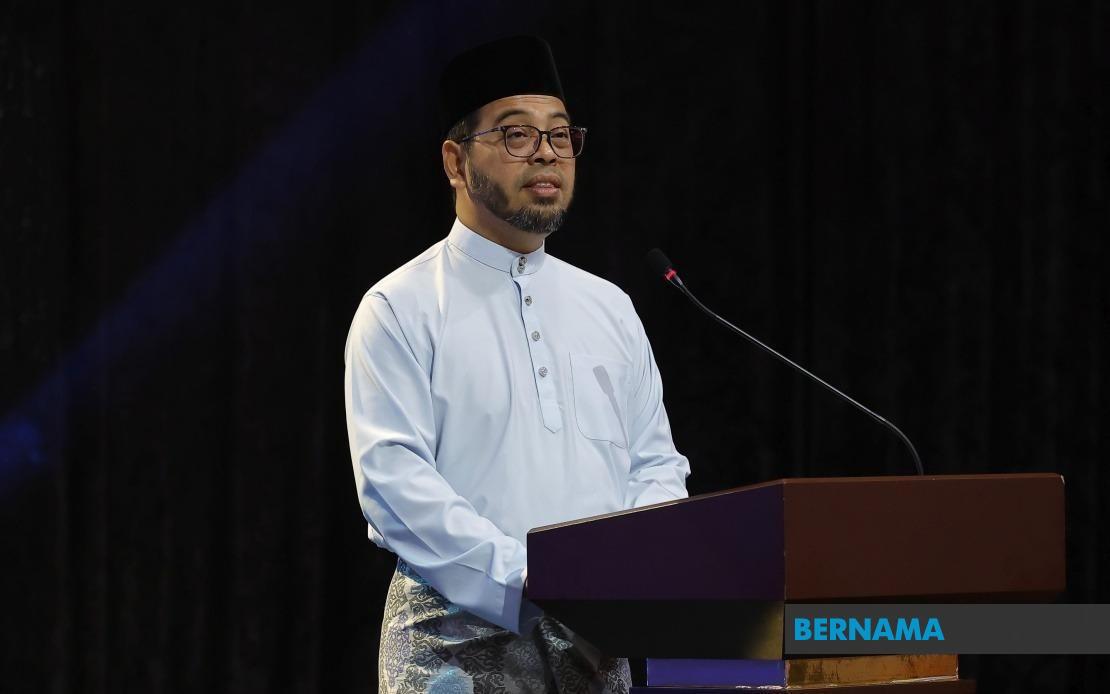
Malaysia's approach to Islamic religious education received renewed emphasis this week when Minister in the Prime Minister's Department (Religious Affairs) Dr Zulkifli Hasan outlined the MADANI Government's strategic vision for tahfiz institutions. Speaking at the 34th convocation ceremony of Darul Quran (DQ) JAKIM in Kuala Lumpur, Zulkifli articulated a framework viewing tahfiz programmes not as isolated religious initiatives but as complementary pillars strengthening the nation's broader educational ecosystem.
The minister's statements signal a deliberate positioning of tahfiz education within Malaysia's wider development narrative. Rather than emphasizing memorization of the Quran as an end goal, Zulkifli underscored the institution's role in cultivating individuals whose grounding in Islamic texts translates into tangible contributions across sectors. This perspective addresses longstanding debates about tahfiz relevance in contemporary Malaysia, where critics have questioned the vocational outcomes and societal integration of graduates specializing purely in Quranic memorization.
Darul Quran's Diamond Jubilee milestone provided the institutional backdrop for this policy articulation. Established in 1966, the institution has operated for six decades as a flagship tahfiz centre under the purview of the Department of Islamic Development Malaysia (JAKIM). The ministry credited DQ with producing 12,633 haffaz—individuals who have memorized the Quran—distributed across education, syariah law, religious outreach, academic research, administrative positions, and professional fields. This diversification of graduate employment reflects deliberate curriculum design and institutional partnerships intended to broaden career pathways beyond traditional religious vocations.
The convocation ceremony demonstrated the scale and structural diversity of tahfiz training in Malaysia. Seven hundred graduates received formal recognition, distributed across multiple qualification levels reflecting the institution's tiered approach to Islamic education. The cohort included 37 graduates earning bachelor's degrees through a collaboration with Universiti Sains Islam Malaysia (USIM), indicating institutional efforts to integrate tahfiz training within higher education frameworks. An additional 454 students completed diploma qualifications in Quranic studies and qiraat—the science of Quranic recitation—demonstrating Malaysia's investment in preserving traditional Islamic scholarship alongside contemporary pedagogical methods.
Beyond these higher-level credentials, DQ certified 204 graduates through specialized tahfiz programmes and five through foundational certificates. This hierarchical structure enables students from varying educational backgrounds and capabilities to access appropriate levels of instruction, a design consideration particularly relevant in Malaysia's diverse socioeconomic context. The availability of entry-level certification pathways potentially widens access to Islamic knowledge institutions traditionally perceived as exclusive or elite.
Zulkifli's emphasis on developing graduates into community leaders and civilizational builders reflects Malaysia's broader aspirations within the Muslim world. The framing positions tahfiz graduates not merely as repositories of religious text but as catalysts for Islamic advancement grounded in Quranic principles. For Malaysian policymakers, this represents an attempt to reconcile religious scholarship with national development priorities—a balancing act particularly salient given ongoing discussions about the integration of Islamic and secular knowledge systems within Malaysian society.
The government's commitment to parallel development of tahfiz and mainstream education carries practical implications for Malaysia's educational administration. Rather than treating religious and secular schooling as competing systems, the MADANI position suggests synchronized strengthening across both domains. This framing may influence resource allocation decisions, curriculum coordination between religious and federal education systems, and the professional recognition accorded to tahfiz graduates in civil service recruitment.
The Diamond Jubilee provided Zulkifli with occasion to articulate aspirational framing for the institution's future. His statement that the 60-year legacy should inspire the next 60 years with greater excellence positioned tahfiz education as an evolving rather than static endeavor. This forward-oriented rhetoric suggests receptiveness to modernizing pedagogical approaches, exploring technological integration in Quranic instruction, or expanding international partnerships—areas where traditional tahfiz institutions have sometimes lagged.
For Malaysia's wider Islamic educational ecosystem, this ministerial positioning carries significance. Private tahfiz institutions proliferated across Malaysia, often operating with minimal regulatory oversight, attracting both domestic and international students. The government's renewed emphasis on strengthening tahfiz education may signal increased attention to quality standards, institutional governance, and graduate outcomes monitoring. Such measures could contribute to elevating the sector's reputation and ensuring consistency with national educational benchmarks.
The JAKIM institution's specific achievements—producing graduates distributed across judiciary, education, research, and administration—demonstrate feasibility of channeling tahfiz graduates into skilled professional roles. This success model may inform policies encouraging private tahfiz institutions to develop similar pathways. Enhanced coordination between tahfiz centres and professional bodies could create clearer career trajectories, potentially increasing enrolment quality and student motivation.
Zulkifli's acknowledgment of institutional leadership and staff commitment reflects political awareness of tahfiz sector morale and recognition requirements. Strengthening these institutions requires not only financial investment but also professional development opportunities, competitive compensation, and public respect for educators who have dedicated careers to Islamic scholarship. Government validation through ministerial attention and institutional recognition may enhance recruitment and retention of qualified instructors—a persistent challenge affecting educational quality.
The broader context informing this policy emphasis involves Malaysia's positioning within regional Islamic leadership frameworks. Southeast Asian nations increasingly view Islamic scholarship and education as components of soft power and civilizational influence. By elevating tahfiz education, Malaysia signals cultural confidence and commitment to preserving Islamic intellectual traditions—a narrative resonating with portions of the electorate while requiring careful navigation to ensure inclusive national development.
Moving forward, the MADANI Government's stated commitment to tahfiz development requires translation into concrete mechanisms: curriculum standards, graduate tracking systems, professional accreditation, and funding allocations. The convocation's celebration of 700 graduates and six decades of institutional continuity provides encouraging foundation, yet sustained excellence demands ongoing strategic investment and adaptive institutional evolution responding to contemporary Malaysian aspirations and regional educational dynamics.

