The MADANI administration is intensifying its grassroots engagement strategy by maintaining momentum on Ziarah Kasih, a targeted assistance initiative designed to reach vulnerable population segments across the country. Officials have signalled that the programme represents a cornerstone of the government's people-centric approach, moving beyond conventional welfare mechanisms to establish direct, personalised support networks within communities. The initiative reflects broader policy ambitions to translate the Malaysia MADANI vision—which emphasises citizen prosperity and collective well-being—into tangible benefits for those facing economic hardship and health challenges.
Abdullah Izhar Mohamed Yusof, political secretary to the Communications Minister, outlined the programme's operational framework during a community engagement event in Mersing. The identification process leverages coordination between the Department of Information and Komuniti MADANI, a grassroots network designed to maintain closer government-citizen connections. This identification mechanism attempts to address a persistent governance challenge across Southeast Asia: ensuring welfare reaches intended beneficiaries efficiently and without bureaucratic friction. By delegating recipient identification to local community structures rather than relying solely on formal application procedures, the scheme potentially captures vulnerable groups who may lack awareness of or access to traditional welfare channels.
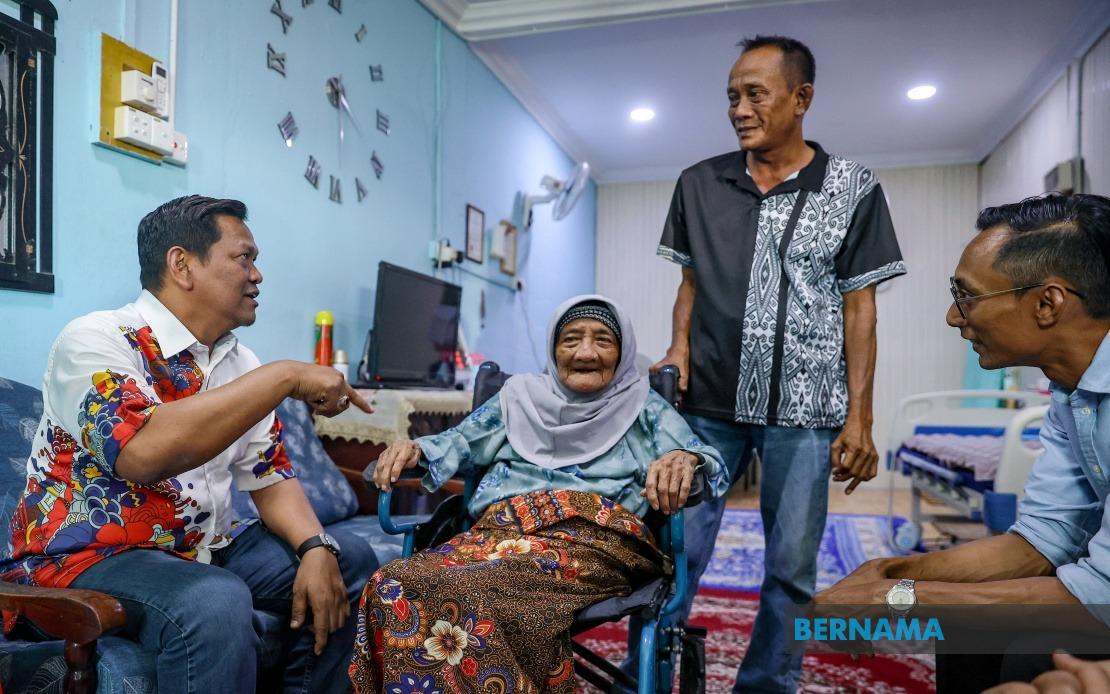
The Mersing visit, part of the Jiwa@Komuniti MADANI Sembang Santai World Cup Edition programme, showcased the initiative's practical implementation. Abdullah Izhar presented direct cash contributions and healthcare equipment to elderly residents, demonstrating an approach that combines monetary relief with material provision tailored to specific needs. This dual-track support recognises that poverty among the elderly extends beyond income deficiency—access to medical equipment and health services often proves equally critical for maintaining dignity and independence.
One beneficiary, 71-year-old Hamdan Abd Latif, exemplifies the human impact of such targeted assistance. Hamdan has lived as a bedridden patient since suffering a severe stroke following a bathroom fall last year, cared for entirely by his 66-year-old wife, Meriam Abd Wahab. The couple's circumstances encapsulate multiple vulnerability layers: Hamdan's health trajectory began with a catastrophic fishing accident in 2011 that coincided with his retirement, revealing the precarious position of Malaysian workers approaching pension eligibility. Subsequent diagnosis of a brain tumour necessitated surgery, and though tumour treatment succeeded, the underlying injury's neurological consequences progressively deteriorated, culminating in stroke. Meriam's loss of income-generating capacity through sewing work—sacrificed to provide full-time care—has transformed the household into a single-income unit entirely dependent on government pensions and assistance programmes.
The second case study involves 91-year-old Zainon Ibrahim, whose care arrangement differs yet highlights comparable resource constraints. Her son Jamaluddin Ismail abandoned employment approximately two years ago to assume caregiving duties, effectively converting formal sector income into unpaid family labour. His siblings provide supplementary support, yet the family's primary challenge remains meeting daily subsistence needs for an elderly dependent. Jamaluddin's decision to exit the workforce represents an employment cost of elder care that extends beyond individual households to aggregate labour supply and productivity metrics across Malaysian society. Government assistance, while welcomed, fills only a portion of the financial gap created by caregiving requirements.
These cases illuminate broader sociodemographic trends affecting Malaysia's vulnerable populations. The nation's ageing population, accelerating as fertility rates decline and life expectancy extends, creates intensifying demand for elderly care services and support systems. Many Malaysian families lack institutional alternatives to home-based caregiving, whether through cultural preference or absence of affordable residential care infrastructure. The Ziarah Kasih programme acknowledges this reality by directing resources toward households managing these burdens independently rather than establishing formal care institutions. The approach reflects both pragmatism—institutional expansion would require substantial capital investment—and cultural sensitivity to family-centred care preferences.
The programme's emphasis on regularity and consistency distinguishes it from ad hoc assistance initiatives. By institutionalising periodic visits and support distribution, the MADANI Government attempts to establish predictable, sustainable welfare provision rather than relying on episodic charitable interventions. This represents a philosophically significant reorientation, positioning government as a continuous presence in vulnerable communities rather than an occasional benefactor. For beneficiaries like Hamdan and Zainon, such predictability enables minimal household financial planning, however constrained by poverty, and provides psychological reassurance that basic needs will periodically receive official attention.
The programme's integration with Komuniti MADANI—the government's decentralised community engagement structure—suggests an attempt to weave assistance provision throughout local social fabric. By embedding welfare distribution within broader community-building initiatives, the government potentially strengthens social cohesion alongside material support. The World Cup edition programming in Mersing demonstrates this integration, combining football-themed entertainment with welfare provision to create moments of normalcy and collective participation for vulnerable populations often socially marginalised by poverty and illness.
For Malaysian policymakers, the Ziarah Kasih model offers lessons regarding vulnerable population targeting and resource allocation. As Southeast Asian nations grapple with rapid urbanisation, demographic transition, and erosion of traditional extended-family support systems, mechanisms for identifying and assisting those in crisis become increasingly critical. Malaysia's approach, emphasising community-level identification and personalised support, contrasts with more centralised, eligibility-criteria-based welfare systems that may exclude poor households unaware of application procedures. The success of such grassroots approaches ultimately depends on implementation consistency, community worker training, and ensuring that identification processes remain transparent and equitable rather than subject to patronage or political manipulation.
Looking forward, sustaining Ziarah Kasih requires continued political and budgetary commitment, particularly as Malaysia's vulnerable population likely expands alongside economic pressures and demographic shifts. The programme's perceived success among beneficiaries—evident in expressions of gratitude despite the inadequacy of assistance relative to actual needs—suggests genuine demand for government engagement with marginalised communities. Whether this initiative can scale effectively while maintaining the personalised touch that distinguishes it from impersonal welfare bureaucracies remains an open question, but the MADANI Government's reaffirmed commitment indicates determination to navigate this challenge.