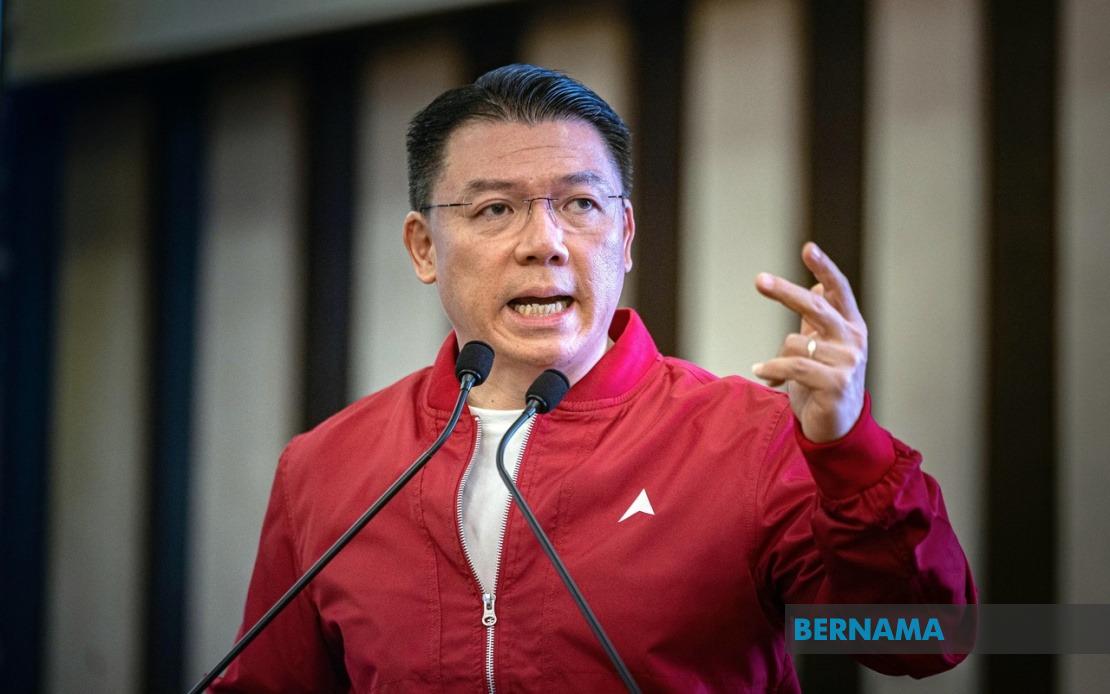
The MADANI Government has positioned Malaysia on a trajectory of accelerated development, particularly in Johor, where unified political administration between federal and state levels is generating tangible benefits for economic growth and public welfare. This assessment comes from DAP deputy chairman Nga Kor Ming, who emphasises that alignment between different tiers of governance creates the conditions necessary for transformative infrastructure and investment initiatives.
The synergy between Federal and Johor state governments operates as a multiplier effect for development outcomes. When both administrative levels share common strategic objectives and operate under the same political coalition, bureaucratic bottlenecks diminish and implementation timelines compress. Nga points to this collaborative framework as the foundation enabling development blueprints, major infrastructure undertakings, and community-focused programmes to move from planning stages into tangible realisation with greater speed and effectiveness. For residents and businesses in Johor, this translates into more responsive governance and accelerated project delivery that directly improves quality of life and commercial opportunity.
Johor's investment landscape has benefited substantially from this coordinated approach. The Malaysian Investment Development Authority recorded RM110 billion in fresh investment commitments flowing into the state during the previous year, a testament to investor confidence in both the state's fundamentals and the stable political environment fostering business certainty. This injection of capital stimulates job creation across multiple sectors and strengthens the local economy's resilience against external shocks. Enhanced coordination between federal and state authorities promises to deepen this momentum further, positioning Johor as an increasingly competitive destination within the regional investment hierarchy.
As Housing and Local Government Minister, Nga articulates how stable governance relationships directly correlate with investor appetite and employment generation. When foreign and domestic investors perceive consistent policy frameworks and reliable regulatory implementation, capital allocation decisions shift towards committed, long-term investments rather than tentative market testing. For Johor specifically, this stability translates into sustained employment pathways for communities and diversified economic foundations less vulnerable to cyclical downturns. The minister underscores that prosperity depends fundamentally on maintaining this political and administrative coherence.
Malaysia's broader investment performance validates this strategic framework. The nation attracted RM426.7 billion in foreign direct investment during 2025, positioning it prominently within the regional hierarchy of capital-recipient economies. This achievement reflects international market confidence in Malaysia's policy clarity, economic fundamentals, and political stability—factors that trickle down to benefit states like Johor competing for their own investment share. The country's transparent regulatory environment and established track record in honouring commitments create the foundation upon which such substantial capital flows depend.
Trade dynamism reinforces Malaysia's economic narrative under the MADANI administration. Despite persistent global economic uncertainties and geopolitical tensions affecting supply chains worldwide, Malaysia maintained a trade volume of RM3.1 trillion in 2025. This performance reveals the robustness of Malaysia's diversified trading relationships and the competitiveness of its manufacturing and services sectors. For Johor—a state with substantial port infrastructure and manufacturing capacity—this national trade strength creates abundant commercial opportunities and supply-chain positioning advantages that amplify local economic dynamism.
Governance quality metrics increasingly influence international investment decisions and risk assessments. Malaysia's improvement in the Corruption Perceptions Index, ascending from 67th to 54th place globally, signals to international investors that institutional integrity and transparent administration are strengthening. This improvement carries particular significance for multinational corporations establishing regional headquarters or significant operational bases, as institutional reliability and reduced corruption risk factor heavily into location decisions. Johor, as a major investment hub, benefits directly from this elevated governance reputation.
Credit rating enhancements further validate Malaysia's macroeconomic trajectory and institutional credibility. Moody's upgrade of Malaysia's outlook to A3 stable reflects international confidence in the country's fiscal management, debt sustainability, and economic trajectory. Such ratings influence borrowing costs for both government and private enterprise, with lower risk premiums enabling cheaper capital access. For Johor's developmental ambitions—whether infrastructure expansion, industrial park development, or urban renewal—this improved ratings environment reduces financing constraints and enables more aggressive capital investment programmes.
Energy security represents an underappreciated dimension of Johor's developmental prospects. Strategic partnerships with Turkmenistan valued at RM52.73 billion and long-term energy cooperation with Russia establishing 20-year supply certainty address one of Southeast Asia's critical vulnerabilities. Johor's energy-intensive manufacturing sectors, petrochemical complexes, and port operations depend on reliable, affordable energy supplies. These agreements insulate the state from energy price volatility and supply disruption risks that could otherwise undermine industrial competitiveness and operational certainty. The geopolitical dimensions of these partnerships also reflect Malaysia's successful navigation of complex international relationships, strengthening the nation's diplomatic positioning and regional influence.
The MADANI Government's commitment extends beyond rhetorical statements into sustained resource allocation and policy prioritisation. Continued investment in Johor's infrastructure, coupled with enhanced quality in public service delivery and explicit population-centred policy orientations, reflects institutional commitment to material improvement in living standards. This represents a conscious governmental choice to channel resources towards public welfare rather than extractive or elite-benefiting arrangements. For ordinary Johoreans, such commitments translate into improved educational facilities, healthcare infrastructure, transportation networks, and economic opportunity structures.
Political stability, policy consistency, and intergovernmental collaboration function as prerequisites rather than optional enhancements for sustainable prosperity. These elements create the predictability and certainty upon which investor decisions rest and around which long-term economic planning occurs. Without them, even resource-rich jurisdictions struggle to convert potential into realised development. Johor's advantageous geographic position, existing infrastructure, and human capital can only be optimally deployed within frameworks of political coherence and administrative competence. The current alignment between federal and state governance therefore represents not merely a political convenience but a functional necessity for unlocking the state's substantial development potential.

