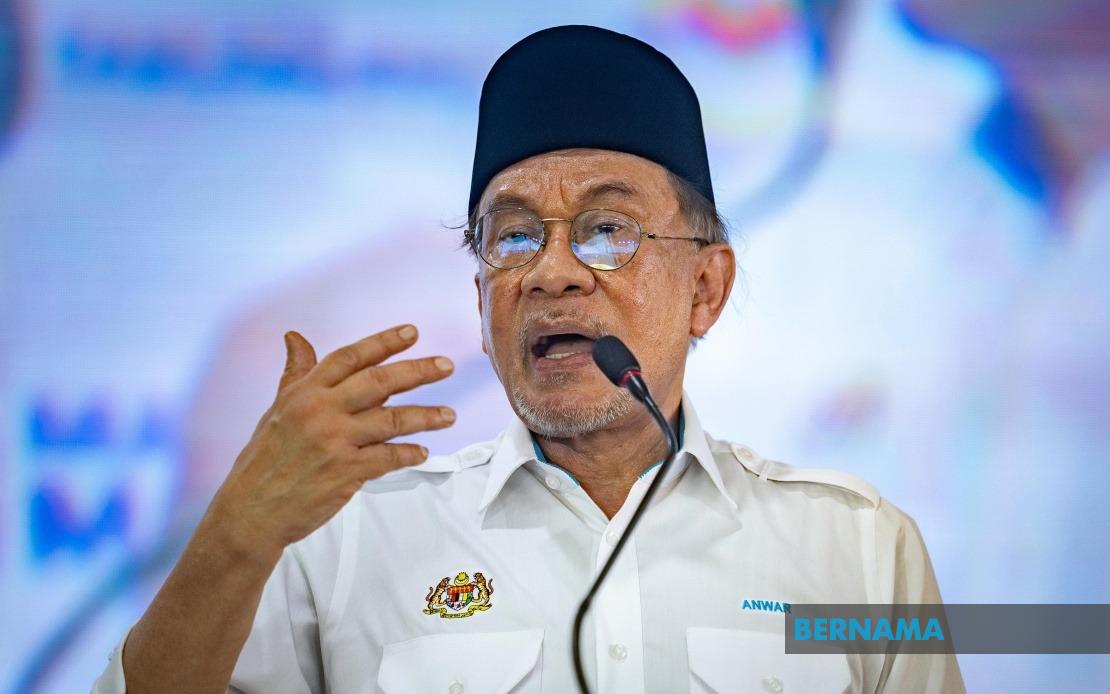
Prime Minister Datuk Seri Anwar Ibrahim has committed the MADANI Government to a sustained programme of enhancement and development for religious schools and pondok institutions across the country, marking a significant policy pledge on the state of Islamic education in Malaysia. Speaking at the 2026 Perak Pondok and Religious Schools Gathering in Ipoh on July 19, Anwar underscored the administration's determination to ensure these traditional centres of learning remain vibrant and relevant in an increasingly digital world.
The Prime Minister acknowledged the historical role pondok schools have played in providing foundational education to Muslim communities, particularly in rural and underserved areas where access to conventional schooling remains limited. However, he identified a critical juncture in their evolution: these institutions had struggled to maintain educational relevance when rapid societal transformation accelerated and they lacked capacity to equip students with knowledge spanning disciplines beyond classical Islamic studies and traditional subjects.
Anwar expressed particular admiration for the commitment of religious scholars, pondok school leaders, and tok guru who have navigated this challenging transition. He praised their efforts to preserve Islamic traditions and the study of classical religious texts while simultaneously demonstrating willingness to embrace contemporary fields of learning. This dual commitment represents a philosophical shift that could reshape how traditional Islamic education positions itself within Malaysia's broader knowledge economy.
The integration of modern technology and artificial intelligence into pondok school curricula represents perhaps the most significant aspect of this initiative. By equipping students at these institutions with skills in computer technology and AI, the government aims to bridge a persistent educational divide that has historically left graduates of religious schools at a disadvantage in employment markets increasingly dominated by digital skills requirements. This approach attempts to reconcile two seemingly competing educational philosophies: preserving authentic Islamic learning whilst simultaneously preparing students for economic participation in the twenty-first century.
Anwar extended formal gratitude to the Malaysia Digital Economy Corporation and the Implementation Coordination Unit within the Prime Minister's Department for their collaborative efforts in supporting upgrades to religious schools. These partnerships suggest a whole-of-government approach to modernising Islamic educational infrastructure, rather than treating religious schools as a separate or subsidiary component of the education system. Such coordination potentially indicates that digital transformation of pondok schools enjoys elevated policy priority within the MADANI administration.
The Prime Minister made an explicit commitment conditional on maintaining economic stability and continued governmental health, stating that the administration would work to enhance and upgrade religious schools and pondok institutions throughout Malaysia. This caveat, whilst rhetorically modest, acknowledges the fiscal realities underlying educational development—sustained investment requires sustained economic conditions. It also reflects the careful political positioning required when pledging resources for religious education in a multi-confessional democracy.
Anwar referenced his conversations with Sheikh Wazir Che Awang Al-Makki, a respected religious scholar from Kelantan, to lend credibility to the government's commitment to Islamic educators and leaders. This personal touch signals engagement with traditional Islamic authority structures and recognition that meaningful reform of pondok schools requires buy-in from established religious communities and scholars rather than top-down implementation.
The gathering itself brought together significant figures in Perak's governance structure, with Menteri Besar Datuk Seri Saarani Mohamad in attendance alongside Minister in the Prime Minister's Department (Religious Affairs) Dr Zulkifli Hasan and Chief Secretary to the Government Tan Sri Shamsul Azri Abu Bakar. The presence of these officials underscores the institutional weight the government has placed behind this educational initiative.
For Malaysia's broader educational landscape, this policy direction carries substantial implications. Religious schools have historically functioned as important repositories of Islamic knowledge and community anchors, particularly in states like Kelantan and Terengganu where pondok education maintains deep cultural significance. Modernising these institutions without diluting their religious character remains a delicate balancing act that will test the government's commitment to both educational innovation and religious authenticity.
The initiative also addresses a longstanding tension within Malaysia's education system: how to accommodate religious learning within frameworks increasingly oriented toward STEM fields and digital literacy. By positioning pondok schools as institutions capable of delivering both religious and technological education, the MADANI Government attempts to overcome a false binary that has marginalised traditional Islamic schooling from economic opportunity pathways.
Regionally, Malaysia's approach to integrating technology with religious education could offer lessons for other Southeast Asian nations grappling with similar questions about preserving Islamic tradition whilst preparing students for knowledge economies. The success or failure of this initiative will likely influence educational policy discussions across the region's Muslim-majority nations.
Looking forward, the practical realisation of these commitments will depend on securing adequate funding, training educators in both religious and technological disciplines, and developing curricula that genuinely synthesise rather than merely juxtapose traditional and modern learning. The stakes extend beyond educational outcomes to encompass questions of cultural preservation, economic mobility, and Malaysia's ability to maintain social cohesion whilst modernising traditional institutions.

