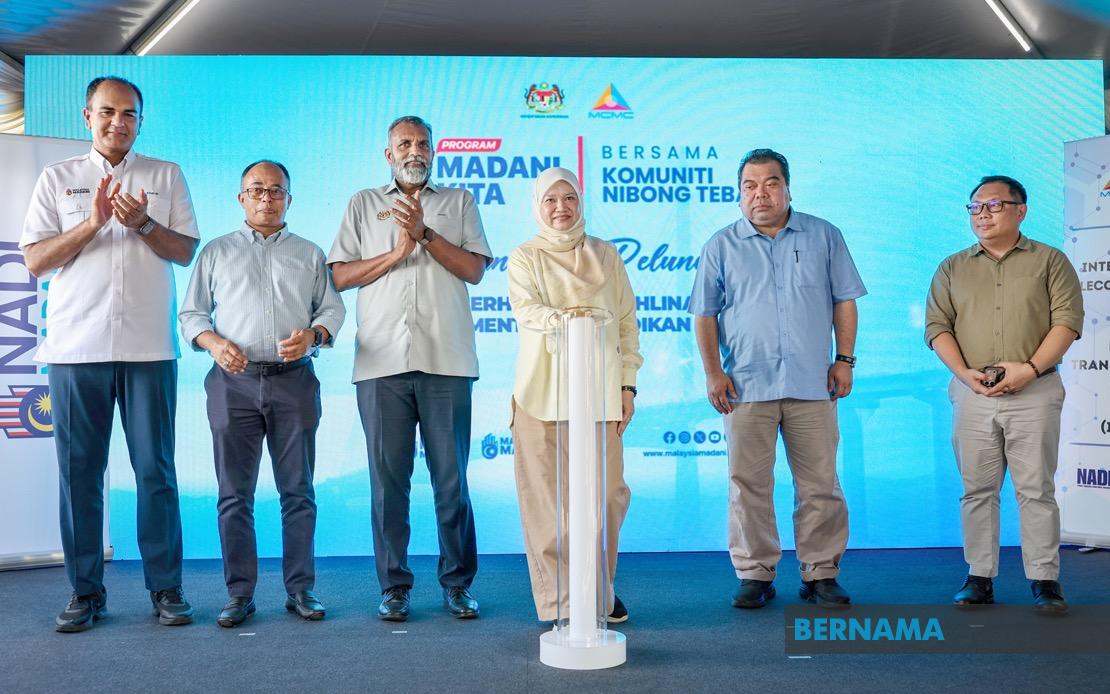
The Malaysian government is intensifying efforts to make public services more accessible through an expanding network of outreach initiatives. The Communications Ministry has now conducted 41 MADANI Kita programmes, positioning these events as a critical bridge between citizens and the state machinery. This initiative represents a shift towards more localised and interactive governance, moving beyond traditional top-down information dissemination to create spaces where Malaysians can directly experience government services and provide real-time feedback.
The latest programme in Nibong Tebal, launched by Education Minister and Member of Parliament Fadhlina Sidek, exemplifies how the government is distributing these engagement platforms across different constituencies. The initiative involves coordination among multiple agencies, including the Community Communications Department, the Malaysian Information Department, and the Malaysian Communications and Multimedia Commission, working through the National Information Dissemination Centre. This inter-agency collaboration suggests a deliberate attempt to consolidate government resources and present a unified front when interacting with the public, reducing bureaucratic fragmentation that often frustrates citizens seeking services.
According to Communications Ministry deputy secretary-general Mano Verabathran, these programmes serve a dual purpose that extends beyond conventional public relations. While citizens certainly gain clearer understanding of government policies and initiatives, the real value lies in allowing them to experience tangible benefits firsthand. This experiential approach acknowledges a growing frustration among Malaysians who feel disconnected from policy announcements that fail to translate into visible improvements in their daily lives. By bringing services directly to communities, the government attempts to demonstrate that its initiatives produce concrete results.
The interactive nature of MADANI Kita programmes creates opportunities for citizens to ask questions, seek clarifications, and voice concerns in real-time rather than through formal channels that often feel distant and impersonal. This direct dialogue mechanism is particularly important in Malaysia's diverse landscape, where different communities face distinct challenges and require tailored explanations of how policies affect them specifically. The programmes essentially function as mobile town halls, bringing decision-makers and service providers into community spaces.
Beyond policy discussion, MADANI Kita programmes incorporate substantial activities designed to appeal to different demographics, particularly younger Malaysians. The integration of technology-focused workshops, educational seminars, and skills development sessions acknowledges that public engagement cannot rely solely on formal government messaging. By packaging civic participation alongside entertainment and talent development activities, organisers create environments where learning about government services feels organic rather than compulsory. The inclusion of e-sports competitions demonstrates sophisticated understanding of how contemporary youth engage with content and communities.
The Permatang Pauh programme, which drew more than 17,000 attendees when held alongside the Penang International Halal Expo during late July, provides concrete evidence of public appetite for these initiatives. The attendance figures suggest that when government programmes align with pre-existing community events and offer varied activities, participation can be substantial. This model of integrating MADANI Kita with established expos and festivals proves more effective than attempting to launch standalone government showcases, which often struggle to attract diverse audiences.
For Malaysian readers and Southeast Asian observers, these programmes reflect a broader regional trend toward what governance experts call "devolved service delivery". Rather than expecting citizens to navigate government offices to understand their entitlements, the state increasingly brings information and services to neighbourhoods and community gathering points. This approach particularly benefits working families, elderly residents, and those with mobility challenges who might otherwise struggle to access centralised government facilities. The model also generates valuable ground-level feedback that can inform policy refinement.
The programmes' emphasis on transparency and direct engagement addresses a persistent challenge for Malaysian governments: building public confidence in institutional integrity. When citizens interact directly with service providers and see how systems operate, they develop more nuanced understanding of government operations and constraints. This familiarity can reduce cynicism born from media-filtered narratives and rumour, replacing abstract perceptions with concrete experience. For governments seeking to restore public trust following periods of institutional controversy, such engagement initiatives offer pragmatic pathways.
The scaling of MADANI Kita to 41 separate programmes indicates serious resource allocation and suggests the government views this as a priority beyond a temporary initiative. Sustaining such a network requires ongoing funding, trained personnel, and coordination across multiple agencies—commitments that typically reflect senior-level political support. For Malaysian constituencies, the expansion signals that such programmes are likely to become regular features of governance, potentially creating predictable opportunities for civic engagement.
Looking forward, the success of MADANI Kita programmes will depend on consistency and genuine responsiveness to feedback collected at these events. Citizens who attend and raise concerns will ultimately judge these initiatives by whether their input produces visible policy adjustments or improved service delivery. If programmes become merely theatrical exercises where government listens but fails to adapt, public enthusiasm will inevitably diminish. The real test lies in demonstrating that direct engagement translates into tangible institutional change.

