Malaysia's horticultural development will reach a significant milestone when a newly cultivated melon variety makes its official debut at the Malaysia Agriculture, Horticulture and Agrotourism Exhibition 2026, which opens tomorrow at the Malaysia Agricultural Expo Park in Serdang. The unveiling marks the culmination of extensive research spanning three years, conducted jointly by the Federal Agricultural Marketing Authority and domestic agricultural entrepreneurs. Minister of Agriculture and Food Security Datuk Seri Mohamad Sabu will preside over the launch ceremony and announce the melon's official designation, cementing its status as the festival's symbolic fruit for this biennial showcase.
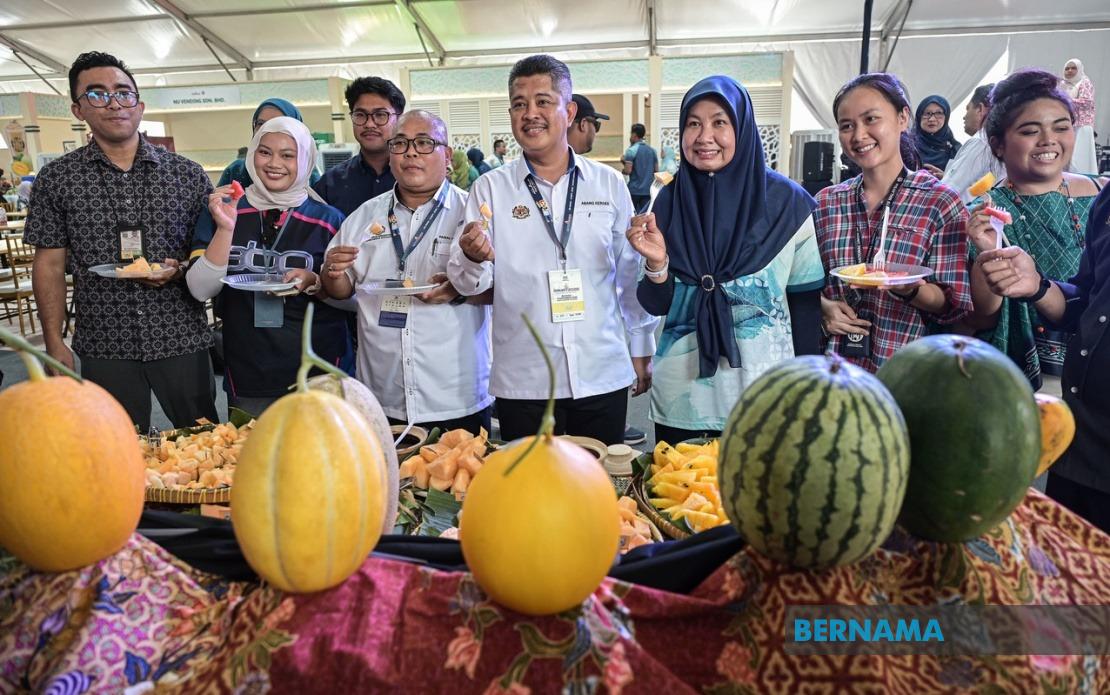
FAMA chairman Abang Ahmad Kerdee Abang Masagus emphasised the cultural and commercial significance of positioning a distinctive produce as the exhibition's centrepiece. The symbolic fruit represents more than ceremonial branding—it underscores the nation's commitment to innovation within the agri-food sector. During a media tasting session, Abang Ahmad Kerdee elaborated on how the new variety reflects deliberate strategic choices informed by market intelligence and consumer behaviour research. The three-year development cycle allowed FAMA and collaborating entrepreneurs to test iterations extensively, ensuring the final product addressed genuine gaps in Malaysia's domestic horticultural supply chain rather than pursuing innovations disconnected from actual demand patterns.
The mini-melon distinguishes itself through several carefully engineered characteristics tailored specifically for the Malaysian marketplace. Its sweetness concentration, measured at level 18 on the Brix scale, positions it among the sweeter varieties currently available to Malaysian consumers. The flesh exhibits a notably crunchy texture that differentiates it from competitors already established in supermarket chains and wet markets. These sensory qualities were not accidental but resulted from systematic selection processes across the three-year research period. Weighing approximately 1.3 kilogrammes with an attractive netting pattern across its skin, the melon targets a particular consumer segment increasingly prevalent in urban and suburban households—those seeking ready-to-eat, individually portioned fruits that balance quality with convenience.
The pricing strategy reflects pragmatic understanding of Malaysian consumer expectations. At approximately RM15 per unit, the mini-melon positions itself as accessible to middle-income households while maintaining sufficient margins to sustain farmer profitability and incentivise broader cultivation adoption. This price point avoids competing directly with imported premium melons while offering demonstrably superior quality compared to budget alternatives. Such calibration represents critical commercial acumen; agricultural innovations that fail to align pricing with perceived value struggle to achieve market penetration regardless of technical superiority. The affordability factor becomes particularly relevant as Malaysia's agricultural sector seeks to expand domestic produce consumption and reduce import dependency for fresh produce categories historically dominated by foreign suppliers.
FAMA director-general Faisal Sulaiman attributed the mini-melon's development to meticulous tracking of consumer preference evolution over the research period. Contemporary Malaysian households increasingly comprise smaller nuclear families and dual-income earners with limited leisure time for food preparation. The trend toward single-serving or small-batch produce directly reflects these demographic and lifestyle shifts. Marketing research conducted throughout the three-year development cycle enabled the collaborative team to quantify these preferences and translate them into concrete product specifications. The practicality factor—easy transport, excellent freshness retention, and consistent sweetness—addresses real pain points experienced by urban consumers navigating their shopping routines between workplaces and homes.
The exhibition itself will showcase the melon's commercial potential through substantial volume deployment. FAMA has committed to supplying over 150,000 melon units during the ten-day MAHA 2026 event, spanning nearly 100 local and international varieties. This dual strategy—simultaneously launching the proprietary new mini-melon while displaying the broader horticultural diversity available to visitors—contextualises the innovation within the sector's larger ecosystem. Visitors can compare and contrast the new variety against established competitors, facilitating direct consumer feedback and building market awareness for subsequent commercialisation phases beyond the exhibition period.
The broader economic implications extend throughout Malaysia's agricultural value chain. Farmer empowerment represents a central objective, as successful adoption of the new melon variety would generate income diversification opportunities for growers currently dependent on traditional crop portfolios. Local entrepreneurs collaborating with FAMA gain potential revenue streams from licensing or producing seeds and propagation materials. The value chain effects ripple through logistics, packaging, cold storage, and retail distribution networks. When agricultural innovations generate demand for associated services and infrastructure improvements, entire regional economies benefit from the multiplier effects of increased production activity and employment generation within supply chain sectors.
Systematic, focused marketing throughout MAHA 2026 aims to crystallise consumer awareness and establish distribution relationships between producers and retail channels. Rather than relying on passive consumer discovery, FAMA has engineered multiple touchpoints—direct sales at the exhibition, tasting sessions, educational demonstrations about cultivation methods, and formal ministerial endorsement—to establish the melon's market presence comprehensively. Such coordinated approach contrasts with ad-hoc product launches that often fail to translate initial awareness into sustained purchasing behaviour. The exhibition setting provides an unparalleled opportunity to build consumer trial and gather real-time feedback informing production scale-up decisions.
The timing aligns strategically with Malaysia's broader agricultural modernisation agenda. Global melon markets remain dominated by established exporters in Thailand, Vietnam, and China, who supply significant portions of Malaysian retail demand. Developing competitive domestic alternatives reduces import expenditure and strengthens food security by cultivating domestic production capacity for high-demand categories. The mini-melon initiative demonstrates how targeted R&D investment, collaborative public-private partnerships, and responsive marketing can generate commercially viable alternatives to imported produce. Such successes provide template models for other commodity categories where import substitution remains achievable through innovation.
MHA 2026 itself has evolved into Malaysia's premier biennial platform for showcasing agricultural progress and innovation. The exhibition encompasses diverse segments including agrotech demonstrations, state-based pavilions, farm-direct sales channels, and participation from hundreds of domestic and international agricultural enterprises. This diversity ensures attendance by industry stakeholders, retail buyers, serious hobbyist farmers, and general consumers seeking quality produce. For FAMA and its collaborative partners, the exhibition provides unmatched access to decision-makers across the distribution chain—supermarket procurement teams, restaurant suppliers, food service distributors, and export-focused merchants. Successful exhibition debut substantially increases the probability of securing retail shelf space and supply contracts that translate exhibition buzz into sustained commercial orders.
The melon's journey from research laboratory to festival centrepiece encapsulates contemporary challenges facing Southeast Asian agriculture. Rapidly urbanising populations demand convenient, affordable, high-quality produce. Traditional subsistence farming increasingly gives way to market-oriented commercial cultivation requiring substantial upfront investment and technological sophistication. Successful transition requires innovation that consumers actually want rather than products seeking markets. By consulting consumer preferences throughout the three-year development period, FAMA demonstrated the discipline essential for agricultural modernisation. The resulting mini-melon represents informed innovation—technically sophisticated yet commercially grounded, ambitious enough to command ministerial attention while practical enough to achieve genuine market adoption.

