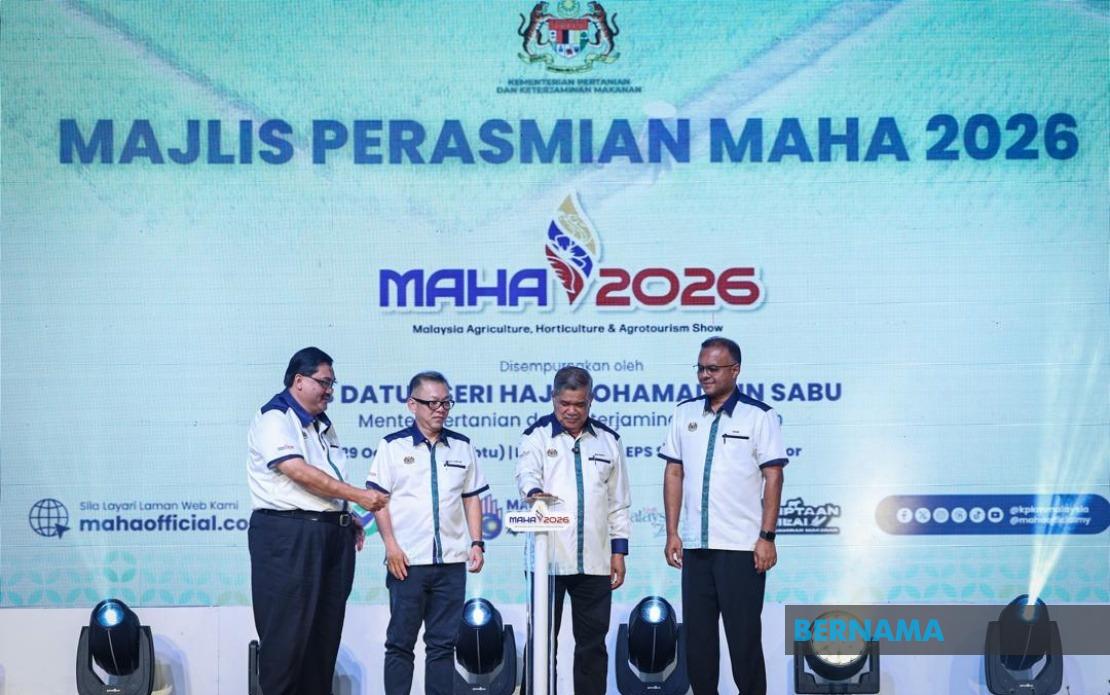
The Malaysia Agriculture, Horticulture and Agrotourism Show (MAHA) 2026, opening this week at the Malaysia Agro Exposition Park Serdang (MAEPS), represents a turning point for the nation's farming sector, according to Agriculture and Food Security Minister Datuk Seri Mohamad Sabu. Speaking at the ceremony on August 29, he positioned the biennial event as more than a commercial showcase, but rather as a catalyst for fundamental transformation in how Malaysian agriculture approaches its economic and environmental responsibilities. The minister's framing suggests the government intends to use this platform to signal a clear policy pivot toward integrating environmental stewardship into agricultural development—a messaging strategy that carries implications for producers, investors, and consumers across the region.
Mohamad Sabu articulated a direct connection between adopting sustainable farming practices and Malaysia's broader climate obligations. He underscored that reducing carbon emissions and mitigating global warming effects require the agricultural sector to embrace environmentally conscious production methods. Beyond the environmental imperative, he positioned sustainability as an economic opportunity, noting that responsible farming enhances the competitive position of Malaysian produce both domestically and internationally. This dual-benefit narrative reflects a growing global consensus that sustainability is no longer a cost centre but a market differentiator. For Malaysian farmers and agribusinesses, this signals that buyers—particularly in premium export markets—increasingly view environmental credentials as non-negotiable.
The minister's explicit call to revive the Green Book Policy, a framework from 1974 championed by the late Tun Abdul Razak, carries considerable symbolic weight. That decades-old initiative sought to reduce Malaysia's reliance on food imports and address affordability pressures through enhanced domestic production. By invoking this historical precedent, Mohamad Sabu drew a line between past and present policy goals, suggesting that food self-sufficiency remains a strategic national objective. However, the contemporary context differs markedly. Today's challenge involves not simply expanding production volume, but doing so within environmental limits and with supply chain resilience—particularly given ongoing global disruptions and climate-related production volatility in key agricultural regions.
Concreto examples of sustainable practices showcased at MAHA 2026 include energy efficiency improvements, structured waste reduction systems, food loss minimisation, elimination of single-use plastics, regenerative farming techniques, and recycling initiatives. These represent tangible, implementable approaches rather than abstract principles. For Malaysian farms considering transition strategies, the event serves as a practical educational forum. Industry participants will encounter working demonstrations and peer learning opportunities that demystify the cost-benefit calculus of moving toward sustainability. This accessibility is particularly valuable for smallholder farmers who often lack resources for independent research and development.
Mohamad Sabu outlined the government's complementary investments in modernising fisheries and livestock production through technological adoption and biosecurity enhancement. Fleet modernisation, farm technology upgrades, advanced aquaculture development, mechanised animal feed systems, and disease prevention frameworks collectively suggest a capital-intensive approach to sector transformation. These investments carry employment implications across rural areas and create opportunities for technology companies and equipment suppliers. For regional agricultural markets, Malaysian innovation in these domains could drive efficiency improvements across Southeast Asia.
The international dimension of MAHA 2026 extends beyond traditional trade promotion. Delegations from fourteen countries are participating, with several bilateral cooperation agreements anticipated. Mohamad Sabu deliberately cautioned against treating such agreements as ceremonial endpoints. His emphasis on translating memoranda of understanding into concrete commercial outcomes—export sales increases, investment capital inflows for agritech enterprises, and market access for startup ventures—reflects frustration with past iterations where agreements languished unsigned or unimplemented. This pragmatic stance suggests the ministry is tightening its accountability measures around international collaborations, demanding measurable returns within specified timeframes.
The scale of MAHA 2026 itself merits attention. Approximately two thousand exhibitors and projected attendance exceeding four million visitors positions the event as a substantial commercial and cultural gathering. For Malaysian agribusinesses and allied sectors, this represents a concentrated opportunity to reach investors, distributors, and consumers. For international participants, the event offers exposure to Southeast Asia's second-largest economy and a gateway to regional agricultural networks. The visitor projection indicates sustained public interest in agricultural matters—whether driven by consumer concern about food provenance, farmer attendance seeking industry updates, or leisure tourism.
The presence of Deputy Minister Datuk Chan Foong Hin and Secretary-General Datuk Seri Isham Ishak at the opening underscores governmental commitment to the event's success. This senior-level attendance signals that the ministry views MAHA 2026 as integral to its policy communication strategy. The official framing emphasises both environmental stewardship and economic advancement, avoiding the false choice between sustainability and profitability. For Malaysian policymakers, this messaging attempts to build broad political and social consensus around agricultural modernisation.
For Malaysian observers, the MAHA 2026 narrative carries several implications. Domestically, consumers may increasingly encounter sustainability messaging around locally-produced food, potentially influencing purchasing decisions. Producers face growing expectations to adopt documented environmental practices, which could require capital investment and operational adjustments. Internationally, Malaysia positions itself as a serious participant in sustainable agriculture development, potentially attracting research collaborations and technology partnerships. The emphasis on food self-sufficiency addresses longstanding concerns about import dependence and price volatility, though achieving meaningful self-sufficiency improvements requires sustained investment and policy consistency beyond the exhibition cycle.
The event's timing and scope suggest the government intends MAHA 2026 to function as a reset point for agricultural sector identity and strategy. By explicitly linking sustainability to competitiveness, economic opportunity, and national food security, Mohamad Sabu attempted to reframe what might otherwise appear as regulatory burden or cost imposition. Whether this messaging translates into widespread sector-wide transformation depends substantially on sustained policy support, accessible financing for infrastructure upgrades, and market mechanisms that reward sustainable practices. The exhibition provides visibility and networking opportunities, but the harder work of implementation remains ahead. For Malaysia's agricultural future—and by extension, for regional food security—the practical outcomes of MAHA 2026 will prove more significant than the rhetoric accompanying its opening.

