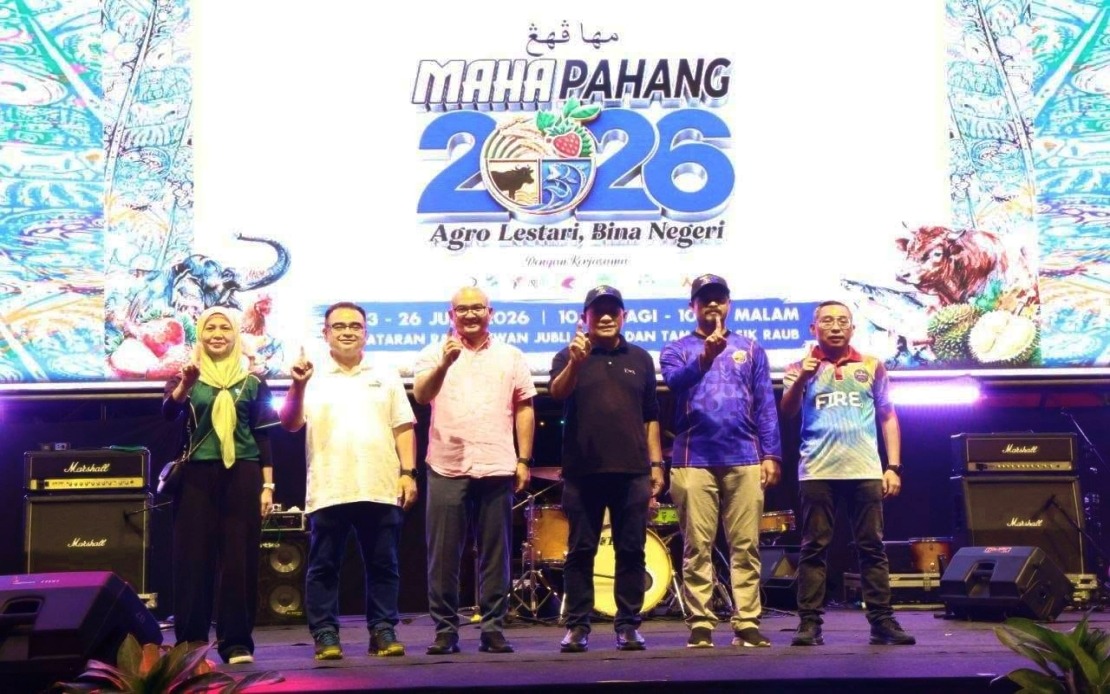
The MAHA Pahang 2026 agricultural exhibition has concluded as a remarkable commercial and public relations success, attracting 212,374 visitors across its four-day run at Dataran Raub in Kuantan. The turnout substantially outpaced organisers' initial projection of 100,000 attendees, representing a 112 per cent increase over the baseline forecast. This surge in public engagement underscores the considerable appetite among Malaysian consumers and stakeholders for direct engagement with the agricultural sector and agri-food entrepreneurs.
Revenue performance mirrored the visitor influx, with the event generating RM2.33 million in sales transactions—a figure that nearly doubles the original target of RM1.3 million. The 79 per cent variance above projections signals that visitors came prepared to make substantial purchases, reflecting genuine demand for products and services showcased by participating vendors. Such spending patterns suggest that agricultural expos serve not merely as promotional vehicles but as functioning marketplaces where consumer interest translates directly into commercial activity.
The entrepreneurial participation also expanded beyond expectations, with 220 businesses and individual operators taking booth space compared to the initial recruitment target of 100 participants. This 120 per cent increase in exhibitor numbers reflects growing confidence among agricultural producers, agro-processors, and related service providers in the commercial viability of such trade events. For Pahang's agricultural sector particularly, the diversity and scale of participant representation demonstrates the breadth of the industry's productive base and its capacity to generate viable commercial enterprises across multiple sub-sectors.
Datuk Seri Mohd Soffi Abd Razak, chairman of the Pahang Agriculture, Agro-based Industry, Biotechnology and Education Committee, attributed the event's strong performance to demonstration of sustained public confidence in agriculture as both a livelihood and consumer category. His remarks carried implicit messaging about the state government's commitment to developing agriculture as a cornerstone economic pillar, particularly given Pahang's geographical advantages and resource endowments in this sector. The overwhelming response provides political validation for continued public investment in agricultural infrastructure and promotional activities.
For Malaysian policymakers examining rural development strategies, the Raub exhibition provides empirical evidence that well-organised agricultural expos can function as effective vehicles for bridging producers directly with consumers, eliminating intermediary layers that traditionally suppress farmer margins. The four-day format appears particularly well-suited to the Malaysian context, allowing working professionals and families to attend across different days while maintaining manageable logistics for vendors and organisers alike. The location in Dataran Raub—positioned within Pahang's agriculturally significant heartland—likely contributed to accessibility for regional participants and customers.
The event's success also carries implications for regional agricultural marketing within Southeast Asia. As Malaysia's domestic food security gains prominence in policy discussions, exhibitions demonstrating robust consumer appetite for locally-produced agricultural goods provide counterpoints to narratives of declining farming interest among younger Malaysians. The diverse participant base suggests that modern agricultural enterprise in Malaysia encompasses not solely traditional smallholder farming but also value-added processing, biotechnological innovation, and livestock-to-table operations that appeal to contemporary consumers.
Mohd Soffi's acknowledgment of support from departmental staff, security personnel, farmers, livestock breeders, and fishermen illustrates the multisectoral coordination required for successful agricultural exhibitions. Such events function as rare forums where diverse elements of the food production chain—from primary producers through processors to retailers—converge to interact with consumers. The recognition of fishermen alongside agricultural participants reflects evolving Malaysian understanding of the seafood sector as integral to national food production and rural livelihoods, particularly relevant given the country's extensive maritime boundaries and aquaculture development.
For entrepreneurs and small business operators in Pahang, the exhibition appears to have functioned as a validating platform. The 220 participating businesses operated within a customer environment where visitors had deliberately chosen to attend specifically to engage with agricultural products and services, rather than encountering such offerings incidentally. This targeted audience composition typically generates superior sales conversion rates compared to general consumer events, potentially establishing customer relationships extending beyond the four-day exhibition window.
The commercial performance gains particular significance against the backdrop of Malaysia's post-pandemic economic recovery. Agricultural expos provide mechanisms for rural and semi-rural entrepreneurs to access urban consumer markets without requiring sustained retail establishment investments, thereby reducing capital barriers to market participation. For participants from Pahang's more remote districts, such exhibitions can represent primary direct-to-consumer selling opportunities throughout the year, influencing production planning and investment decisions substantially.
Looking forward, the documented success of MAHA Pahang 2026 will likely influence resource allocation decisions for subsequent agricultural promotional events across Malaysian states. Governments and industry bodies examining the cost-effectiveness of various marketing interventions now possess concrete evidence of public responsiveness to well-executed agricultural exhibitions. The RM2.33 million in documented sales represents genuine economic activity that would previously have occurred through traditional retail channels or online platforms, with some portion representing incremental demand generated specifically by the exhibition format.
The event's performance also provides insights into demographic and psychographic characteristics of Malaysian agricultural consumers. The capacity to attract over 200,000 visitors within a four-day window indicates that substantial population segments remain actively interested in agricultural products, willing to expend time and resources to engage with producers directly, and capable of making significant purchasing decisions within a single venue. These audience characteristics validate continued investment in physical agricultural exhibitions despite the growth of e-commerce alternatives.
Beyond immediate commercial outcomes, MAHA Pahang 2026 served to reinforce institutional connections between Pahang's state government and its agricultural constituencies. Such events generate goodwill that translates into political support while simultaneously providing governments with direct feedback regarding farmer and entrepreneur concerns, market dynamics, and emerging opportunities within the sector. The success metrics—whether visitor numbers, sales volumes, or entrepreneurial participation—become narratives that state administrations leverage when advocating for agricultural policy initiatives or securing federal funding allocations.

