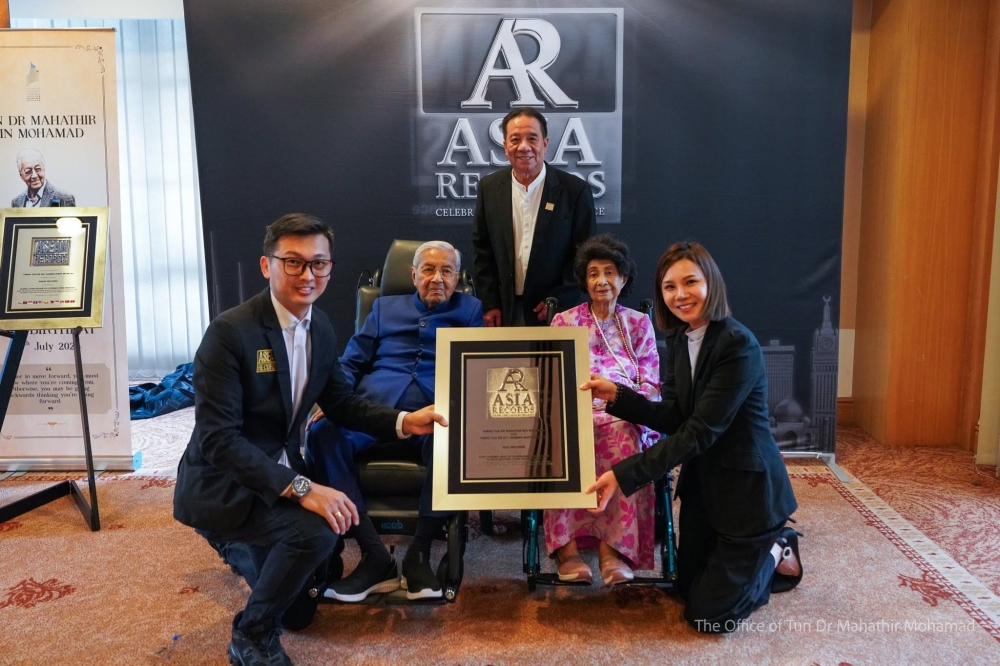
Tun Dr Mahathir Mohamad and his wife Tun Dr Siti Hasmah Mohd Ali have made history by becoming the world's oldest married couple, with combined credentials that have earned them three separate Guinness World Records. The milestone achievement recognises not only their remarkable personal longevity but also their profound influence on Malaysia's trajectory over the past century.
The records underscore an exceptional life narrative that spans two distinct eras of Malaysian governance. Dr Mahathir, at the helm of the nation for more than two decades across non-consecutive periods, reshaped the country's industrial landscape and positioned it on the global stage. His tenure saw the implementation of the Vision 2020 framework, which outlined ambitious targets for economic transformation and modernisation. Meanwhile, Tun Dr Siti Hasmah's contributions extended beyond ceremonial duties, encompassing substantial work in public health advocacy and women's welfare initiatives that complemented her role as Malaysia's longest-serving First Lady across multiple terms.
The recognition of this centenarian couple carries particular significance in a region where discussions about ageing populations and elder care are becoming increasingly central to policy discourse. Malaysia's demographic profile has been shifting noticeably, with the elderly population expanding as birth rates decline and life expectancy rises. The visible prominence of figures like Dr Mahathir and Tun Dr Siti Hasmah, still engaging with public affairs and maintaining active schedules well into their second century, challenges conventional narratives about the limitations of advanced age and retirement.
The Guinness World Records certification reflects not merely numerical achievement but symbolises the couple's sustained influence within Malaysian society. Their ability to remain culturally relevant and politically engaged across generational transitions speaks to the enduring respect they command among diverse segments of the population. Dr Mahathir, in particular, has maintained a presence in public discourse through various platforms, offering perspectives on contemporary governance challenges and offering critiques of successive administrations.
From a regional perspective, the Mahathir-Siti Hasmah centenary represents a broader narrative about Southeast Asian leadership and continuity. Several neighbouring nations have also witnessed their former leaders advancing into advanced age, raising questions about succession planning, institutional memory, and the balance between honouring elder statesmen and fostering new generation emergence. The Malaysian example suggests that managing this transition requires acknowledging the legitimacy of elder influence while creating meaningful spaces for younger leaders to establish authority and credibility.
The three Guinness World Records—likely encompassing categories related to marriage longevity, individual longevity, and possibly combined public service—place the couple in an extraordinarily exclusive category. Achieving such recognition requires meticulous documentation and verification processes, underscoring that this is not merely a ceremonial honour but reflects internationally-verified standards of achievement. The records serve as permanent entries in global documentation, ensuring their place in world history beyond Malaysia's borders.
Tun Dr Siti Hasmah's contributions have historically received less extensive public documentation than her husband's, a pattern reflecting broader gender dynamics in historical record-keeping. However, her recognition in these records acknowledges her independent significance, particularly her pioneering work in public health during formative decades when Malaysia was building its medical and welfare infrastructure. Her advocacy extended to vulnerable populations and represented an approach to First Ladyship that emphasised substantive engagement rather than ceremonial presence.
The achievement also carries implications for Malaysian healthcare systems and elderly welfare frameworks. As the nation confronts the reality of an ageing population, the visibility of healthy, active centenarians provides both inspiration and practical evidence that extended lifespan need not be accompanied by diminished quality of life or irrelevance. This reality should inform policy discussions about pensions, healthcare provision, and social integration of elderly citizens.
For younger Malaysians, the Mahathir-Siti Hasmah milestone presents an interesting generational lens. Many citizens have no lived memory of Malaysia without these figures as public reference points, making their longevity feel almost inevitable. Yet their centenaries mark an inflection point where institutional memories fade and historical documentation becomes crucial for understanding the nation's journey from colonial administration through independence and modernisation.
The Guinness recognition also highlights Malaysia's capacity to celebrate achievements that transcend partisan divisions. While Dr Mahathir remains a contested figure across Malaysia's political spectrum, this milestone provides occasion for recognition that supersedes contemporary political disagreements. Such moments of national recognition, when properly channelled, can reinforce social cohesion by celebrating shared heritage and acknowledging contributions to nation-building, regardless of political perspective on specific policies.

