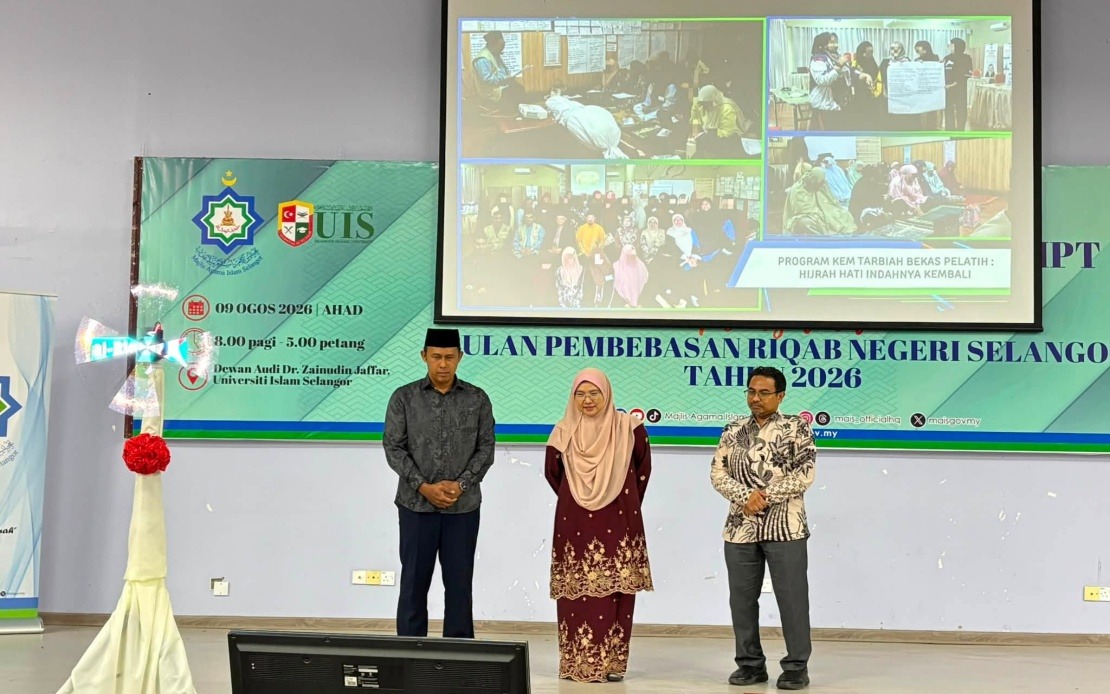
The Selangor Islamic Religious Council (MAIS) has committed substantial resources to addressing the needs of vulnerable individuals within its community, channelling more than RM17 million in zakat allocation during the previous financial year to support 13,945 people classified as asnaf riqab. This demographic encompasses individuals confronting a spectrum of social and spiritual difficulties that place them at the margins of society, requiring coordinated intervention and long-term support mechanisms to facilitate their rehabilitation and reintegration.
The zakat distribution represents a deliberate policy choice by MAIS to prioritize rehabilitative and preventive approaches within its social welfare mandate. Rather than allocating resources solely to immediate relief, the council has structured its spending around comprehensive support infrastructure, including grants directed toward dedicated rehabilitation homes, vocational training programmes, professional counselling services, and ongoing welfare assistance. This multi-layered approach acknowledges that addressing the root causes of social dysfunction typically requires sustained engagement rather than temporary financial interventions.
MAIS operates three dedicated rehabilitation facilities alongside a network of 24 specialized centres across Selangor, collectively providing physical spaces where individuals can access structured programmes designed to address their specific challenges. The infrastructure investment demonstrates confidence in facility-based interventions, though it also reflects the complexity of providing effective support for people navigating multiple, interconnected difficulties. These institutions function as more than shelter; they serve as hubs for counselling, education, vocational skill development, and peer support activities.
The scale of ongoing need is evident in the preliminary data from early 2024, which showed that during the first half of the year alone, MAIS provided assistance to 1,656 asnaf riqab individuals through RM4.1 million in zakat allocations. This pace suggests that annual assistance figures will approach or exceed those from the previous reporting period, indicating either increasing prevalence of these challenges or improved identification and engagement by the council. The consistency of funding indicates this is not a temporary initiative but an embedded component of MAIS's social service architecture.
A significant aspect of MAIS's strategy involves human resource deployment designed to provide personalized guidance. The council has appointed 213 Al Riqab guides specifically trained to work with this vulnerable population, effectively creating a cadre of specialized support workers embedded within the council's organizational structure. These guides operate beyond the confines of formal facilities, meeting individuals within their communities and providing ongoing mentorship aimed at redirecting lives toward stability, spiritual grounding, and social reintegration. This human element transforms the programme from a purely institutional response into a relational one.
The categorization of asnaf riqab carries significant theological and administrative weight within Islamic social welfare frameworks. A 2012 fatwa established the definition to encompass individuals struggling with substance addiction, gender and sexual identity issues, and Muslims considered to have deviated from religious practice. This formal classification enables MAIS to justify zakat distribution to these groups—historically, zakat has been directed toward eight categories of recipients, and the riqab classification essentially establishes a modern interpretation reflecting contemporary social challenges that warrant religious charitable support.
Recognizing that public understanding of these programmes remains limited, MAIS has designated August 2024 as the Riqab Liberation Month Campaign, a coordinated awareness initiative running throughout the month. The campaign encompasses forums bringing together stakeholders, informational presentations aimed at community education, structured guidance sessions, public information counters, celebrations at rehabilitation homes honouring residents' progress, and a comprehensive seminar addressing the interconnected social and faith dimensions of these challenges. The nomenclature of "liberation" suggests an intentional framing emphasizing freedom, recovery, and restoration rather than stigma or punishment.
The publicity strategy underscores an apparent institutional recognition that social stigma surrounding these issues remains substantial within Selangor's Muslim communities. By designating a campaign month and embedding it within broader religious and social celebration frameworks, MAIS appears to be attempting rehabilitation of public perception alongside individual rehabilitation efforts. The decision to publicize specific programme details and numerical outcomes reflects transparency principles increasingly expected of religious institutions managing large public funds.
For Malaysian policymakers and religious authorities across other states, the MAIS model presents both a template and several analytical questions. The programme demonstrates that Islamic religious councils can deploy significant financial resources toward contemporary social challenges using the zakat mechanism, moving beyond traditional charity categories into active intervention in areas like addiction recovery and gender-related support. This expansion reflects evolving interpretations of religious obligation that prioritize practical harm reduction and community stability.
The programme's implications extend beyond Selangor's administrative boundaries, as other state Islamic religious councils monitor each other's initiatives and often adopt successful models. The MAIS approach may establish expectations that comparable councils in other states develop similarly comprehensive responses, potentially normalizing support for asnaf riqab across Malaysia's Islamic institutional landscape. For individuals and families dealing with these challenges across the country, MAIS's commitment signals that religious institutions can be constructive partners in addressing social dysfunction rather than purely restrictive authorities.
Capacity constraints, however, merit consideration. With 13,945 individuals assisted across a state of nearly 6 million Muslims, the programme reaches approximately 0.23 percent of the population—suggesting either that need is substantially higher or that identification and engagement mechanisms remain limited. Understanding whether the RM17 million represents saturation-level funding or a fraction of available resources becomes important for assessing programme scalability and adequacy in addressing population-level challenges within Selangor and potentially across Southeast Asia's Muslim-majority regions.
The MAIS initiative also reflects broader regional trends among Islamic institutions in Southeast Asia toward professionalizing social service delivery and quantifying outcomes. By releasing specific figures, facility counts, and personnel numbers, MAIS aligns with international development sector norms emphasizing transparency and evidence-based programming. This shift represents a subtle but significant institutional evolution where religious councils increasingly adopt language and frameworks from secular social welfare sectors, creating potential for greater integration with government health, education, and social protection systems while maintaining distinctive theological and cultural foundations.

