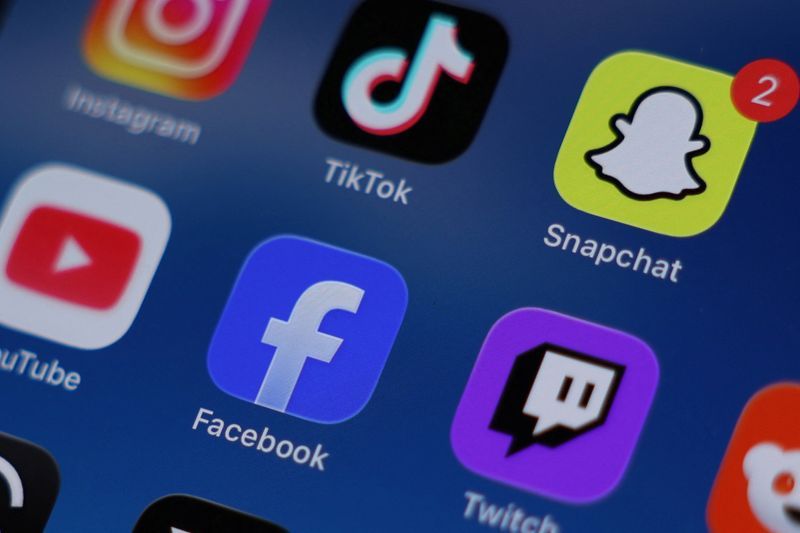
Public opinion in the United States has tilted decisively toward supporting government intervention in social media regulation, according to polling data that reflects growing concern about the platforms' influence on young people. The Reuters/Ipsos survey, conducted over six days ending August 3, uncovered broad-based support for stricter rules governing how major technology firms operate, with particular emphasis on protecting children from unmoderated content and addictive design practices. The findings arrive amid an intensifying legal and political assault on platforms including Meta Platforms and Google's YouTube, signalling that voters across traditional party lines increasingly view the issue as a legitimate domain for government action.
The timing of the poll coincides with escalating legal challenges facing the social media industry. A federal trial was set to commence examining allegations by state prosecutors that Meta deliberately engineered its platforms to addict young users, a claim the company has consistently rejected. Beyond the courtroom, New Mexico's state judiciary ordered Meta to contribute $567 million toward a teen mental health initiative and fundamentally restructure how its platforms function for minors, determining that the company bore responsibility for damaging children's psychological wellbeing. These developments underscore the mounting pressure technology companies face from state governments and voters alike.
The financial stakes for the industry are substantial. Meta faces potential liability exceeding $1.4 trillion should state prosecutors successfully prove their addiction allegations, an exposure that demonstrates the magnitude of legal risk confronting platforms. This extraordinary exposure reflects not only the scope of the litigation but also the depth of anger among state officials and the general public regarding the treatment of young users. For technology companies operating in jurisdictions across North America and potentially facing similar scrutiny internationally, these outcomes represent a cautionary precedent.
Democrats and Republicans converged on the question of regulatory necessity, with 71 per cent of Democrats and 62 per cent of Republicans endorsing stronger oversight. This bipartisan alignment represents a rare point of political consensus in an otherwise divided landscape, suggesting that concerns about youth welfare transcend partisan calculation. Independent voters showed lower levels of support, with a substantial proportion expressing uncertainty about their position on the matter. The breadth of this consensus carries particular weight given the polarised state of American politics, where agreement on regulatory questions typically proves elusive.
Regarding specific protective mechanisms, approximately two-thirds of respondents endorsed legislation requiring age-verification technologies to restrict access by children under sixteen. Support was marginally higher among Republicans, at 74 per cent, compared to 69 per cent among Democrats. This particular consensus reflects public understanding that age-gating represents a concrete, implementable solution rather than abstract regulation. Industry opponents, however, have mobilised against such requirements. NetChoice, a trade organisation financed by social media giants including Meta, TikTok, and Snap, has initiated legal proceedings challenging state laws mandating age verification, contending that such mandates violate constitutional free speech protections.
Responses from individual voters illuminated the complexities underlying support for regulation. James Bosserdet, a sixty-year-old mechanical engineer from Tennessee who backed Republican Donald Trump in the 2024 presidential election, articulated the tension between libertarian instincts and practical necessity. Despite generally favouring minimal government involvement in citizens' lives, Bosserdet acknowledged that social media restrictions for children constituted an appropriate exception to his preference for limited state action, reflecting how parental and protective concerns override ideological commitments.
Concern about the psychological implications of platform use proved nearly universal. Eighty-five per cent of respondents accepted that social media functions as an addictive mechanism for children, while a comparable proportion believed that platform consumption damages mental health outcomes. These perceptions, whether grounded in clinical evidence or shaped by media coverage and personal observation, translate into political pressure for intervention. Christopher Chen, a thirty-four-year-old Washington, D.C., resident who voted for Democratic candidate Kamala Harris, articulated the argument that technology companies exercise disproportionate power over user experience and content visibility, warranting corrective governmental action despite uncertainty about regulatory design.
Grandparents and parents expressed particular frustration regarding enforcement challenges. Paula Dick, seventy-three, from Kansas, noted that although she prevents her grandchildren from accessing YouTube during their care, the children have discovered technological workarounds that circumvent parental restrictions. This phenomenon, wherein young people demonstrate sophisticated capacity to evade digital guardrails that adults have implemented, underscores why regulatory approaches targeting the platform level, rather than relying exclusively on household-level monitoring, have gained purchase among policymakers and voters.
Despite widespread concerns about potential harms, Americans maintain an appreciative relationship with social media platforms. Seventy per cent of respondents characterised their time on these platforms as enjoyable, whilst only 35 per cent reported experiencing stress from usage. When asked directly about excessive consumption, responses divided almost evenly, with 52 per cent acknowledging spending too much daily time on social media against 43 per cent disagreeing. This simultaneous endorsement of both the value and potential excess of platform usage reflects the complicated position social media occupies in contemporary American life: simultaneously enriching and potentially corrosive.
The legislative record thus far suggests that public opinion has advanced faster than congressional action. Despite demonstrated voter support for protective legislation, the federal Congress has yet to enact comprehensive measures specifically targeting youth protection on social media. This gap between public demand and legislative output has created openings for state-level regulatory initiatives and judicial intervention. More than a dozen states have already passed laws regulating minors' social media access, establishing a patchwork of protections that, whilst inconsistent, represents the primary governmental response to constituent concerns. For Malaysian observers, this American regulatory landscape demonstrates how public health concerns about technology can transcend traditional ideological divides and compel government intervention, a pattern potentially relevant to Southeast Asian policy debates.
The Reuters/Ipsos survey included 4,505 American adults interviewed online, with a margin of error of plus or minus two percentage points. The methodology and sample size provide reasonable confidence in the findings' representativeness of the broader American population, though online-only surveying potentially introduces bias related to digital literacy and access patterns.

