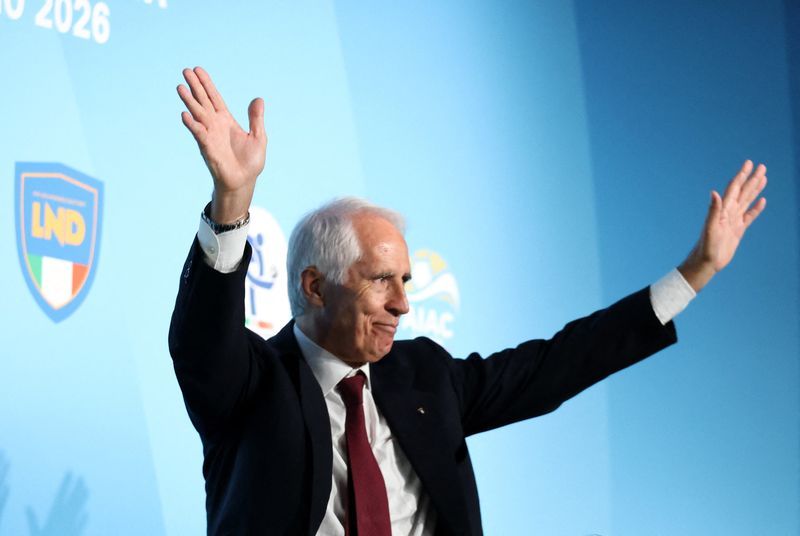
Giovanni Malago has assumed leadership of Italian football at perhaps its darkest moment, having been elected president of the Italian Football Federation on Monday in Rome following the national team's shock failure to qualify for the World Cup for a third consecutive tournament. The 67-year-old businessman, who recently oversaw the successful organisation of the Milano Cortina Winter Olympics in February, secured 68.58 percent of votes at the FIGC assembly, defeating fellow candidate Giancarlo Abete to take the helm of the four-time world champions.
Malago's appointment comes in the aftermath of what many Italians viewed as an unthinkable collapse. The April playoff defeat to Bosnia & Herzegovina that ended Italy's World Cup hopes sparked fury among supporters and political figures alike, precipitating predecessor Gabriele Gravina's resignation just weeks later. The fallout extended far beyond the national team's disappointment: Italian clubs subsequently crashed out of European club competitions, creating a cascading crisis that has left the nation's football infrastructure severely weakened. Industry observers describe the current state of Italian football as the worst in four decades, a dramatic reversal for a country that has historically ranked among Europe's footballing superpowers.
The depth of the institutional challenge facing Malago became apparent through a series of departures following the April debacle. Head coach Gennaro Gattuso stepped down in the immediate aftermath of the Bosnia & Herzegovina loss, while legendary goalkeeper Gianluigi Buffon, serving as national team delegation head, also announced his departure. These moves highlighted not merely tactical shortcomings but a broader systemic failure within Italian football's development pipeline and competitive structure.
Prior to the qualification disaster, warning signs about Italy's football infrastructure had been accumulating for years. Distinguished former striker Roberto Baggio and other prominent figures within the sport had publicly raised concerns that Italy's youth development systems were no longer producing the calibre of talent necessary to compete at the highest international level. This structural weakness, many analysts argue, lay beneath the surface collapse during World Cup qualifying, suggesting that the April defeat represented not a sudden catastrophe but rather the inevitable result of long-term neglect in youth football investment and management.
In addressing these multifaceted challenges, Malago has outlined an ambitious reform agenda. His immediate priorities include recruiting a new men's national team coach to restore competitive credibility, fundamentally restructuring how Italian football identifies and develops young talent, and accelerating preparations for the 2032 European Championship, which Italy will jointly host with Turkey. The European Championship role offers Malago an opportunity to begin restoring national pride through a major tournament on home soil within eight years.
Malago brings relevant experience from his previous role as head of the Italian National Olympic Committee and his background as a former futsal player, giving him both administrative expertise and sporting credibility. His successful stewardship of the Milano Cortina Winter Olympics, which garnered widespread praise for its smooth execution, demonstrates his capacity to manage large, complex sporting institutions under intense scrutiny. However, football's emotional significance to Italian society—far exceeding that of winter sports—presents an altogether different magnitude of pressure.
In his initial remarks following his election, Malago struck a tone attempting to balance realism with ambition. "I am not afraid but I am highly mindful of the responsibilities," he told reporters, acknowledging the weight of expectation. The new federation president emphasised that the FIGC must transcend mere administrative function and instead become an inspirational force within Italian society. "The Football Federation must not just administer; it must be a source of inspiration. It is the largest social institution in the country, and not just in terms of numbers," he stated, framing football's role in national life.
Malago's vision for Italian football recovery explicitly rejects dwelling on past glories while using them as motivational fuel. "Our roots must not be a source of nostalgia or a burden; we must turn them into an incentive to look toward a new season—one that is courageous, victorious, humble yet ambitious," he explained before the voting process. This framing suggests a leadership approach that acknowledges Italy's storied football heritage without becoming imprisoned by it, a crucial psychological distinction for an organisation rebuilding from crisis.
For his predecessor Gravina, the assembly represented a moment of reckoning. The 72-year-old, who had led the federation since 2018, conceded that he should have relinquished his post earlier, seemingly acknowledging that his leadership had become untenable well before his April resignation. Gravina's departure without having guided Italy through a World Cup cycle—a stark break from tradition—underscores the severity of the institutional crisis.
Malago's emphasis on collaborative reconstruction carries particular significance given the fractious nature of Italian football's various factions. He stated that "Alone I can do nothing, together we can do everything," signalling an intention to unite the federation's disparate elements around a shared recovery mission. This coalition-building approach will be essential given the interconnected nature of Italian football's problems, which span club-level performance, youth development systems, national team selection, and broader federation governance.
For Malaysian and Southeast Asian observers, Italy's struggles offer instructive parallels regarding the importance of sustained youth development investment and the dangers of complacency. While Asian football federations have generally made substantial progress in recent decades, the Italian case demonstrates how quickly even established systems can deteriorate without continued modernisation and investment. Malago's appointment and recovery plan therefore represents not merely an Italian concern but a regional learning opportunity regarding football governance and institutional reform.
The path ahead for Malago appears formidable but not insurmountable. With clear diagnostic assessments of Italy's problems already available, specific developmental priorities identified, and a major tournament hosting opportunity in 2032, the structural components for rebuilding exist. Whether the new federation president can unite Italian football's various interests behind a coherent recovery programme, and whether that programme can restore Italy to competitive prominence, will define his tenure and determine whether Italian football can genuinely turn crisis into renaissance.