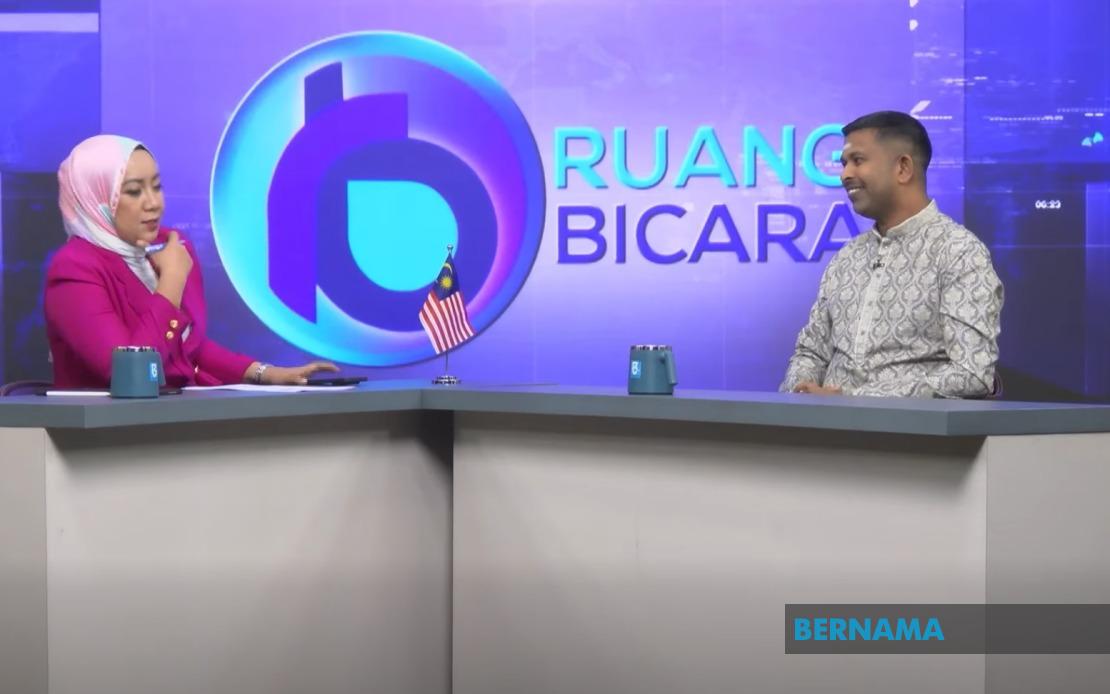
Sustaining and enhancing the standing of the Malay language requires coordinated action across all sectors of Malaysian society, according to an academic expert involved in language policy governance. Prof Dr Ramalinggam Rajamanickam, who holds the position of Faculty of Law professor at Multimedia University and serves as a member of the Dewan Bahasa dan Pustaka Board of Governors, stressed that language elevation cannot be achieved through isolated institutional efforts but demands engagement from government ministries, educational bodies, corporate entities and the broader citizenry.
The constitutional framework protecting Malay already exists in robust form. Article 152 of the Federal Constitution explicitly designates Malay as the national language, establishing its foundational legal status. This protection extends further through the National Language Act 1963/67, which mandates official use of the language in government functions and formal administration. Yet constitutional recognition alone does not guarantee the language's continued vitality or relevance, Ramalinggam indicated during a recent television discussion focused on Malay as the soul of the nation and symbol of national identity.
The real challenge confronting Malay today differs from historical struggles over recognition or usage frequency. The contemporary issue centres on maintaining linguistic quality and precision amid informal communication patterns that have accelerated with digital technology. The phenomenon of "bahasa rojak"—the mixing of Malay with English and other languages—alongside casual abbreviations prevalent on social media platforms represents a genuine concern for language purity. However, Ramalinggam distinguished between acceptable linguistic flexibility in casual discourse and the necessity for formal standard usage in official contexts, government communications and institutional settings where grammatical correctness and proper sentence construction remain non-negotiable.
Universities emerge as critical institutions in this national endeavour. Higher education bodies must balance competing demands: ensuring that Malay functions as an authentic medium for academic knowledge and research while simultaneously maintaining English proficiency among graduates to enable participation in global scientific and commercial discourse. This dual mandate requires institutional commitment rather than relegating Malay to symbolic status. Faculties must develop robust Malay-language curricula in specialized fields, from medicine to engineering, demonstrating that the language can serve contemporary intellectual needs. Simultaneously, ministries tasked with oversight must actively monitor compliance with language legislation and evaluate implementation effectiveness across government operations.
The trajectory of technology development presents both opportunities and risks. Rather than passively awaiting technological platforms to incorporate Malay-language functionality, Malaysia should proactively invest in language technology infrastructure that enables Malay to function across digital domains. This approach reflects a fundamental principle: the language should not adapt to technology but instead drive technological advancement in Malay contexts. Artificial intelligence systems, machine learning applications and digital tools should be deliberately engineered to support Malay-language operations. Such technological empowerment requires extensive collaboration between government bodies, university researchers, linguists and technology developers working toward shared objectives.
Historical precedent supports ambitious aspirations for Malay's contemporary role. The language previously functioned as a regional lingua franca facilitating commerce and communication across Southeast Asia. This heritage demonstrates genuine linguistic capacity to serve sophisticated communicative purposes across diverse contexts. Contemporary international interest reinforces this potential: China, Japan, India and other nations maintain academic programs in Malay studies, suggesting external recognition of the language's value and significance. Harnessing this dormant potential requires deliberate policy choices and sustained investment in research infrastructure.
Malaysia's multilingual environment should not be framed as contradictory to Malay language advancement. Ramalinggam emphasized that proficiency in multiple languages represents an asset rather than a threat to national language status. Bilingualism and even multilingualism remain compatible with Malay functioning as the primary symbol of national identity and cohesion. The distinction lies in ensuring that alongside global languages like English, Malay maintains its pre-eminent position within Malaysian institutions, government structures and national discourse. This hierarchy of language status can coexist with genuine competence in international languages essential for economic participation and knowledge exchange.
Private sector engagement remains underutilized in current language promotion strategies. Commercial enterprises, media corporations, technology companies and financial institutions possess significant influence over language patterns within their operations and public communications. Incentivizing corporate commitment to Malay-language excellence—through recognizing exemplary usage standards, supporting internal language development programs and incorporating language quality metrics into corporate governance—could substantially amplify national efforts. The private sector reaches audiences continuously through marketing, customer communications and workplace environments, creating multiplicative opportunities for positive language influence.
Citizen responsibility extends beyond passive acceptance of language policies. Ramalinggam emphasized that every Malaysian bears personal accountability for upholding Malay language dignity. This collective responsibility translates into individual choices about language usage, participation in formal discourse, support for language-related initiatives and modeling of appropriate usage for younger generations. Parents, educators, journalists and public figures all influence linguistic norms through example and engagement patterns.
The scientific and technological domains require particular attention given global economic trends. Malay-language scientific terminology must be systematically developed or adopted, allowing researchers to conduct advanced work in their national language while maintaining capacity for international collaboration. This vocabulary development cannot occur haphazardly but demands coordinated effort from terminology specialists, subject-matter experts and language planners. Similarly, economic discourse—from finance to commerce to entrepreneurship—must be integrated into Malay's functional repertoire, demonstrating the language's capacity to address contemporary economic realities and opportunities.
Implementation of this comprehensive strategy demands clear governance structures with designated accountability. Ministries require adequate resources and enforcement mechanisms to ensure language compliance across government operations. Universities need explicit performance expectations regarding Malay language integration. The private sector requires both incentives and transparency regarding language quality standards. Without such structural clarity and resource allocation, even well-intentioned policy statements remain largely rhetorical.
The stakes underlying this language effort extend beyond cultural or nationalist sentiment. Language shapes how communities think, organize knowledge and transmit values across generations. A national language that functions robustly across formal, academic and technological domains reinforces social cohesion, facilitates democratic participation and strengthens institutional effectiveness. Conversely, relegating the national language to ceremonial functions while allowing other languages to dominate functional domains creates linguistic stratification that can undermine national unity and institutional legitimacy.

