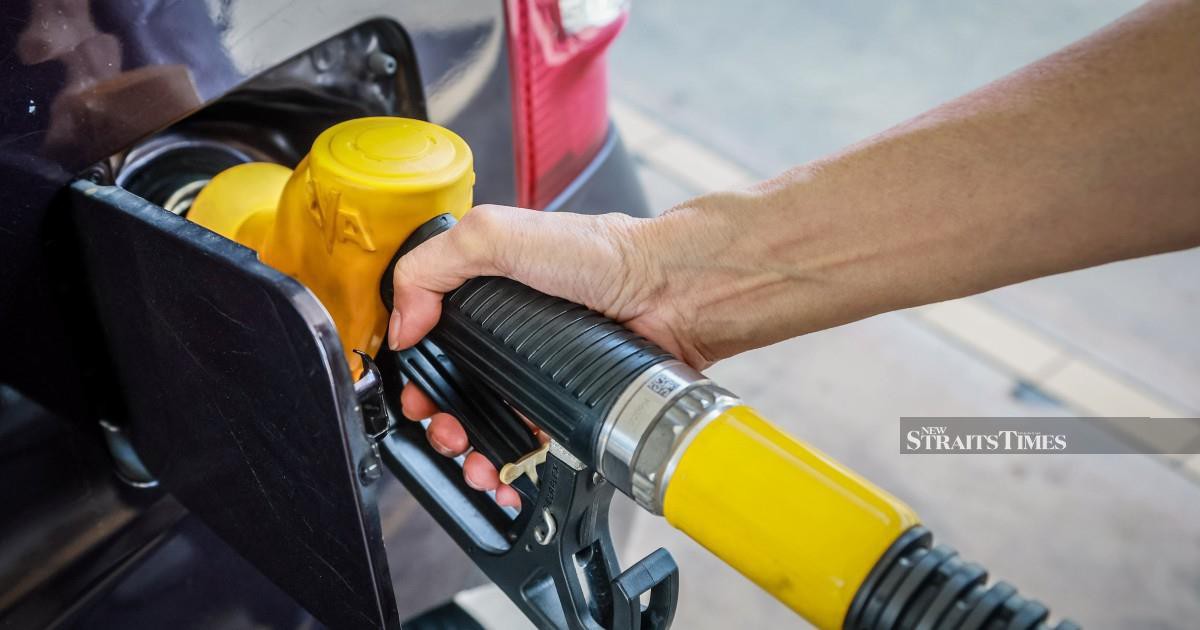
Malaysia continues to shield its motorists from the full impact of international crude oil volatility by absorbing substantial fiscal costs. Prime Minister Datuk Seri Anwar Ibrahim revealed that the government spends as much as RM50 billion yearly in fuel subsidies to keep the pump price of RON95 petrol frozen at RM1.99 per litre, a figure that has remained unchanged despite persistent upward pressures in global energy markets.
The disclosure underscores the delicate balancing act facing Kuala Lumpur as policymakers grapple with competing priorities. Supporting affordable fuel prices for the majority of lower and middle-income households must be weighed against the strain such interventions place on public finances, particularly given Malaysia's existing fiscal constraints and competing demands for government spending across healthcare, education, and infrastructure. The RM50 billion annual commitment represents a substantial portion of federal expenditure, equivalent to roughly 5-6 percent of total government spending in recent budgets, illustrating the magnitude of this policy commitment.
Fluctuating global crude prices form the backdrop to this domestic pricing strategy. When international petroleum markets experience upward movements—driven by geopolitical tensions, supply disruptions, or shifts in global demand—the gap between the actual cost of imported fuel and the retail price Malaysians pay at the pump widens considerably. The government effectively absorbs this differential through its subsidy apparatus, preventing sudden shocks that might ripple through the broader economy via transport costs, logistics expenses, and ultimately consumer prices for goods and services.
This approach reflects a philosophical choice deeply embedded in Malaysian governance since independence. Fuel subsidies have traditionally been viewed as a social safety net protecting ordinary Malaysians from commodity price volatility beyond their control. For a developing nation where many citizens depend on private vehicles for commuting due to limited public transport infrastructure outside major urban centres, keeping petrol affordable remains politically and economically significant. However, the sustainability of such generous support in the long term remains contested among economists and policymakers.
The fiscal burden of maintaining artificially low fuel prices has prompted periodic discussions about subsidy restructuring or targeted support mechanisms. Past governments have attempted gradual subsidy rationalisation, though such efforts have frequently encountered public resistance and political complications. The question of whether universal fuel subsidies represent the most efficient way to assist those genuinely needing help—or whether resources might achieve greater social impact if redirected—continues to generate policy debate within government circles and among analysts.
Regional context adds another dimension to Malaysia's decision. Neighbouring countries have adopted varying approaches to fuel pricing. Some have moved towards market-linked mechanisms with periodic adjustments, while others maintain subsidies at different levels. Malaysia's maintenance of RON95 at RM1.99 therefore positions the country as relatively generous in regional terms, potentially attracting cross-border fuel purchasing and placing additional pressure on domestic supply infrastructure.
The RM50 billion figure announced by Anwar Ibrahim signals governmental awareness that current subsidy levels demand transparency and public discourse. By putting a specific number on the annual cost, the leadership effectively communicates to citizens what their fuel price stability truly costs the national treasury. This transparency serves multiple purposes: it justifies government budgetary constraints in other areas, demonstrates concrete policy commitment to affordability, and creates space for more informed public debate about trade-offs inherent in subsidy policies.
International energy market dynamics will likely intensify these pressures. Long-term trends including the energy transition away from fossil fuels, geopolitical realignments affecting oil supply routes, and potential supply shocks create uncertainty around future crude prices. Should global oil costs spike significantly beyond current levels, Malaysia's subsidy bill could swell even further unless price caps are adjusted. Conversely, if international energy markets experience extended price declines, the fiscal relief would allow reallocation of resources elsewhere, though such scenarios have proven difficult to predict with confidence.
Southeast Asian observers note that Malaysia's approach contrasts with regional patterns and raises questions about long-term sustainability. The petroleum industry faces structural headwinds from energy transition policies globally, and domestic crude production has been gradually declining. These trends suggest that maintaining historical subsidy levels indefinitely may prove increasingly challenging without either securing alternative revenue sources or eventually reforming the subsidy architecture itself.
For Malaysian households and businesses, the RM1.99 price point provides budget certainty and protection from external shocks, supporting consumption patterns and investment decisions. Workers commuting long distances to employment centres benefit from predictable transport costs, while logistics operators and transport companies can plan operations with reasonable confidence about fuel expenses. This economic stability has measurable value beyond mere price considerations.
Government officials emphasise that maintaining affordable fuel remains part of broader cost-of-living support, particularly as Malaysians navigate inflationary pressures in housing, food, utilities, and other essential expenses. Removing or significantly raising fuel subsidies without complementary support mechanisms could trigger broader cost-of-living crises affecting consumption patterns and potentially economic growth.
Looking forward, the sustainability calculus will grow more pressing. Anwar Ibrahim's articulation of the RM50 billion annual cost signals that the government recognises this cannot continue indefinitely at current levels without addressing underlying fiscal challenges. Whether Malaysia moves towards means-tested subsidies targeting lower-income groups, market-linked pricing with adjustment mechanisms, or alternative solutions, the coming years will likely see more active policy recalibration as policymakers seek equilibrium between affordability commitments and fiscal reality.

