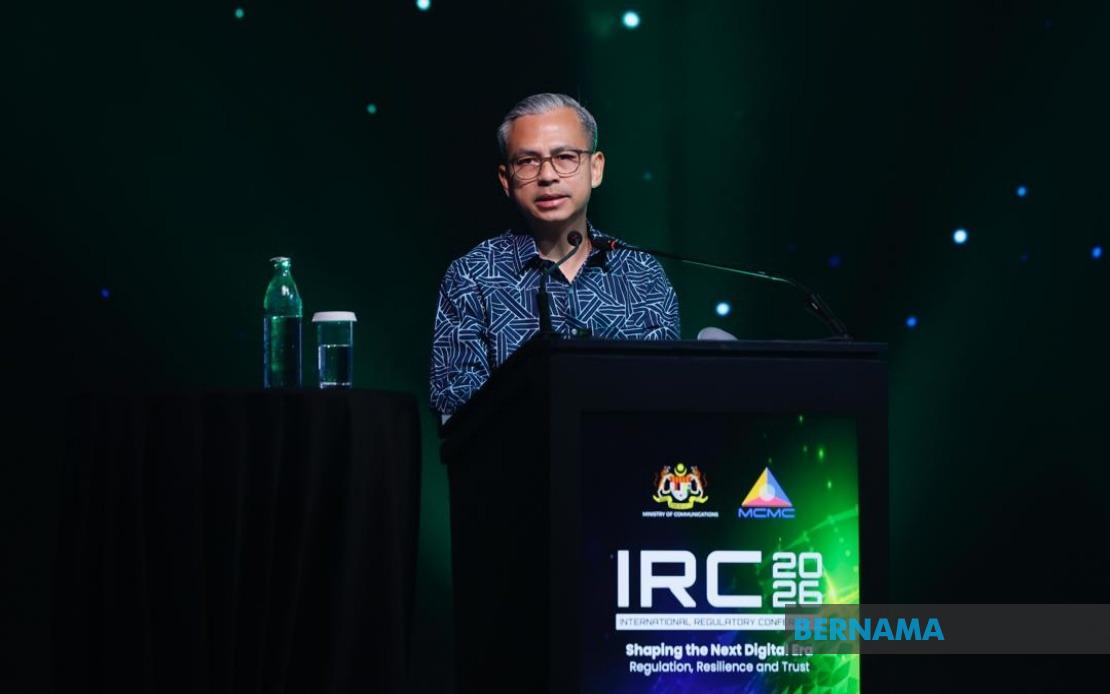
Malaysia is fortifying its approach to digital governance, recognising that trust and security have become fundamental pillars in an increasingly technology-dependent world. Speaking at the International Regulators Conference 2026 in Kuala Lumpur, Communications Minister Datuk Seri Fahmi Fadzil underscored the government's commitment to ensuring that technological progress serves the nation's interests while protecting citizens from emerging digital threats. This positioning reflects growing recognition across Southeast Asia that effective regulation of the digital economy is crucial for sustainable growth and public confidence.
The government's comprehensive strategy encompasses multiple layers of infrastructure and legislative development. The National Digital Network Plan, or Jendela, forms the backbone of these efforts, working in tandem with the nationwide 5G deployment and investments in submarine cable networks to create robust connectivity. More recently, the Online Safety Act 2025 represents a legislative milestone, shifting Malaysia's regulatory paradigm from reactive crisis management to proactive harm prevention. This three-pronged approach—infrastructure, connectivity, and regulation—demonstrates a holistic understanding of what digital governance requires in contemporary contexts.
Central to Fahmi's message is an acknowledgement of the fundamental trust deficit characterising the digital age. Citizens increasingly question whether the platforms they depend on safeguard their data, whether the information flowing through these channels remains reliable, and whether the algorithms shaping their digital experiences operate within acceptable ethical bounds. This concern extends beyond individual worry; it reflects systemic anxiety about whether digital systems can be governed effectively when technological change consistently outpaces regulatory frameworks. For Malaysian consumers and businesses, these questions carry particular weight as the nation deepens its digital economy integration.
The challenge Malaysia faces is not unique to Southeast Asia, yet the region's specific circumstances demand tailored solutions. Regulatory frameworks designed in earlier technological eras often prove inadequate for managing artificial intelligence, quantum computing, autonomous systems, and sophisticated data-sharing architectures. Fahmi acknowledged this mismatch explicitly, noting that governance mechanisms must evolve at comparable speeds to technological innovation. For Malaysian policymakers, this means developing flexibility within regulatory structures—creating rules that can adapt to unforeseen developments without requiring constant legislative overhauls.
The Online Safety Act 2025 exemplifies this evolution in thinking. Rather than focusing exclusively on punishing harmful content after it circulates, the legislation emphasises platform accountability, requiring digital services to implement preventative measures. This shift proves particularly significant for protecting vulnerable populations, including children navigating complex online environments. Malaysian parents and educators have long sought stronger safeguards; the act represents a concrete policy response to these concerns, holding platforms responsible for the safety of their user bases.
Malaysia's regulatory experience has attracted international attention, particularly regarding the country's transition from a Single Wholesale Network to a Dual Network model for 5G deployment. This technical decision, which initially appeared relevant only to telecommunications specialists, has become a case study for international regulators examining how governments can encourage competitive markets while maintaining service quality and security. The International Regulators Conference 2026, now in its third iteration, emerged directly from this international curiosity, evolving into a substantive platform for cross-border regulatory dialogue.
The conference's agenda reflects emerging digital governance priorities affecting economies worldwide. Discussions spanning online safety, data governance, artificial intelligence, quantum communications, and autonomous systems address issues that transcend national boundaries. A data breach affecting Malaysian citizens' information may originate on foreign servers; artificial intelligence systems deployed by international companies influence local labour markets; quantum computing advances promise both tremendous opportunities and security vulnerabilities. Fahmi's emphasis on translating conference dialogue into practical policy outcomes acknowledges that regulatory effectiveness increasingly depends on international coordination.
Malaysia's positioning as a Council Member of the International Telecommunication Union provides leverage in these discussions. The commitment to share conference outcomes with the ITU suggests Malaysia intends to contribute to global regulatory standard-setting rather than simply adopting frameworks designed elsewhere. This approach aligns with Southeast Asian aspirations for greater self-determination in digital policy, resisting external pressure while remaining cognisant of international best practices. For Malaysia's technology sector, regulatory leadership enhances the nation's credibility as a stable, responsible digital economy.
The broader context involves recognising that digital governance extends beyond traditional telecommunications regulation. Fahmi's invitation to academics, industry leaders, and policymakers alongside regulators reflects understanding that effective governance requires input from multiple stakeholder groups. Technology companies contribute technical expertise and identify unintended regulatory consequences; academics provide research grounding policy discussions; civil society advocates represent citizen interests; regulators synthesise these perspectives into enforceable rules. This inclusive model offers advantages over purely technocratic or purely market-driven approaches.
For Malaysian businesses and entrepreneurs, the regulatory framework under development carries significant implications. Clear, proportionate rules can reduce compliance uncertainty and create competitive advantages for companies that embrace robust governance practices. Conversely, regulations perceived as excessive or poorly designed can stifle innovation and drive investment toward more predictable jurisdictions. Fahmi's emphasis on balancing innovation encouragement with accountability suggests policymakers are attempting to navigate this delicate equilibrium, though implementation details will ultimately determine actual outcomes.
The timing of this regulatory emphasis reflects Malaysia's broader digital economy ambitions. As the nation seeks to position itself as a regional technology hub, attracting international investment and developing domestic innovation capacity, digital trust becomes a crucial competitive advantage. Companies and investors increasingly conduct due diligence on regulatory environments before committing resources; jurisdictions offering both stability and flexibility gain advantage in this competition. Malaysia's legislative and infrastructural initiatives work together to project an image of a country serious about digital governance without imposing prohibitive restrictions.
Looking forward, the effectiveness of Malaysia's digital governance approach will depend on adaptive implementation and genuine international cooperation. Regulatory frameworks require ongoing refinement as technologies evolve and new challenges emerge. The commitment to share IRC outcomes with international bodies suggests Malaysia recognises that unilateral regulation proves insufficient in interconnected digital ecosystems. This openness to international collaboration, combined with confidence in developing locally appropriate solutions, positions Malaysia to influence regional and global digital governance standards while protecting its citizens' interests.

