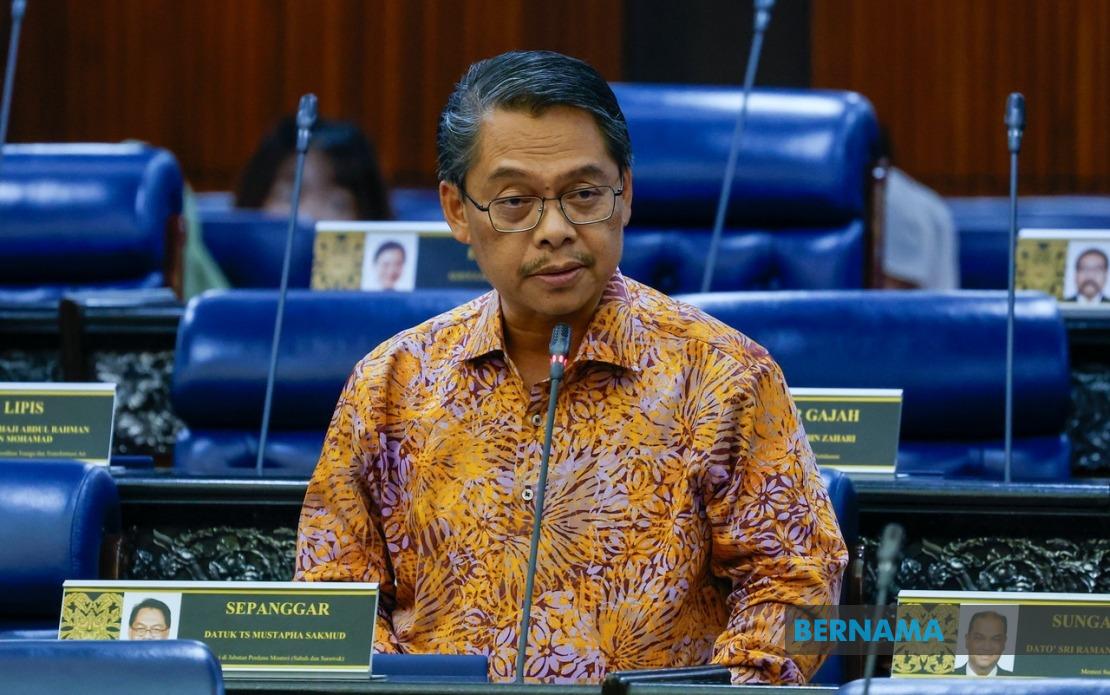
Negotiations spanning the Malaysia Agreement 1963 have yielded tangible progress, with 13 substantial matters now fully settled out of the 29 originally tabled for discussion. Minister in the Prime Minister's Department (Sabah and Sarawak Affairs) Datuk Mustapha Sakmud disclosed this development during parliamentary proceedings, signalling that the long-running effort to clarify the constitutional relationship between the peninsula and the two East Malaysian states continues to advance, albeit incrementally.
Beyond the fully resolved questions, a further five contentious areas have attained what government officials term interim or partial resolution following deliberations at the March 2 Technical Committee session. Among these halfway measures are matters related to the enlargement of state-level public service opportunities, which fall under the ambit of Article 112 of the Federal Constitution. The interim category also encompasses unresolved dimensions of healthcare access, educational provision, and the controversial concept of Borneonisation—efforts to populate federal government positions in Sabah and Sarawak with local talent rather than peninsular-based appointees.
The classification of these five issues as interim rather than fully resolved reflects the complexity inherent in federal negotiations involving multiple tiers of government. Each requires coordination not only between Kuala Lumpur and the two state capitals, but also alignment across numerous federal and state agencies. The remaining 11 matters continue under active oversight by the Sabah and Sarawak Affairs Division, which functions as the negotiating secretariat, ensuring that progress continues despite the bureaucratic and political hurdles that often encumber such discussions.
The question of electoral representation has proven far more intractable than internal administrative adjustments. Isnaraissah Munirah Majilis, the Warisan MP representing Kota Belud, pressed the minister on proposals to elevate Sabah and Sarawak's combined parliamentary quota to 35 per cent of all Dewan Rakyat seats, a demand rooted in the original agreement that created Malaysia in 1963. Mustapha's response underscores why this particular issue remains frozen in preliminary stages despite mounting pressure from both East Malaysian states and their representatives.
Any reallocation of parliamentary seats cannot proceed unilaterally; the Election Commission holds constitutional authority over redelineation matters, and such boundary-redrawing exercises may only commence once an eight-year electoral cycle concludes. This procedural constraint, embedded in the 13th Schedule and Article 113 of the Federal Constitution, creates a structural bottleneck that transcends mere political will. Even when circumstances permit the commission to act, enlarging East Malaysia's parliamentary representation would demand constitutional amendment—specifically modifications to Article 46, which defines the Dewan Rakyat's composition.
Constitutional amendments in Malaysia require a supermajority: two-thirds support from the full house. This threshold has historically served as a brake on far-reaching reforms, particularly those affecting the federal-state balance or electoral structures. For East Malaysian interests to secure expanded parliamentary representation through formal amendment, they would need to assemble uncommon cross-party consensus. Absent such alignment, proposals languish in the discussion phase, as has occurred with the 35 per cent demand.
The MA63 framework itself reflects the delicate constitutional bargain struck at Malaysia's formation. Sabah and Sarawak were promised specific protections and privileges in exchange for joining the federation, yet interpreting and implementing those guarantees has consumed decades of negotiation. The partial success registered thus far—with 13 settled matters representing substantial progress—indicates that incremental accommodation remains possible within existing constitutional structures.
For Malaysian policymakers, the MA63 negotiation process illustrates both the opportunities and constraints of federal governance. Matters susceptible to administrative adjustment or executive coordination have moved toward resolution. Those demanding electoral or constitutional change, by contrast, encounter immovable procedural obstacles that no amount of goodwill between administrations can overcome without triggering broader institutional reform. This asymmetry helps explain why Sabah and Sarawak representatives, despite their coalition partnership with federal ruling parties in recent years, continue to express frustration about the pace of implementation.
The interim designation for five issues also reflects a pragmatic negotiating technique. Rather than deadlock entirely, negotiators increasingly resort to provisional arrangements—perhaps pilot programmes, phased implementations, or understandings subject to future review. Such approaches allow both sides to claim progress whilst deferring thornier definitional questions. The interim category thus represents neither success nor failure, but rather negotiation in its ongoing, messier reality.
The composition of outstanding matters—11 issues still under close monitoring by BHESS and stakeholders—suggests that certain categories of disagreement prove more amenable to resolution than others. These may involve technical disputes over implementation mechanisms, funding allocations, or coordination protocols rather than fundamental claims to rights or constitutional status. Should negotiations continue at their present pace, forecasts suggest additional modest gains over the coming months, though breakthroughs on the parliamentary representation question appear unlikely absent significant constitutional development.
For Southeast Asia more broadly, the Malaysian experience with negotiating federal settlement terms decades after independence carries instructive lessons. Both Singapore's original membership in Malaysia and the creation of Malaysia itself demonstrated that written agreements, however detailed, require continuous renegotiation and reinterpretation as circumstances evolve. The MA63 negotiation process, now spanning years, underscores the durability—and complexity—of achieving practical consensus among communities with distinct governance traditions, resource bases, and political cultures.

