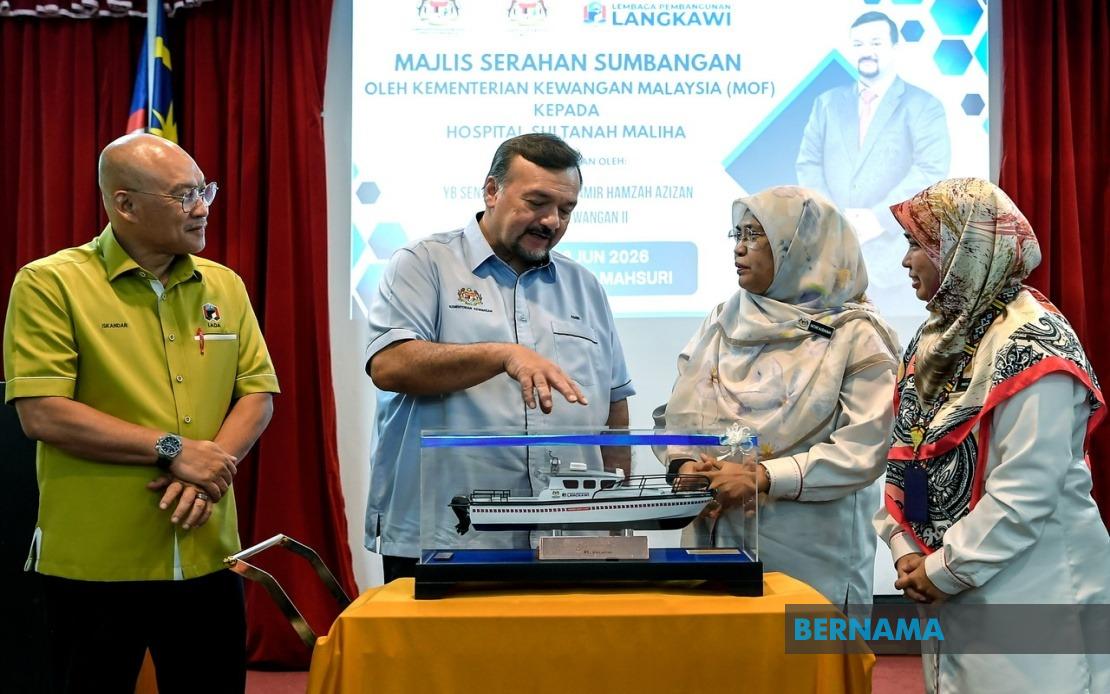
Malaysia's Ministry of Finance is investing RM5.5 million to establish a dedicated maritime ambulance service for Langkawi, responding to critical gaps in the island's emergency healthcare transport infrastructure. Finance Minister II Datuk Seri Amir Hamzah Azizan announced the initiative, which encompasses both the procurement of specialist vessels and their initial operating expenses, with operations slated to begin in early 2024. The funding represents a significant commitment to modernising the healthcare delivery system in one of Southeast Asia's premier tourist destinations, where rapid and reliable medical evacuation capabilities directly impact patient outcomes and public health resilience.
Currently, Langkawi relies on commercial passenger ferry services to transport patients requiring urgent mainland hospital treatment—a system fraught with logistical constraints. These ferries operate on fixed schedules that frequently fail to align with medical emergencies, and service frequency reductions during off-season periods further compound delays. For critically ill or severely injured patients, these transportation bottlenecks can prove life-threatening, as every minute of delay deteriorates medical prognosis. The new sea ambulance addresses this vulnerability by providing on-demand, medically-equipped transfers independent of civilian ferry operations, fundamentally transforming the island's capacity to respond to health crises.
Hospital Sultanah Maliha, Langkawi's principal government medical facility, will operate the new service with responsibility for patient transfers to referral hospitals on the mainland. This operational model leverages existing medical expertise within the hospital while establishing a dedicated transport link in the healthcare chain. The vessel itself will be specifically configured for emergency medical work, capable of accommodating two stretchers simultaneously along with twelve medical and support personnel. This capacity enables comprehensive patient care during transit, ensuring that critically ill individuals receive continuous monitoring and intervention during the often turbulent sea passage to the Peninsular Malaysia coast.
Beyond logistical efficiency, the sea ambulance prioritises patient dignity and wellbeing during vulnerable moments. Medical transfers represent high-stress situations where patient privacy, comfort, and psychological reassurance significantly influence outcomes and recovery trajectories. Dedicated medical vessels equipped with appropriate fixtures, climate control, and stabilisation systems create environment fundamentally different from makeshift arrangements aboard commercial ferries. For tourists suddenly facing medical emergencies far from home, access to professional maritime ambulance services also reinforces Malaysia's positioning as a destination where traveller safety is paramount.
During the same Langkawi visit, Finance Minister Amir Hamzah oversaw presentation of RM700,000 worth of healthcare equipment to Hospital Sultanah Maliha, demonstrating a broader government strategy to strengthen the island's medical capabilities. This complementary investment addresses capacity constraints and technological modernisation across the facility. Medical devices, IT infrastructure, furniture, and security systems collectively enable the hospital to deliver more sophisticated, efficient care to both resident populations and the millions of international visitors who arrive annually. The timing reflects coordinated planning between the Ministry of Finance and Health Ministry to ensure comprehensive healthcare system upgrades.
Particularly significant is the integration of digital health infrastructure through the Electronic Medical Record system, now becoming foundational across Malaysia's Health Ministry operations. Hospital Sultanah Maliha will utilise computers on wheels—mobile workstations enabling clinicians to enter patient data directly during ward rounds—facilitating real-time documentation and system connectivity with other hospitals. This digitalisation eliminates traditional paper-based delays, ensuring medical histories and treatment records instantaneously available to healthcare providers throughout the referral network. For Langkawi patients transferred to mainland tertiary hospitals, seamless digital record transmission accelerates diagnostic and treatment decisions, potentially saving critical hours in complex medical cases.
The sea ambulance initiative carries particular significance for Langkawi's tourism economy and regional positioning. International visitor confidence increasingly depends on transparent healthcare accessibility and emergency response capabilities. Medical emergencies remain unpredictable, and tourists evaluating destination safety inevitably consider whether adequate emergency systems exist. A dedicated maritime ambulance service, publicly announced and professionally operated, signals governmental commitment to visitor welfare. This capability enhancement may influence tourism development decisions and destination marketing strategies, particularly for medical tourism segments seeking assurances about healthcare infrastructure quality.
From a broader Malaysian healthcare perspective, this Langkawi investment exemplifies decentralisation of emergency medical capacity beyond major urban centres. Regional disparities in healthcare access represent persistent Southeast Asian development challenges, where island communities and remote areas often experience disproportionate barriers to urgent medical care. By establishing dedicated maritime evacuation systems, Malaysia demonstrates commitment to equitable healthcare distribution and recognition that island economies require specialised solutions adapted to geographic realities. This model may inform planning for emergency services expansion to other maritime-dependent regions.
The project also reflects evolving governance coordination between the Ministry of Finance and Langkawi Development Authority, where Amir Hamzah serves as co-chairman. This dual institutional engagement suggests integrated developmental planning spanning healthcare, infrastructure, and economic growth objectives. Such coordination mechanisms, when functioning effectively, enable comprehensive development strategies addressing interconnected challenges rather than siloed sectoral interventions. For Langkawi's continued development as a sustainable tourism and economic centre, this integrated approach positions healthcare infrastructure as integral to broader development goals rather than peripheral welfare provision.
Implementation timelines now become critical. Early 2024 commencement means procurement, vessel customisation, crew training, and operational protocols must progress rapidly. Healthcare workforce readiness—ensuring hospital personnel understand maritime ambulance protocols and interdepartmental coordination procedures—requires substantial preparation. Integration with mainland referral hospitals must be established smoothly to prevent operational friction. Successful launch will depend on meticulous project management, sustained funding beyond initial allocations, and continuous performance monitoring to ensure the service meets intended standards.
The RM5.5 million investment represents meaningful but not unlimited resources, requiring disciplined management and operational efficiency. Long-term sustainability depends on establishing funding mechanisms beyond one-time allocations—whether through health ministry budgets, user fees with exemptions for vulnerable populations, or innovative financing models. As Malaysia develops healthcare systems befitting an upper-middle-income economy, strategic infrastructure investments in healthcare logistics and digital systems position the nation competitively while addressing persistent accessibility challenges. The Langkawi sea ambulance exemplifies this dual objective, simultaneously enhancing emergency response capabilities and demonstrating Malaysia's commitment to equitable healthcare access across diverse geographic contexts.

