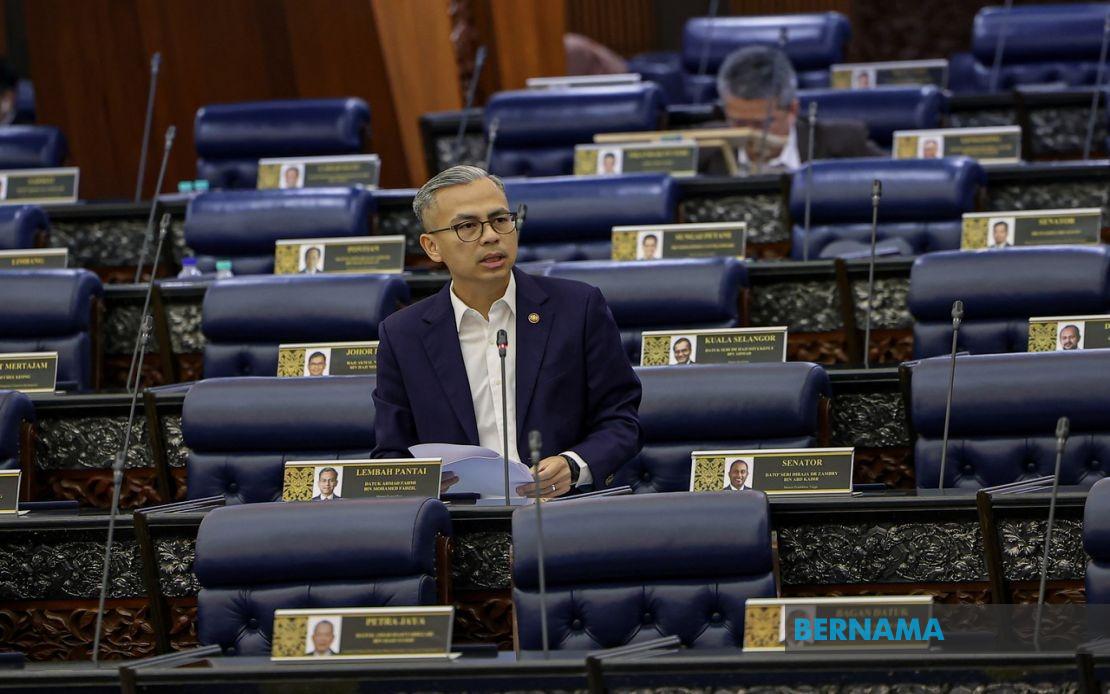
Parliament has taken a significant step toward reshaping Malaysia's telecommunications regulatory landscape with the tabling of the Communications and Multimedia (Amendment) Bill 2026 on July 13. Communications Minister Datuk Seri Fahmi Fadzil presented the legislation for its first reading in the Dewan Rakyat, with the second reading expected to proceed during the current parliamentary session. The Bill represents a substantive revision of the foundational Communications and Multimedia Act 1998, reflecting how policymakers now view digital infrastructure through a dual lens of service provision and security imperatives.
The legislative initiative centres on revising Section 202 of Act 588, introducing two new subsections that fundamentally expand ministerial authority over universal service provision. The amendments would permit the Communications Minister to direct the Malaysian Communications and Multimedia Commission (MCMC) to oversee and promote universal service initiatives whenever deemed necessary for national security purposes. This represents a deliberate policy choice to intertwine infrastructure development with security considerations, acknowledging that telecommunications networks now constitute critical infrastructure with implications beyond commercial service delivery.
Under the proposed Subsection 202(1A), the Minister gains discretionary power to instruct MCMC to support initiatives relating to network services and application services where national security interests are engaged. This language deliberately casts a wide net, covering both traditional telecommunications infrastructure and the newer domain of digital applications and online services. The breadth of this formulation suggests policymakers anticipate evolving threats and want regulatory flexibility to respond to security challenges as they emerge across the digital ecosystem.
The complementary Subsection 202(1B) extends this framework to encompass tangible infrastructure development. It specifically authorises initiatives promoting the installation of network facilities and the provision of network or application services to safeguard national security. This provision recognises that security objectives sometimes require not merely regulating existing services but actively building out capacity and redundancy in critical communication pathways. By embedding this power within universal service provisions, the legislation frames security-driven infrastructure investment as a public service obligation rather than a narrower security measure.
Crucially, the Bill stipulates that determinations regarding what constitutes a national security imperative shall rest with the National Security Council operating under Section 4 of the National Security Council Act 2016. This procedural safeguard theoretically prevents the Communications Ministry from unilaterally defining security threats and instead requires coordination with Malaysia's apex security body. However, the assignment of definitional authority to the National Security Council also represents a significant concentration of discretionary power within the executive, with limited explicit requirements for parliamentary oversight or public scrutiny of individual determinations.
The proposed amendment to Section 202(2) through Subclause 2(b) grants the Minister authority to promulgate regulations governing national universal service initiatives through Section 16 of Act 588. This delegated rule-making power enables the government to establish detailed operational frameworks without requiring subsequent parliamentary approval of each specific policy measure. For telecommunications operators and technology service providers, this suggests that ministerial directives and regulatory rules may emerge with relative speed, potentially creating compliance obligations on shorter timelines than traditional legislative processes would permit.
The Bill's architects framed these amendments as necessary responses to the telecommunications industry's evolution and technological advancement. Malaysia's communications sector has undergone dramatic transformation over the past two decades, from predominantly terrestrial cellular networks to converged platforms delivering voice, data, and entertainment across multiple technologies. Simultaneously, cybersecurity threats have proliferated, and geopolitical tensions have heightened awareness of technology supply chain vulnerabilities. The Bill acknowledges these realities, positioning universal service obligations as vehicles for building resilient, secure digital infrastructure aligned with national strategic objectives.
A significant feature of this legislative proposal is its avoidance of any new budgetary allocations. The government explicitly stated the Bill will not trigger additional financial expenditure from the national treasury. This suggests the intended mechanism relies primarily on regulatory direction and industry obligation rather than direct government investment or subsidy. Telecommunications operators and digital service providers will likely bear compliance costs, whether through infrastructure investment, operational modifications, or administrative expenses associated with implementing security-directed universal service initiatives.
For Malaysia's technology ecosystem and international investors, this amendment signals a regulatory environment increasingly attuned to security considerations. Multinational corporations operating telecommunications or digital infrastructure services in Malaysia may face new obligations to support security-oriented initiatives, though the specifics remain undefined pending regulatory elaboration. This adds a compliance layer beyond traditional commercial arrangements, potentially affecting operational flexibility and cost structures for established players and new market entrants alike.
The Bill's integration of security concerns into universal service frameworks reflects broader regional and global trends. Southeast Asian nations have increasingly recognised that digital infrastructure represents strategic national assets deserving protection equivalent to traditional critical infrastructure. The Malaysian approach of embedding security requirements within service obligation frameworks rather than creating separate security regimes represents one policy pathway, though it potentially risks conflating commercial service provision with security apparatus in ways that merit careful parliamentary scrutiny.
The timing of this legislative initiative also warrants attention. Coming at a moment of heightened geopolitical competition and evolving cybersecurity threats, the Bill demonstrates Malaysia's intent to exercise greater control over its digital infrastructure architecture. Whether this represents a necessary safeguarding of national interests or an expansion of executive discretion without sufficient countervailing accountability mechanisms will likely become a focal point during parliamentary debate and subsequent regulatory implementation.
As the Bill progresses through its second reading and subsequent parliamentary stages, telecommunications companies, digital platforms, and civil society organisations will carefully examine the detailed implications. The success of this legislation ultimately depends on how MCMC, the Communications Ministry, and the National Security Council translate broad statutory language into specific, predictable, and administratively efficient operational requirements. The parliamentary record should document the government's intent regarding the scope of security considerations and the boundaries of ministerial discretion, providing essential guidance for implementation and eventual legal interpretation.

