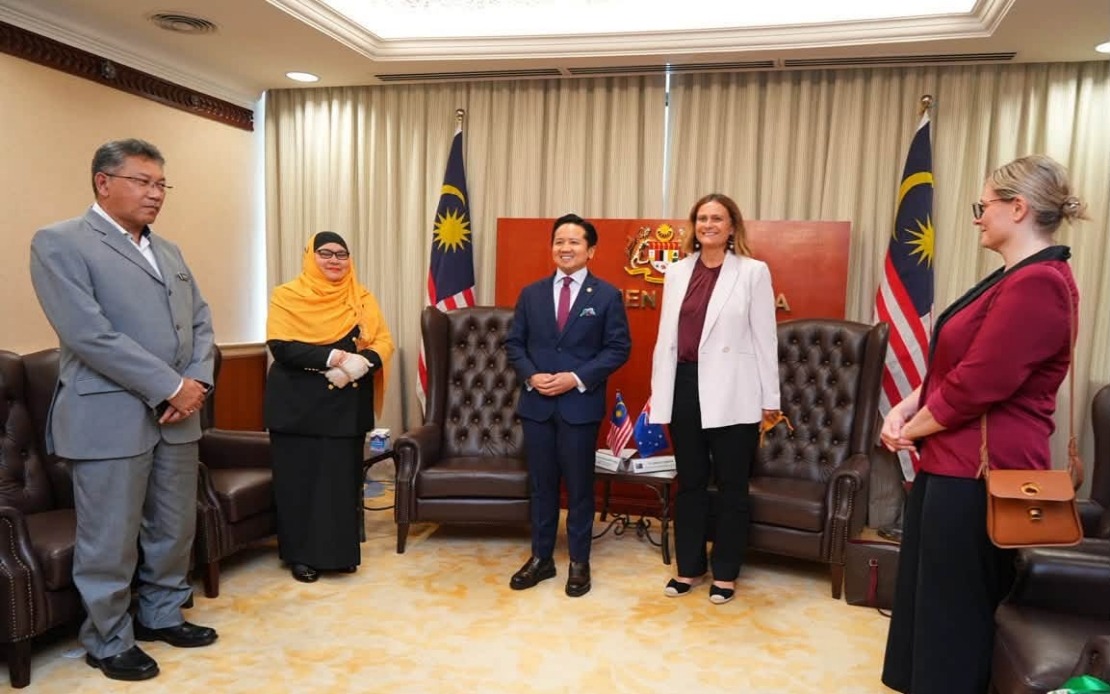
Malaysia and Australia have moved to intensify their partnership in the rare earth elements and critical minerals sectors, signalling a strategic shift towards building domestic manufacturing capacity in high-value downstream industries. The commitment emerged following discussions between Malaysia's Natural Resources and Environmental Sustainability Minister Datuk Seri Arthur Joseph Kurup and Australian High Commissioner to Malaysia Danielle Heinecke at the Parliament building, highlighting the growing importance both nations place on securing supply chains for materials essential to the global clean energy transition.
The bilateral engagement reflects Malaysia's determination to establish a complete domestic rare earth value chain stretching from midstream through to downstream processing, aligning with the broader objectives outlined in the National Mineral Policy 3 (NMP3). Rather than remaining solely a producer of raw materials, Malaysia seeks to capture greater economic value by developing the technical capacity to refine and manufacture advanced products like neodymium magnets, which are critical components in electric vehicle motors, wind turbines, and other renewable energy technologies. This shift represents a modernisation of Malaysia's traditional role as a resource-exporting nation.
Australia brings substantial technical knowledge and proven operational experience in managing the complexities of critical minerals extraction and processing. The country has established itself as a global leader in rare earth technology and has developed sophisticated methodologies for handling the environmental challenges inherent in this sector. By tapping into Australian expertise, Malaysia can accelerate its own development programme while simultaneously avoiding costly mistakes in process optimisation and regulatory compliance. This knowledge transfer is particularly valuable given the technical sophistication required to produce high-purity magnets meeting international manufacturing standards.
A significant focus of the ministerial discussions centred on the treatment and management of rare earth processing residues, specifically neutralisation underflow residue (NUF), which poses substantial environmental risks if mishandled. This technical dimension underscores that modern rare earth development must integrate rigorous environmental safeguards from the outset. Malaysia's willingness to engage with Australia on residue management reflects international best practice standards and demonstrates commitment to ensuring that economic gains do not come at the expense of environmental degradation or public health.
The development of domestic neodymium magnet manufacturing capabilities carries particular strategic significance for Malaysia. Neodymium magnets represent one of the highest-value segments of the rare earth supply chain, with applications spanning defence technology, medical imaging equipment, and renewable energy infrastructure. Establishing this manufacturing base within Malaysia would position the country as a crucial hub within regional and global technology networks, attracting related downstream industries and creating skilled employment opportunities. Such industrial development aligns with Malaysia's aspirations to transition towards higher-value manufacturing sectors.
Beyond the technical dimensions of minerals processing, the two nations explored complementary areas of environmental stewardship, including hazardous waste management protocols and marine ecosystem conservation initiatives. These discussions acknowledge that sustainable resource development requires integrated environmental management rather than siloed technical approaches. Both countries recognised that coupling industrial development with rigorous environmental protection enhances long-term competitive advantages in international markets where sustainability credentials increasingly influence investment and trade decisions.
Climate financing emerged as another collaborative priority, reflecting the urgent need for developing nations to access capital for green energy transitions. Australia and Malaysia discussed mechanisms for channelling investment towards climate-resilient projects and sustainable resource development. This conversation proved timely given Malaysia's formal commitment to the United Nations Climate Change Conference (COP31), where the country will articulate its climate action targets and resource management commitments to the international community.
The partnership operates within the established framework of the Malaysia-Australia Comprehensive Strategic Partnership (CSP), which was formalised in 2021 and provides the institutional architecture for deepening bilateral relations across multiple sectors. Rather than treating rare earth cooperation as a discrete initiative, both governments recognised it as one component within a broader relationship encompassing security, education, trade, and environmental collaboration. This integrated approach suggests sustained commitment extending beyond ministerial cycles or individual policy initiatives.
For Malaysia, the cooperation strategy addresses a fundamental economic challenge: maximising value extraction from finite mineral resources while building sustainable, knowledge-intensive industries. The rare earth sector represents precisely the type of high-technology manufacturing that Malaysia has targeted in its long-term development plans. Success in neodymium magnet production could catalyse establishment of related industries in electrical engineering, manufacturing technology, and materials science research.
The emphasis on green economic growth and long-term bilateral benefits signals mutual recognition that cooperation in critical minerals serves both nations' strategic interests. For Australia, partnership with Malaysia strengthens supply chain resilience and creates opportunities for technology export and technical service provision. For Malaysia, the arrangement unlocks access to advanced knowledge while positioning the country as a credible player in regional and global critical minerals networks increasingly shaped by decarbonisation imperatives.
Regionally, this bilateral initiative carries broader implications for Southeast Asia's positioning within global critical minerals supply chains. As Western nations diversify procurement away from concentrated suppliers, regional producers like Malaysia gain negotiating leverage and investment interest. Successful execution of the rare earth strategy could establish a template for other Southeast Asian countries seeking to develop their mineral sectors sustainably and establish higher-value manufacturing capabilities.
The coming months will determine whether these exploratory discussions translate into concrete joint ventures, shared research facilities, or investment commitments. Successful implementation would require navigating regulatory frameworks, securing sufficient capital, and developing the specialised workforce necessary for advanced minerals processing. Nevertheless, the ministerial engagement demonstrates serious political commitment from both governments to pursuing this strategic partnership.

