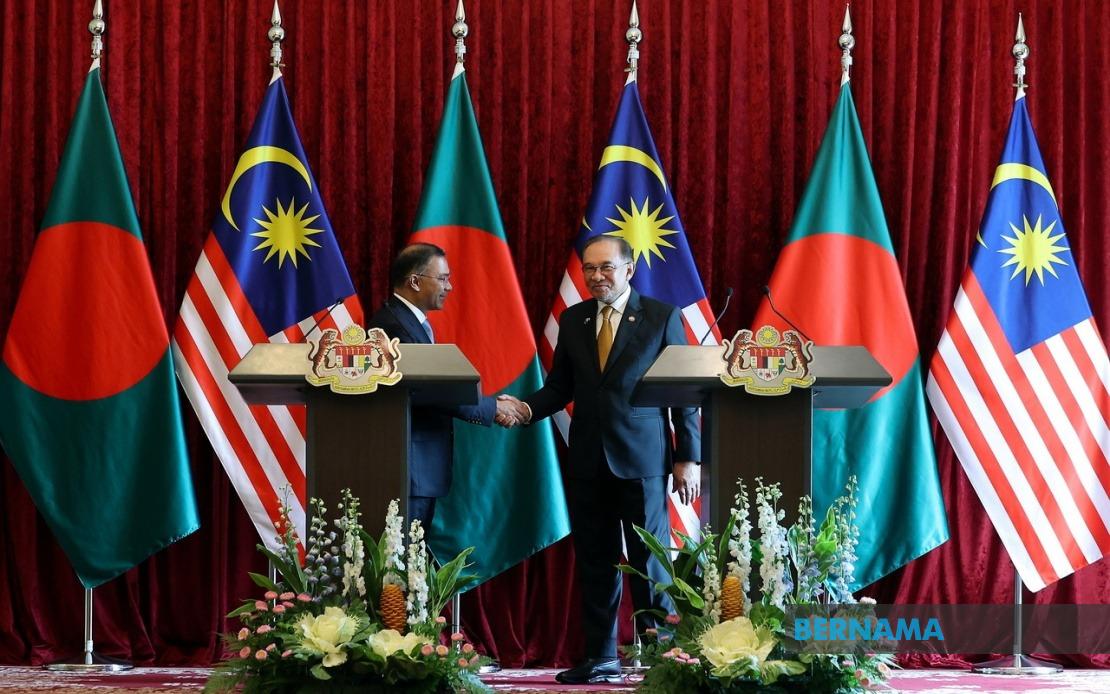
Malaysia and Bangladesh have reached a significant accord on combating the exploitation and abuse of migrant workers, marking a concerted effort by both nations to address longstanding humanitarian concerns that have plagued their labour relationship. The commitment was announced at a joint press conference in Putrajaya on June 22, where Prime Minister Datuk Seri Anwar Ibrahim met with his Bangladeshi counterpart Tarique Rahman to discuss bilateral cooperation across multiple sectors, with labour standards emerging as a priority agenda item.
Anwar's public remarks underscored the complexity of Malaysia's reliance on foreign labour, acknowledging that while migrant workers remain indispensable to the country's continued economic expansion, this dependency has simultaneously created vulnerabilities that enable systemic abuse. The Malaysian premier characterised the issue not merely as a policy concern but as a fundamental humanitarian challenge requiring urgent institutional reform, noting that the scale of scandals and grievances stemming from poor working conditions has reached a point where neither government can afford further inaction.
The Prime Minister's emphasis on transparency represents a direct response to years of documented cases involving wage theft, unsafe work environments, contract switching, and physical mistreatment of Bangladeshi workers employed across Malaysia's construction, manufacturing, and domestic sectors. By explicitly framing transparency as a cornerstone of any reformed system, Anwar signalled that Malaysia recognises the necessity of moving beyond rhetorical commitments toward concrete mechanisms that would allow oversight bodies and civil society organisations to monitor recruitment practices and workplace conditions more effectively.
Crucially, Anwar stressed that both countries share responsibility for safeguarding the interests not only of migrant workers themselves but also their families back home. This recognition acknowledges that the impact of exploitative labour practices extends far beyond individual workers to entire households and communities dependent on remittances. Bangladesh, with over nine million citizens working abroad, faces considerable pressure to ensure that outward labour migration generates genuine development benefits rather than perpetuating cycles of poverty and vulnerability.
Bangladesh Prime Minister Tarique Rahman used the bilateral engagement to advance his government's strategic labour interests, formally requesting that Malaysia expand recruitment of Bangladeshi workers and expedite the reopening of its labour market. This request reflects Bangladesh's ongoing effort to increase its citizens' access to Malaysian employment opportunities, particularly given the economic importance of overseas remittances to the Bangladeshi economy. However, such expansion must now occur within the framework of the two countries' new commitment to stricter standards.
The timing of this agreement carries particular significance for the region. Southeast Asia has increasingly confronted international scrutiny over labour rights, with organisations including the International Labour Organization and various human rights groups documenting widespread violations in supply chains and employment sectors. Malaysia, as a major destination for regional migrant labour, faces mounting pressure from foreign governments and international bodies to implement credible reforms. Bangladesh, similarly, has been criticised for insufficient oversight of its overseas recruitment agencies, many of which facilitate exploitative practices through fraudulent contracts and undisclosed fees.
The reformed recruitment system envisioned by both governments would need to address several persistent problems within current processes. Intermediary agents operating in Bangladesh frequently charge excessive fees that workers repay through wage deductions over months, effectively placing them in debt bondage. Contract terms are sometimes modified after workers arrive in Malaysia, creating disputes over salary, working hours, and conditions. Inadequate pre-departure orientation and language training compounds communication barriers that leave workers vulnerable to further exploitation.
For Malaysia specifically, implementing such reforms carries economic implications that must be carefully managed. The construction and manufacturing sectors, heavily dependent on migrant labour, face potential cost increases if tighter compliance standards are enforced. However, these sectors also risk reputational damage and supply chain vulnerabilities if exploitation continues unchecked. The government's challenge will be balancing business concerns against the moral and strategic imperative to eliminate abusive practices.
Regionally, Malaysia and Bangladesh's joint commitment could establish a model for other labour-sending and labour-receiving nations in Southeast Asia. If the two countries succeed in establishing transparent, enforceable standards that genuinely protect workers while maintaining labour flows, other bilateral relationships—such as those involving Indonesia, the Philippines, and Myanmar—may adopt similar frameworks. Conversely, failure to implement credible reforms would demonstrate that political statements lack substantive backing.
The practical operationalisation of this agreement will require substantial institutional capacity building. Malaysia would need to strengthen labour inspectorate resources, establish independent complaint mechanisms accessible to migrant workers, and potentially impose penalties on employers and recruitment agencies that violate standards. Bangladesh must similarly enhance oversight of its recruitment agencies and establish dedicated units to assist workers facing abuse. Both countries may benefit from third-party monitoring arrangements with international organisations.
The agreement also implies a broader reimagining of Malaysia's labour migration policy. Rather than treating migrant workers primarily as economic inputs to be sourced with minimal regulatory friction, the new framework positions them as rights-bearing individuals deserving of protection equivalent to Malaysian citizens. This conceptual shift, while progressive, will require sustained political will to implement against pressures from employers seeking to maintain cost advantages through lax standards.
For Bangladeshi workers currently in Malaysia and those considering migration, the agreement offers hope but demands vigilance. Implementation will ultimately determine whether the bilateral accord translates into tangible improvements in working conditions, wage security, and access to justice. International observers and civil society groups will likely monitor compliance closely, and any backsliding could trigger renewed international criticism and potentially affect Malaysia's labour agreements with other countries.