%22%2F%3E%3C%2Fpattern%3E%3C%2Fdefs%3E%3Crect%20width%3D%22100%25%22%20height%3D%22100%25%22%20fill%3D%22url(%23ph1jjv2g)%22%2F%3E%3Crect%20width%3D%22100%25%22%20height%3D%22100%25%22%20fill%3D%22url(%23ph1jjv2p)%22%2F%3E%3Ctext%20x%3D%2250%25%22%20y%3D%2250%25%22%20text-anchor%3D%22middle%22%20dominant-baseline%3D%22central%22%20fill%3D%22rgba(255%2C255%2C255%2C0.95)%22%20font-family%3D%22Georgia%2C%20'Times%20New%20Roman'%2C%20serif%22%20font-weight%3D%22700%22%20font-size%3D%22170%22%20letter-spacing%3D%22-0.02em%22%3EMalaysia%3C%2Ftext%3E%3C%2Fsvg%3E)
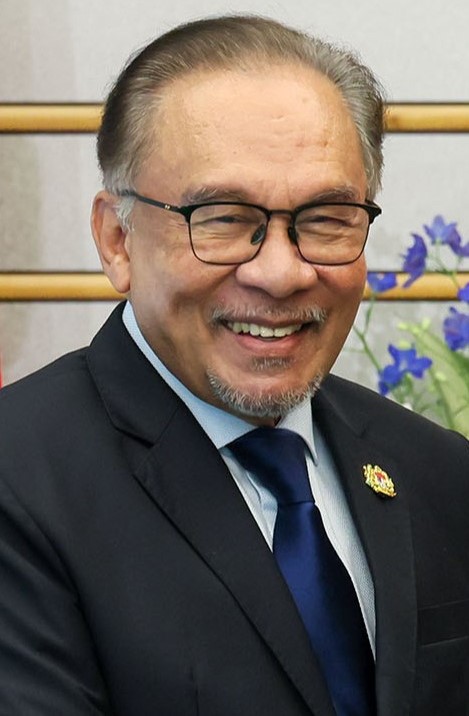
Malaysia and Bangladesh have committed to leveraging ASEAN frameworks and diplomatic channels to address the protracted Rohingya refugee crisis, according to Prime Minister Datuk Seri Anwar Ibrahim. Speaking during a joint press conference with visiting Bangladesh Prime Minister Tarique Rahman in Putrajaya, Anwar underscored the shared resolve between the two nations to find durable solutions for Rohingya populations currently sheltering within their borders. The undertaking reflects growing recognition in the region that sustained multilateral engagement remains essential to unlocking progress on an issue that has resisted conventional bilateral approaches.
The Malaysian and Bangladeshi leaders signalled their intention to utilise diplomatic mechanisms at their disposal, particularly through coordination between respective foreign ministries and formal ASEAN structures, to press for dialogue with Myanmar's authorities. This strategy acknowledges that substantive progress hinges partly on Myanmar's willingness to engage constructively and facilitate conditions enabling voluntary, safe repatriation. For Bangladesh, which hosts the overwhelming majority of the region's displaced Rohingya population, the emphasis on coordinated regional pressure carries particular weight, as Dhaka continues managing one of the world's largest refugee camps with substantial international support.
Tarique, who has been in office since February 2026, articulated Bangladesh's acute concern regarding the humanitarian dimensions of the refugee presence while commending Malaysia's provision of material assistance and advocacy for humane repatriation standards. His characterisation of the desired outcome—safe, dignified, and sustainable return to Myanmar—reflects a principled stance shared across the region that any solution must protect Rohingya rights and security rather than pursuing rapid but precarious resettlement. This emphasis on process integrity, not merely numerical targets, shapes how both countries approach their humanitarian obligations and regional standing.
Beyond the Rohingya question, the bilateral engagement between Anwar and Tarique encompassed a broader review of Malaysia-Bangladesh relations and identification of growth opportunities. Their formal discussions ranged across trade and investment partnerships, human resource development, semiconductor industries, energy cooperation, agricultural linkages, and educational exchanges. This comprehensive agenda reflects deepening recognition that Southeast Asia and South Asia benefit from enhanced economic connectivity and that Malaysia-Bangladesh ties serve as a microcosm of potential regional integration across these two maritime-centred zones.
The two governments formalised their expanded cooperation through multiple instruments signed during the visit. A Memorandum of Understanding on Cultural Cooperation establishes formal structures for knowledge sharing, artistic exchange, and heritage preservation initiatives. Simultaneously, two Exchanges of Notes were executed covering counter-terrorism research collaboration and investment promotion mechanisms. These institutional arrangements signal that both capitals are institutionalising cooperation beyond ad hoc coordination, creating persistent frameworks that can survive individual political transitions and generate sustained mutual benefit.
Tarique's visit to Kuala Lumpur represents his inaugural bilateral official journey abroad since assuming the Bangladesh premiership in early 2026, a ceremonial choice that underscores the diplomatic significance Malaysia holds within Bangladesh's immediate regional hierarchy. Malaysia's positioning as a fellow Muslim-majority nation with established ASEAN credentials and proven capacity to mobilise regional consensus makes it a natural priority destination for Bangladesh's external engagement. The timing and protocol of the visit signal Dhaka's recognition that effective regional diplomacy on complex issues like the Rohingya question requires cultivating strong relationships with key regional powers.
Economic ties between the two nations have expanded substantially, with 2025 bilateral trade reaching RM12.18 billion, demonstrating growing commercial interdependence. Malaysia's export portfolio to Bangladesh, valued at RM10.08 billion, predominantly comprises petroleum products, reflecting both Malaysia's refining capacity and Bangladesh's energy requirements amid rapid industrialisation. Conversely, Bangladesh contributes RM2.10 billion in imports, principally textiles, apparel, and footwear, sectors where Bangladesh has emerged as a globally significant manufacturing hub. This complementary trade structure provides economic substance to diplomatic partnerships and creates constituencies within both nations invested in maintaining stable, cooperative bilateral relations.
Bangladesh's position as Malaysia's 28th largest trading partner globally and second-largest within South Asia, after India, reflects the relationship's growing commercial weight. This ranking positions Bangladesh alongside established economic partners and signals Malaysia's strategic attention to South Asian developments. For Bangladesh, Malaysia represents a critical gateway to Southeast Asian markets and a source of technology and investment capital supporting its continued industrialisation. This economic foundation provides leverage and incentive for addressing shared challenges through cooperative frameworks rather than through confrontational approaches that might disrupt commercial flows.
The Rohingya issue exemplifies transnational challenges that resist unilateral solutions and demand sustained multilateral coordination. Malaysia hosts over 180,000 registered Rohingya refugees alongside considerably larger undocumented populations, straining social services and creating complex integration questions. Bangladesh shelters approximately 900,000 Rohingya across sprawling camps, predominantly in the Cox's Bazar district, where humanitarian conditions remain precarious despite international assistance. Neither nation can resolve this crisis independently; both require Myanmar's cooperation, sustained international support, and coordinated regional pressure to create conditions enabling voluntary repatriation combined with temporary protection for those unable or unwilling to return immediately.
The invocation of ASEAN mechanisms signals that Malaysia and Bangladesh are pursuing channels that engage the broader regional community, including ASEAN members with established diplomatic relationships with Myanmar. This approach differs from isolated bilateral pressure and instead embeds Myanmar within regional diplomatic ecosystems where consensus-building, peer pressure, and mutual interests can generate motivation for constructive engagement. ASEAN's principle of non-interference limits the forum's interventionary capacity, yet it provides neutral space for dialogue and creates diplomatic costs for obstruction that member states often weigh carefully.
Future progress likely depends on Myanmar's domestic political evolution and international pressure convergence. The Rohingya question intersects with Myanmar's broader governance challenges and international standing, particularly regarding accountability for past atrocities and humanitarian access. Malaysia and Bangladesh's commitment through ASEAN channels acknowledges these complexities while maintaining diplomatic pressure through institutionalised cooperation rather than rhetorical denunciation. This measured approach seeks to maintain Myanmar's engagement with regional bodies rather than driving it toward isolation, a calculation that reflects mature understanding of regional dynamics and the limited leverage available to external actors.
The visit also demonstrates how bilateral partnerships increasingly serve as vehicles for addressing regional and global challenges rather than functioning purely as transactional exchanges of goods and services. Malaysia-Bangladesh cooperation on counter-terrorism research, cultural exchange, and investment promotion creates networks and relationships that enhance both societies' resilience and adaptive capacity. As Southeast Asia and South Asia navigate transnational threats ranging from terrorism to climate change to refugee crises, these institutional frameworks provide foundational architecture for coordinated responses. The Anwar-Tarique engagement thus represents not merely bilateral diplomacy but contribution to building regional governance capacity for addressing shared challenges.