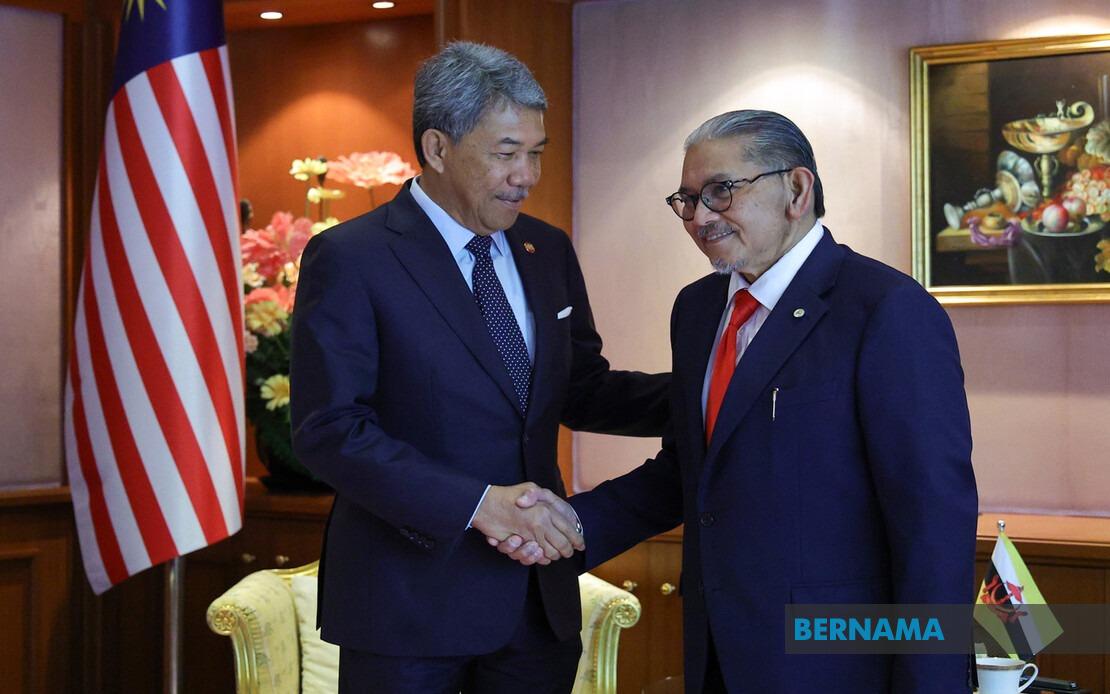
Malaysia and Brunei are moving forward with a comprehensive strengthening of their bilateral relationship, as demonstrated by the 27th Meeting on the Implementation of the Exchange of Letters held in Bandar Seri Begawan. Foreign Minister Datuk Seri Mohamad Hasan, who co-chaired the talks alongside Brunei Second Minister of Foreign Affairs Datuk Seri Setia Erywan Mohd Yusof, highlighted the substantive progress achieved across multiple policy domains, signalling the sustained commitment of both nations to deepen cooperation in critical areas affecting their shared borders and populations.
The meeting addressed a range of bilateral matters that reflect the complex interdependencies between the two neighbours. Discussions centred on territorial demarcation, regional security mechanisms, and enhanced people-to-people mobility across the closely connected territories of Brunei, Sarawak, and Sabah. This multi-layered agenda underscores how Malaysia and Brunei continue to navigate both longstanding technical matters and contemporary challenges that require fresh institutional frameworks to manage effectively.
A particularly significant outcome is the anticipated signing of a memorandum of understanding governing search and rescue operations. This agreement represents an important development for maritime and coastal security in the region, establishing formal protocols and coordination mechanisms that will enable faster, more efficient responses to emergencies affecting citizens of either nation. Given the shared maritime environment and the need for seamless cross-border coordination during crises, such a framework addresses a genuine operational gap that has likely hampered rescue efforts in the past.
On the contentious issue of land boundaries, both countries have made tangible progress in their demarcation efforts, having completed approximately fifty percent of the comprehensive boundary marking process. This measured advancement reflects years of technical and diplomatic groundwork. While the existing boundary itself has long been established and accepted by both sides, the formal demarcation—physically marking the line on the ground—requires meticulous work that accounts for geographical complexities, historical documentation, and on-site conditions that may not have been fully evident during earlier agreements.
The demarcation initiative operates within the framework of a 2009 Terms of Reference that governs the methodology and standards for this work. Both Malaysia and Brunei have committed to ensuring that their field-based technical committees adhere to these established parameters as they continue their laborious ground surveys and marking exercises. This adherence to a pre-agreed framework provides both certainty and impartiality in resolving any disputes that might arise as the teams work through difficult terrain and historical boundary interpretations.
The forthcoming report from the technical committee on the ground promises to be crucial in advancing the remaining fifty percent of the demarcation work. These on-the-ground specialists bear responsibility for documenting geographical features, reconciling historical records, and recommending appropriate demarcation methods that reflect both the letter of the 2009 Terms of Reference and the practical realities of the landscape. The committee's findings will likely determine whether the demarcation can proceed smoothly or whether additional diplomatic consultation is needed to resolve specific sections.
Facilitating movement between the populations of Brunei, Sarawak, and Sabah emerged as another priority area during the bilateral talks. This reflects the reality that these three territories are demographically and economically interwoven, with families, businesses, and cultural ties spanning the borders. Streamlining bureaucratic procedures and enabling smoother transit arrangements can significantly enhance economic integration and social cohesion in this corner of Southeast Asia, potentially catalysing regional development initiatives that benefit all parties.
The timing and frequency of these Exchange of Letters meetings—now in their 27th iteration—demonstrates the institutionalised nature of Malaysia-Brunei relations. Rather than addressing disputes through ad-hoc crisis management, both nations have embedded regular diplomatic engagement into their bilateral architecture. This systematic approach reduces misunderstandings, builds trust through consistent dialogue, and ensures that emerging issues are addressed before they escalate into more intractable problems.
For Malaysia and Brunei, maintaining and upgrading bilateral mechanisms carries importance beyond the immediate bilateral sphere. As two of Brunei's closest neighbours and fellow members of the ASEAN community, the stability and depth of their partnership contributes to broader regional stability in Southeast Asia. Clear boundary demarcation, effective search and rescue coordination, and facilitated cross-border movement exemplify the kind of practical cooperation that underpins peaceful coexistence in a geographically complex region where maritime boundaries, shared resources, and historical claims occasionally generate tension.
The progress reported by Datuk Seri Mohamad Hasan also signals confidence in the bilateral relationship's trajectory. With half the boundary demarcation complete and new cooperative frameworks being formalised, both countries appear committed to resolving technical matters methodically rather than allowing them to fester. This approach reduces the risk that routine administrative matters become fodder for nationalist political rhetoric or historical grievances, a challenge that plagues many border relationships globally.
Looking ahead, the successful completion of the remaining boundary demarcation will require sustained political will from both capitals and continued technical coordination among the field teams. The signing of the search and rescue memorandum will establish new operational protocols that must be regularly tested and refined to ensure effectiveness when emergencies actually occur. Simultaneously, facilitating easier movement for citizens of the three territories will require harmonising visa policies, customs procedures, and transportation infrastructure—tasks that demand both bureaucratic coordination and investment.

