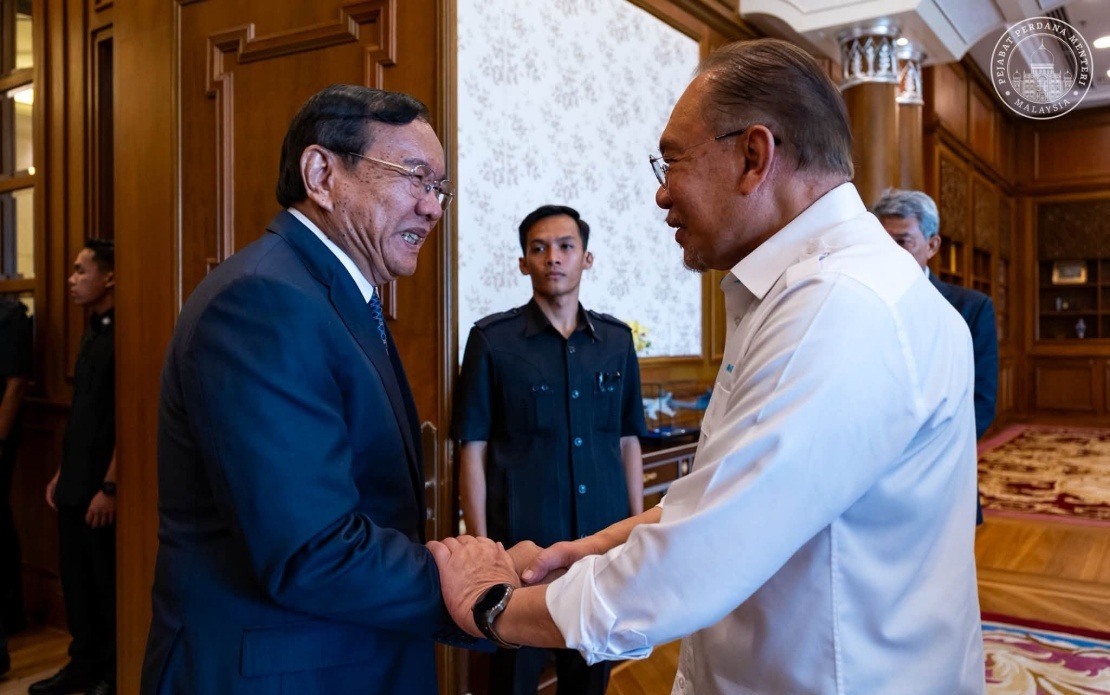
Prime Minister Datuk Seri Anwar Ibrahim has announced a comprehensive framework to deepen Malaysia-Cambodia ties across multiple economic and security domains, signalling Kuala Lumpur's commitment to strengthening one of Southeast Asia's historically significant bilateral relationships. The commitment emerged during high-level discussions with Cambodian Deputy Prime Minister and Foreign Minister Prak Sokhonn, who arrived in Malaysia for a two-day official visit that underscores the importance both nations place on their diplomatic partnership.
The expanded cooperation agenda reflects contemporary regional priorities that extend well beyond traditional trade channels. Both countries have identified the digital economy and artificial intelligence as critical growth areas where mutual capacity-building and technology transfer can unlock significant value for their respective economies. This focus aligns with broader ASEAN initiatives to position Southeast Asia as a competitive digital hub, particularly as global technology companies increasingly diversify their operations beyond China and traditional Western markets. For Malaysia, deepening technological cooperation with Cambodia represents an opportunity to position itself as a regional technology leader while simultaneously supporting a neighbouring nation's digital transformation.
The halal industry component of the bilateral framework carries particular weight, given Malaysia's established position as a global halal certification authority and Cambodia's growing Muslim-majority demographic in certain regions. Enhanced cooperation in this sector could open pathways for Malaysian halal expertise, standards, and certification services to become embedded in Cambodia's food and pharmaceutical industries. This presents commercial opportunities for Malaysian businesses while simultaneously strengthening cultural and religious ties between the two nations, fostering people-to-people connections beyond governmental interactions.
Food security emerged as another priority area, reflecting shared vulnerabilities to climate change, supply chain disruptions, and demographic pressures across Southeast Asia. By coordinating agricultural policies, sharing crop research, and establishing supply chain resilience mechanisms, both nations can buffer themselves against future crises. Malaysia's advanced agricultural technology and Cambodia's significant arable land resources could be complementary assets in developing a more robust regional food production network, particularly relevant given increasing global competition for food supplies.
The commitment to combating cross-border crime represents a critical security dimension that has gained urgency in recent years. Southeast Asia confronts sophisticated transnational criminal networks engaged in human trafficking, drug smuggling, wildlife trafficking, and cyber-enabled financial crimes. Enhanced intelligence sharing, joint law enforcement operations, and coordinated border management between Malaysia and Cambodia can disrupt these networks' operational effectiveness. This cooperation becomes especially significant given Cambodia's geographic positioning as a potential transit route for illicit goods flowing through Southeast Asia.
Human capital development—the fifth pillar of the partnership framework—addresses a fundamental challenge across both nations: cultivating skilled workforces capable of competing in knowledge-intensive industries. Through educational exchanges, vocational training programmes, and capacity-building initiatives, Malaysia can leverage its established educational institutions while Cambodia gains access to expertise and resources. Such investments in people create lasting bonds between societies and generate tangible benefits for ordinary citizens, moving bilateral relations beyond elite diplomatic circles.
The Third Malaysia-Cambodia Joint Commission for Bilateral Cooperation meeting scheduled for August 4 serves as the formal institutional mechanism for operationalising these commitments. Joint commissions function as crucial coordination bodies that translate political declarations into concrete action plans, establish timelines, allocate resources, and create accountability mechanisms. The existence of such structured dialogue platforms demonstrates the maturity of the bilateral relationship and the serious intent both governments place on implementation rather than mere rhetorical flourishes.
The timing of this engagement acquires additional significance against the backdrop of ASEAN's collective agenda. As member states of the Association of Southeast Asian Nations, Malaysia and Cambodia share institutional responsibilities for advancing regional integration, preserving peace, and realising the ASEAN Community Vision 2045. Bilateral partnerships that reinforce shared values and operational capacity ultimately strengthen ASEAN's collective bargaining power in international negotiations and its ability to manage regional challenges from climate change to great power competition.
Looking ahead, the commemoration of the 70th anniversary of Malaysia-Cambodia diplomatic relations in 2027 provides an extended timeframe for consolidating and expanding these initiatives. Rather than representing a milestone merely worthy of ceremonial recognition, the approaching anniversary offers a practical opportunity to assess progress on current commitments and identify new areas for cooperation reflecting evolving regional circumstances and shared interests.
For Malaysia specifically, deepening engagement with Cambodia reinforces its positioning as a constructive regional power committed to advancing prosperity and stability throughout Southeast Asia. Such engagement also diversifies Malaysia's diplomatic portfolio and economic partnerships, reducing dependency on any single bilateral relationship. From Cambodia's perspective, strengthened ties with Malaysia provide access to expertise, investment, and markets that can accelerate its own development trajectory while fostering confidence with a larger, more developed neighbour.

