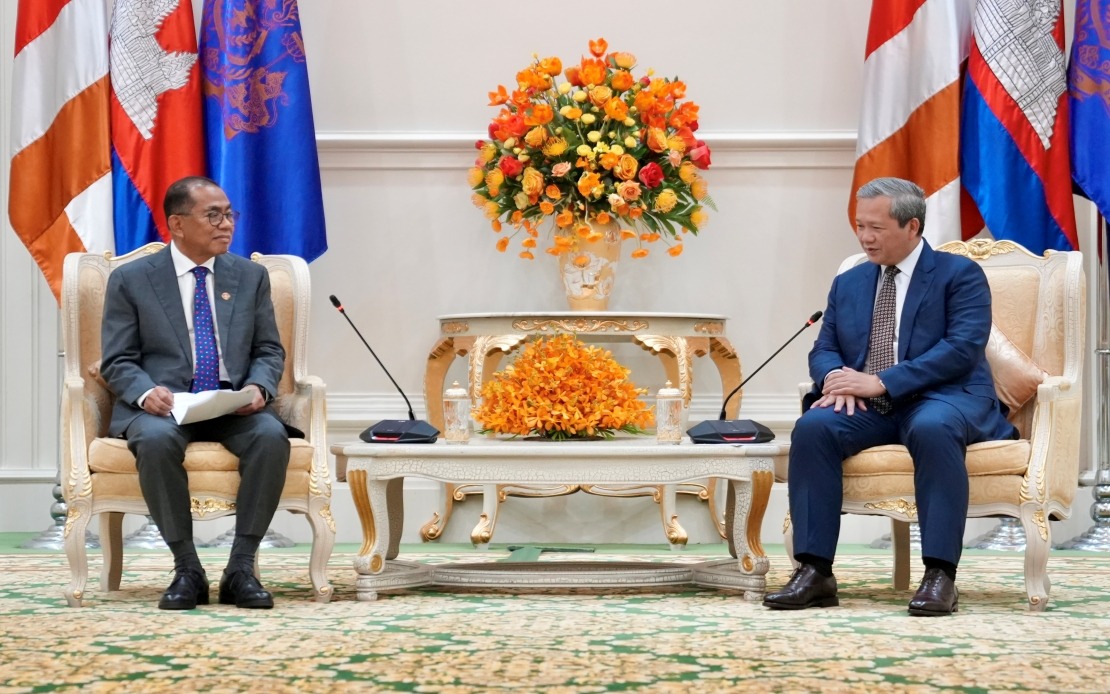
Malaysia and Cambodia are moving closer to formalising a comprehensive defence partnership that reflects expanding security cooperation across Southeast Asia. Defence Minister Datuk Seri Mohamed Khaled Nordin travelled to Phnom Penh this week to meet with Cambodian Prime Minister Samdech Thipadei Hun Manet and Defence Deputy Prime Minister General Tea Seiha, signalling Kuala Lumpur's commitment to deepening ties with its regional neighbours at a time of heightened geopolitical complexity.
The centrepiece of these discussions was progress on the Malaysia-Cambodia Defence Cooperation Memorandum of Understanding, which both nations are working to finalise. This framework will establish formal mechanisms for expanded collaboration, moving beyond traditional military partnerships into emerging security domains. The agreement represents a significant step in institutionalising defence relations between the two countries and reflects their shared interest in bolstering regional security architecture.
While Malaysia no longer holds the ASEAN Chair, the country has maintained its diplomatic momentum in addressing regional security challenges. Mohamed Khaled emphasised that Malaysia continues to support ASEAN centrality and dialogue-based approaches to resolving disputes. Both sides reaffirmed the importance of peaceful resolution mechanisms, particularly concerning ongoing tensions along the Cambodia-Thailand border where ceasefire arrangements remain fragile. Malaysia's sustained backing for the ASEAN Observer Team demonstrates Kuala Lumpur's investment in conflict prevention mechanisms that have proven essential for maintaining stability in the region.
The scope of bilateral defence cooperation is expanding into areas that reflect modern security threats and technological advancement. Beyond traditional military exercises, Malaysia and Cambodia are exploring collaboration in jungle warfare training, reflecting the shared terrain and operational challenges both nations face. More significantly, the two countries are establishing partnerships in defence industry development, artificial intelligence applications, and drone technology—domains that will increasingly shape military capabilities and strategic competition in Southeast Asia.
The discussion of South China Sea matters underscores how bilateral defence cooperation connects to broader regional interests. Both nations have stressed the importance of finalising the Code of Conduct in the South China Sea, viewing it as essential for maintaining a rules-based order and preventing militarisation of contested waters. This shared perspective highlights how smaller Southeast Asian nations are leveraging multilateral frameworks to manage great power competition and protect their maritime interests.
Mohammad Khaled's visit follows an earlier official working visit to Vietnam on August 5-6, where he engaged with Prime Minister Le Minh Hung and Defence Minister General Phan Van Giang. These consecutive visits to two major ASEAN military powers demonstrate Malaysia's systematic approach to defence diplomacy, reinforcing partnerships that support regional equilibrium. The sequencing of these visits—Vietnam followed by Cambodia—reflects Malaysia's balanced engagement across ASEAN's diverse political landscape and security priorities.
The timing of these diplomatic engagements carries particular significance as Malaysia positions itself within ASEAN's evolving security architecture. By implementing the Third Pillar of the National Defence Strategy, titled Credible Partnerships, Malaysia is building a network of bilateral relationships that collectively strengthen ASEAN's defensive capabilities. Chief of the Royal Malaysian Navy Admiral Tan Sri Zulhelmy Ithnain's participation in the Cambodian delegation signals the operational dimension of these partnerships, extending beyond political declarations to military-to-military exchanges.
Looking ahead, both nations are conscious of the approaching 70th anniversary of their diplomatic relations in 2027. Mohamed Khaled expressed confidence that the strengthened defence cooperation will enhance bilateral ties during this landmark period. This forward-looking perspective suggests Malaysia is intentionally building institutional foundations that will define Malaysia-Cambodia relations through this milestone and beyond. The Defence Cooperation MoU is expected to receive formal endorsement during the ASEAN Defence Ministers' Meeting in the Philippines, providing a multilateral platform for its adoption.
For Malaysia and broader Southeast Asia, these developments carry strategic weight amid rising regional tensions and shifting geopolitical alignments. The emphasis on dialogue, ASEAN mechanisms, and peaceful resolution approaches contrasts with more confrontational postures elsewhere. By strengthening bilateral defence ties while reinforcing ASEAN centrality, Malaysia is attempting to preserve space for smaller states to manage their security interests through cooperative frameworks rather than alignment with external powers. The focus on emerging technologies and modern warfare domains also signals recognition that Southeast Asian security challenges increasingly transcend traditional military concerns.
The Defence Ministry's framing of these visits within the National Defence Strategy underscores how Malaysia integrates bilateral defence partnerships into a coherent strategic doctrine. This systematic approach contrasts with ad-hoc diplomatic engagement and reflects institutional learning about how sustained, structured partnerships contribute to regional stability. The involvement of senior naval and policy officials indicates these are substantive military-to-military relationships rather than ceremonial exchanges.
Cambodia's receptiveness to strengthened defence cooperation reflects its own assessment that enhanced ties with fellow ASEAN members serve its security interests better than exclusive reliance on external powers. The bilateral discussions on border security and ceasefire maintenance in Cambodia-Thailand zones demonstrate how defence partnerships support practical conflict management in contested regions. For Malaysian policymakers, this represents an opportunity to extend Kuala Lumpur's influence as a stabilising actor while building coalitions around shared security concerns.
The emphasis on new domains like artificial intelligence and drone technology reveals both nations recognising that future security challenges will be shaped by technological capabilities. By establishing cooperative frameworks now, Malaysia and Cambodia position themselves to develop indigenous defence capabilities rather than remaining dependent on external suppliers. This aspect of the partnership carries economic implications for both countries' defence industries and suggests a longer-term vision of regional defence industrial cooperation.
Ultimately, the Malaysia-Cambodia defence cooperation represents measured but significant progress in regional security architecture. While not headline-grabbing in isolation, these partnerships collectively constitute the binding mechanism that keeps ASEAN cohesive amid external pressures. For Malaysian readers, the significance lies in understanding how bilateral defence diplomacy supports both immediate security interests and long-term regional stability that underpins prosperity and growth.

