Malaysia and the European Union are making steady progress on their bilateral free trade agreement, with negotiators having wrapped up discussions on five key chapters and setting their sights on finalising the accord within the next two years. Investment, Trade and Industry Deputy Minister Sim Tze Tzin announced that the fourth round of talks, conducted in Kuala Lumpur from June 8 to 12, resulted in the conclusion of three important chapters covering customs procedures, trade remedies, and regulatory harmonisation. Combined with agreements reached during earlier negotiating rounds, the two sides have now cleared half of the major hurdles in crafting what officials describe as a transformative partnership.
The Malaysia-European Union Free Trade Agreement represents an ambitious undertaking to deepen economic ties between Kuala Lumpur and the bloc that represents the world's largest integrated single market. Sim characterised the deal as potentially game-changing for Malaysia's economy, particularly in unlocking opportunities within high-technology services, renewable energy sectors, and the burgeoning digital trade landscape. For European firms, the agreement promises improved market access to Southeast Asia's third-largest economy and a reliable manufacturing hub serving regional supply chains. The next phase of negotiations is scheduled to occur in Brussels from September 21 to 25, keeping both sides on track to meet their 2027 deadline.
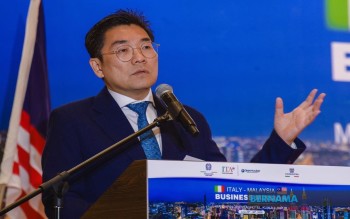
The negotiations take place against a backdrop of strengthening Malaysia-Europe bilateral relations. Prime Minister Datuk Seri Anwar Ibrahim's official visit to Italy in July of the previous year, undertaken at the invitation of Italian Premier Giorgia Meloni, helped catalyse momentum toward the trade agreement. The Italy-Malaysia Business Mission held in Kuala Lumpur, where Sim made his announcement, exemplifies the deepening engagement between the two countries and reflects broader efforts to translate political goodwill into concrete economic partnerships. Italian companies increasingly view Malaysia as an attractive investment destination, particularly for manufacturing operations intended to serve Southeast Asian markets.
Malaysia's trade relationship with Italy specifically demonstrates the commercial potential that the wider EU agreement seeks to amplify. In 2025, bilateral trade between the two countries climbed 14.2 percent year-on-year to reach approximately RM17 billion, positioning Italy as Malaysia's fifth-largest trading partner across Europe. Malaysian exports to Italy expanded by 12.7 percent year-on-year to RM7.6 billion during the same period, with the increase driven substantially by shipments of palm oil and palm-derived products, steel and iron goods, electrical and electronic components, and industrial machinery. This mix of goods reflects Malaysia's established strengths in commodity production and intermediate manufacturing.
On the import side, Malaysia brings in sophisticated machinery, precision optical and scientific instruments, industrial chemicals, and electronic products from Italy, underscoring the complementary nature of the two economies. While Malaysia excels in resource-based and labour-intensive manufacturing, Italy brings world-class expertise in high-precision machinery production and advanced manufacturing techniques. This division of comparative advantage provides a foundation upon which the broader EU trade agreement can build, potentially allowing Malaysian firms to integrate further into European supply chains while offering EU manufacturers access to Southeast Asian markets through Malaysian operations.
Italian investment in Malaysia has already reached substantial levels, with over eighty manufacturing projects valued at US$442 million now operational across diverse sectors ranging from food processing and chemicals to aerospace engineering. These investments testify to Italian industrialists' confidence in Malaysia's business environment, comprehensive industrial infrastructure, and established supply chain networks that facilitate production for regional distribution. Sim noted that Italy's manufacturing prowess, particularly in machinery and equipment, aligns well with Malaysia's existing capabilities, creating potential for joint ventures and technology partnerships that could benefit both economies.
Malaysia's efforts to advance into higher-value manufacturing segments feature prominently in the government's strategic vision for the trade agreement's implementation. The New Investment Incentive Framework, which commenced operations in March 2025, provides a policy instrument for attracting capital into semiconductor manufacturing, integrated circuit design, and other advanced manufacturing domains. Deputy Minister Sim emphasised that these incentives apply equally to both foreign investors and Malaysian companies, contrary to perceptions that only overseas operations receive support. The framework specifically aims to help domestic industries climb the value chain and achieve greater international competitiveness.
The semiconductor sector represents a particularly significant focus within Malaysia's manufacturing ambitions. As global supply chain dynamics continue shifting following disruptions in recent years, Malaysia is positioning itself as a reliable alternative production location for semiconductor components and related technologies. The government's targeted incentive structure encourages foreign direct investment in front-end semiconductor activities while simultaneously supporting Malaysian firms seeking to develop indigenous capabilities in higher-value manufacturing. This dual approach seeks to create a thriving local industry rather than merely hosting foreign operations.
For Malaysian readers and businesses, the MEUFTA framework promises tangible benefits across multiple dimensions. Manufacturers exporting to Europe would face reduced tariffs and streamlined customs procedures, lowering costs and improving competitiveness. Services providers, particularly in digital and technology sectors, would gain improved market access to the EU's half-billion-person consumer base. Conversely, European firms entering Malaysia gain a lower-cost production base with sophisticated infrastructure from which to serve both the domestic market and regional neighbours. The agreement's emphasis on regulatory harmonisation and standardisation helps eliminate non-tariff barriers that have historically complicated trade.
The 2027 completion target reflects both the complexity of negotiating a comprehensive trade framework and the genuine commitment of both sides to achieving results within a reasonable timeframe. Trade agreements of this scope typically span multiple years because they must address not only tariffs but also services, intellectual property, labour standards, environmental provisions, and regulatory compatibility across diverse economic systems. By maintaining momentum through quarterly negotiating rounds and setting a clear deadline, Malaysia and the EU signal serious intent to conclude what would represent one of Malaysia's most significant trade pacts with a major developed market bloc.
For Southeast Asia more broadly, the Malaysia-EU agreement carries strategic implications beyond bilateral commerce. It demonstrates that Malaysia, despite its membership in regional organisations such as ASEAN, continues pursuing its own bilateral trade negotiations with major powers. This approach complements rather than contradicts regional integration efforts, as it brings external capital and technology into the region while creating hubs through which regional neighbours can access EU markets. The agreement's success could also set templates for other ASEAN members considering similar arrangements with the EU, potentially catalysing broader EU-Southeast Asia economic engagement.
The emphasis on green energy and digital trade within the anticipated agreement reflects contemporary global economic trends. As the world economy transitions toward decarbonisation and digital platforms reshape commerce, both Malaysia and the EU recognise the necessity of establishing frameworks that facilitate rather than hinder these transformations. Malaysian companies developing renewable energy technologies or digital services find natural markets in Europe, while European green technology providers see Malaysia and Southeast Asia as growth markets where clean energy demand is rising rapidly alongside urbanisation and development.
Looking forward, successful completion of the MEUFTA would position Malaysia as a bridge between Europe and Southeast Asia, leveraging its geographic location and established manufacturing base to serve both markets efficiently. The agreement would also reinforce Malaysia's reputation as a pragmatic economic partner willing to engage in mutually beneficial arrangements that respect both parties' interests and developmental priorities. As negotiations resume in Brussels, Malaysian stakeholders including manufacturers, service providers, and investors should begin preparing for the expanded opportunities the completed agreement would create.

