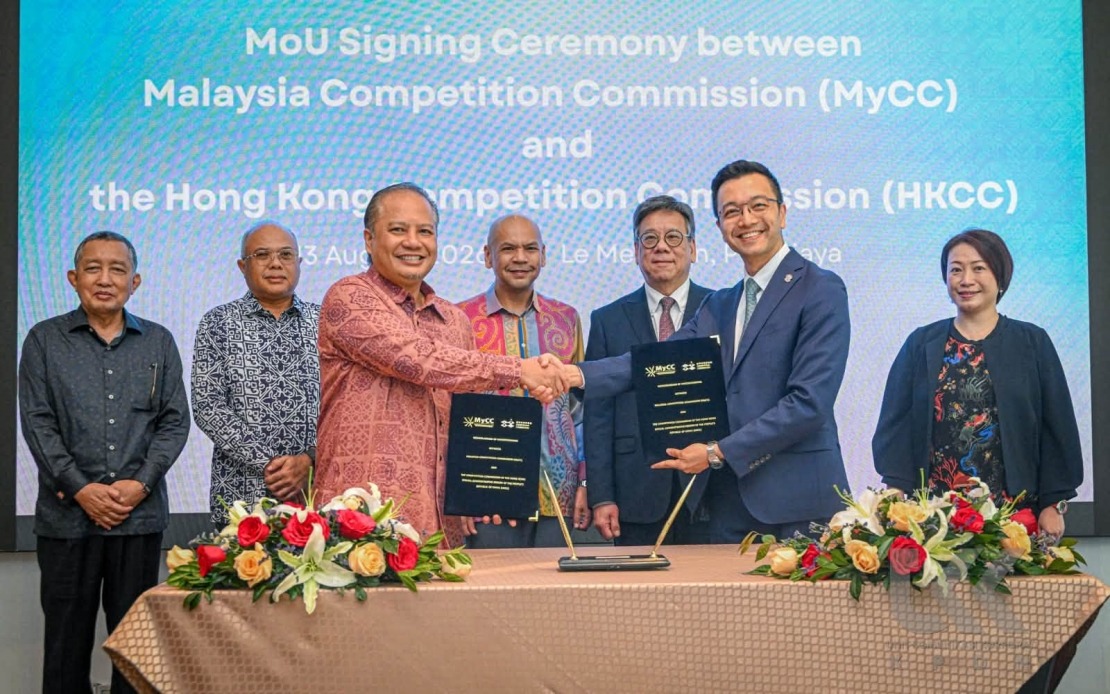
Malaysia's competition authority has entered into a fresh partnership with its Hong Kong counterpart, signalling deepening regional commitment to tackling anti-competitive practices that span multiple jurisdictions. The Malaysia Competition Commission and the Hong Kong Competition Commission formalised their collaboration through a Memorandum of Understanding, establishing a framework that will facilitate seamless information sharing and joint enforcement efforts across both economies. Domestic Trade and Cost of Living Minister Datuk Armizan Mohd Ali highlighted the significance of the accord, positioning it as part of a broader strategy to combat market distortions that increasingly transcend national boundaries.
This agreement represents MyCC's fourth formal arrangement with foreign competition bodies, extending Malaysia's existing partnerships with the Türkiye Competition Authority, Korea Fair Trade Commission, and Philippine Competition Commission. The expanding web of bilateral agreements underscores a recognition within ASEAN and its trading partners that modern competition issues rarely remain confined within single jurisdictions. Businesses operating across the region frequently engage in conduct that affects multiple markets simultaneously, from price-fixing cartels to abusive market dominance, making isolated enforcement efforts insufficient. By establishing these institutional bridges, regulators can now pool resources and intelligence to identify and address violations that would otherwise slip through enforcement gaps.
The minister emphasised that the government views international cooperation as essential to maintaining Malaysia's competitive advantage in an increasingly globalised economy. Rather than viewing competition authorities as merely reactive bodies policing violations, the administration has reframed them as proactive guardians of market health—a posture that requires continuous dialogue with foreign regulators. The acknowledgment that cross-border competition challenges demand cross-border solutions reflects a maturation in how Southeast Asian policymakers approach economic governance, moving beyond territorial thinking toward a more integrated regional perspective.
Under the MoU's framework, both authorities will systematically exchange intelligence on significant developments in competition legislation and enforcement precedents. This knowledge-sharing mechanism addresses a practical problem: when one regulator investigates a cartel or merger that affects both markets, the other benefits from investigative findings, reducing duplication of effort and accelerating resolution timelines. Companies contemplating anti-competitive conduct in either jurisdiction will face the prospect of coordinated scrutiny, raising the costs of non-compliance. For Malaysian consumers and businesses, this creates a more transparent and predictable regulatory environment, particularly for firms engaged in cross-border trade with Hong Kong and beyond.
Capacity building emerges as a critical component of the partnership. Through structured training programmes, workshops, and officer secondments, MyCC personnel will gain exposure to Hong Kong's enforcement methodologies and investigative techniques. This technical exchange is particularly valuable given Hong Kong's sophisticated competition regime and its experience handling complex transnational cases. Malaysian regulators can adapt successful practices to local contexts, while simultaneously benefiting from insights into challenges their Hong Kong counterparts have encountered. Research collaboration will further elevate the quality of competition analysis available to both jurisdictions, creating a shared knowledge base that raises professional standards across the region.
The timing of this agreement carries additional significance within Southeast Asia's competitive landscape. As ASEAN economies become increasingly integrated through the ASEAN Economic Community framework, competition issues have become more pronounced and sophisticated. Regional companies now routinely operate across multiple member states, creating enforcement coordination challenges that bilateral arrangements help address. Malaysia's proactive engagement with Hong Kong—a major financial centre and trade hub—positions the nation as a serious participant in regional competition governance rather than a passive observer.
For Malaysian businesses, particularly those with operations in Hong Kong or those competing against Hong Kong-based firms in the region, the enhanced enforcement coordination carries both risks and benefits. Companies with genuine compliance programmes will find their competitive position strengthened as barriers to entry created by anti-competitive practices are dismantled. Conversely, firms relying on opaque conduct or exploiting regulatory blind spots will face increased exposure. The deterrent effect alone may prevent anti-competitive behaviour before it materialises, protecting market integrity and consumer interests across both economies.
Minister Armizan articulated the broader policy vision underpinning this cooperation: strengthening Malaysia's competition ecosystem to benefit consumers and support economic dynamism. This framing aligns with contemporary development thinking that views competition—not state protection or monopolistic privileges—as the engine of efficiency gains and consumer welfare. By institutionalising cooperation with Hong Kong and other jurisdictions, Malaysia demonstrates commitment to this principle at the regional level, potentially influencing how neighbouring states approach their own competition frameworks.
The MoU represents a tangible outcome of Malaysia's strategy to maintain relevance in international competition governance structures. As global competition enforcement becomes increasingly sophisticated, with agencies in major economies developing advanced tools for detecting cartels and merger harms, smaller jurisdictions must ensure their institutional capacity keeps pace. Regional cooperation arrangements allow Malaysia to leverage collective expertise and resources, ensuring that myopic enforcement does not undermine the broader goal of maintaining contestable and efficient markets. The Hong Kong partnership, building on existing arrangements with Turkey, Korea, and the Philippines, demonstrates that this strategy extends beyond developed economies to include neighbouring Asian jurisdictions with similar development challenges.

