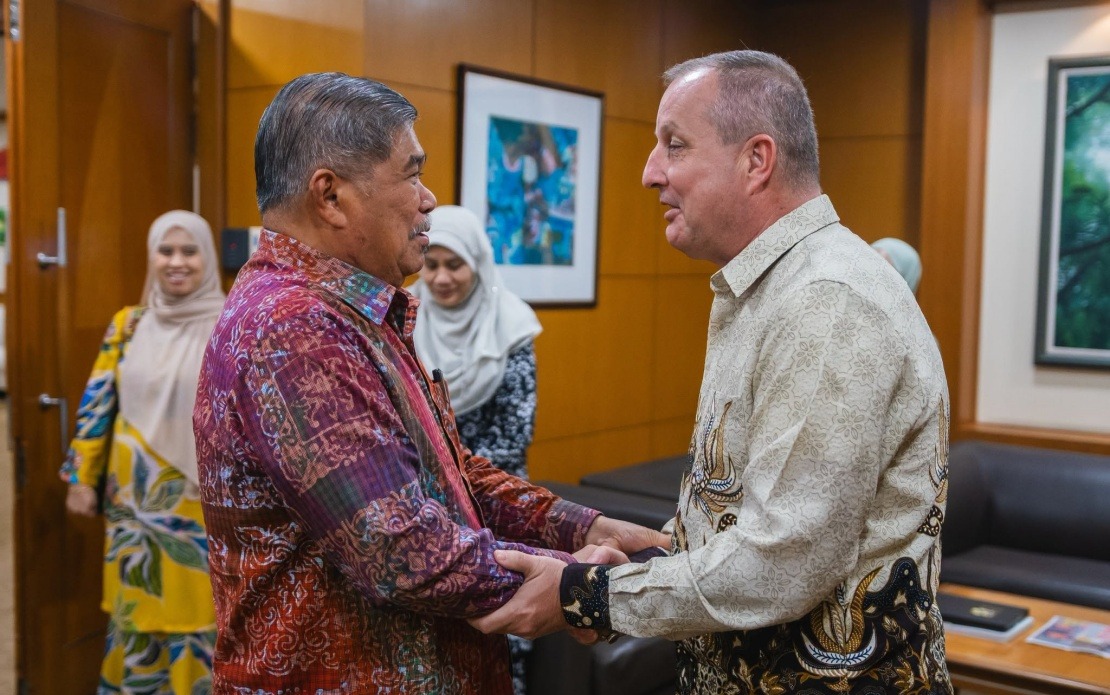
Malaysia and Hungary are embarking on a comprehensive partnership aimed at bolstering agricultural development and food security in both nations, marking a strategic shift towards strengthened bilateral cooperation in a sector critical to regional stability. During a recent meeting in Kuala Lumpur, Agriculture and Food Security Minister Datuk Seri Mohamad Sabu outlined the breadth of collaborative initiatives with Hungarian Ambassador to Malaysia Dr. Sándor Sipos, signalling the government's commitment to leveraging European expertise to enhance domestic agricultural productivity.
At the heart of this cooperation lies Hungary's confirmed participation in the Malaysian Agriculture, Horticulture and Agrotourism Exhibition (MAHA) 2026, a flagship event that attracts stakeholders from across the agricultural value chain. The exhibition serves as a crucial platform for showcasing innovations, facilitating investment discussions, and fostering networking opportunities among producers, researchers, and industry players. Hungary's involvement represents a tangible demonstration of the country's interest in the Malaysian market and reflects growing recognition of the Southeast Asian nation's importance in global agricultural development.
The establishment of the first Malaysia-Hungary Joint Working Group (JWG) meeting constitutes a foundational institutional framework for sustained engagement between the two governments. Such multilateral mechanisms typically outline shared priorities, coordinate implementation timelines, and establish monitoring protocols to ensure initiatives progress effectively. This formal structure signals that the partnership extends beyond ad hoc arrangements into a structured, long-term commitment with clear governance mechanisms.
Central to the technical dimensions of this cooperation is an emerging research collaboration between the Malaysian Agricultural Research and Development Institute (MARDI) and the Hungarian University of Agriculture and Life Sciences (MATE). MARDI has long served as Malaysia's primary institution driving agricultural innovation and adaptation to tropical conditions, while MATE brings decades of European expertise in temperate-zone agricultural systems. This institutional partnership creates opportunities for cross-pollination of methodologies, particularly as both nations grapple with evolving climate challenges and resource constraints.
The Erasmus+ Researcher exchange programme has already begun facilitating direct collaboration between scientists and technical experts from both institutions, enabling knowledge transfer that transcends traditional academic publishing. These exchanges permit researchers to work embedded within partner laboratories, observe field trials, and engage in practical problem-solving relevant to each country's agricultural priorities. Such immersion-based learning proves particularly valuable for adapting technologies and practices across different agro-climatic zones.
Specific research focus areas including genetics and breeding technology represent domains where Hungary's established capabilities can meaningfully accelerate Malaysian progress. Advanced breeding programmes require substantial institutional infrastructure, long-term germplasm collections, and accumulated empirical data spanning multiple growing seasons. By tapping into Hungarian expertise developed over generations, Malaysian researchers can compress development timelines for crop varieties optimised for local conditions whilst maintaining rigorous scientific standards.
The partnership's emphasis on developing high-quality livestock products opens significant commercial potential for both nations. Malaysia's growing middle class has steadily increased demand for premium animal proteins, whilst Hungary possesses established supply chains and quality-control systems for pork, beef, and poultry products. Shared technical standards and certified breeding lines could position both countries advantageously within regional food systems, particularly as consumer preferences increasingly favour traceable, sustainably-produced meat products.
For Malaysia's farming community, this cooperation promises tangible benefits through expanded access to advanced breeding stock, improved cultivation techniques, and technological solutions developed within temperate agricultural systems that may prove adaptable to tropical conditions with appropriate modification. Smaller-scale farmers and agribusiness entrepreneurs stand to gain through knowledge dissemination programmes, whilst research institutions benefit from expanded international research networks and funding opportunities available through European collaborative mechanisms.
The emphasis on expanding trade and investment in the agri-food sector reflects recognition that technical cooperation must translate into commercial viability to sustain long-term momentum. Hungarian agri-food companies evaluating Southeast Asian markets often encounter regulatory, logistical, and market-structure challenges; Malaysian firms similarly face barriers accessing European supply chains and certification requirements. Joint initiatives addressing these structural obstacles could unlock bilateral trade growth, particularly in value-added products where technological differentiation provides competitive advantage.
From a regional food security perspective, diversified agricultural partnerships strengthen Southeast Asia's resilience against supply disruptions and price volatility affecting global commodity markets. Hungary's position as a significant European agricultural producer with established export infrastructure provides Malaysia with an alternative sourcing relationship and technical reference point beyond traditional Asian suppliers. This diversification proves especially important given climate variability increasingly affecting crop yields across production regions.
Datak Seri Mohamad Sabu's emphasis on strengthening the agricultural relationship aligns with Malaysia's broader strategy of positioning itself as a regional agricultural innovation hub. By hosting international research collaborations, attracting foreign investment in agri-tech, and facilitating knowledge exchanges, Malaysia can establish competitive advantages in emerging sectors including precision agriculture, biotechnology, and value-added processing.
The timing of these initiatives coincides with global recognition that conventional agricultural approaches face mounting pressures from climate change, soil degradation, and resource scarcity. Malaysia-Hungary cooperation therefore carries significance extending beyond bilateral commercial interests into contributions addressing food security challenges affecting hundreds of millions across Asia. Whether measured through enhanced crop productivity, improved livestock genetics, or strengthened institutional capacity for agricultural innovation, this partnership demonstrates commitment to ensuring agricultural systems evolve alongside escalating global demands.
Looking forward, the success of these initiatives will depend upon sustained institutional commitment, adequate resource allocation, and willingness to navigate inevitable technical and regulatory complexities accompanying international research collaboration. The foundation now established through MARDI-MATE engagement and formal governmental working groups provides a platform upon which practical achievements can accumulate, potentially transforming Malaysia-Hungary cooperation from promising diplomatic gesture into demonstrable contributor to national food security and agricultural competitiveness.

