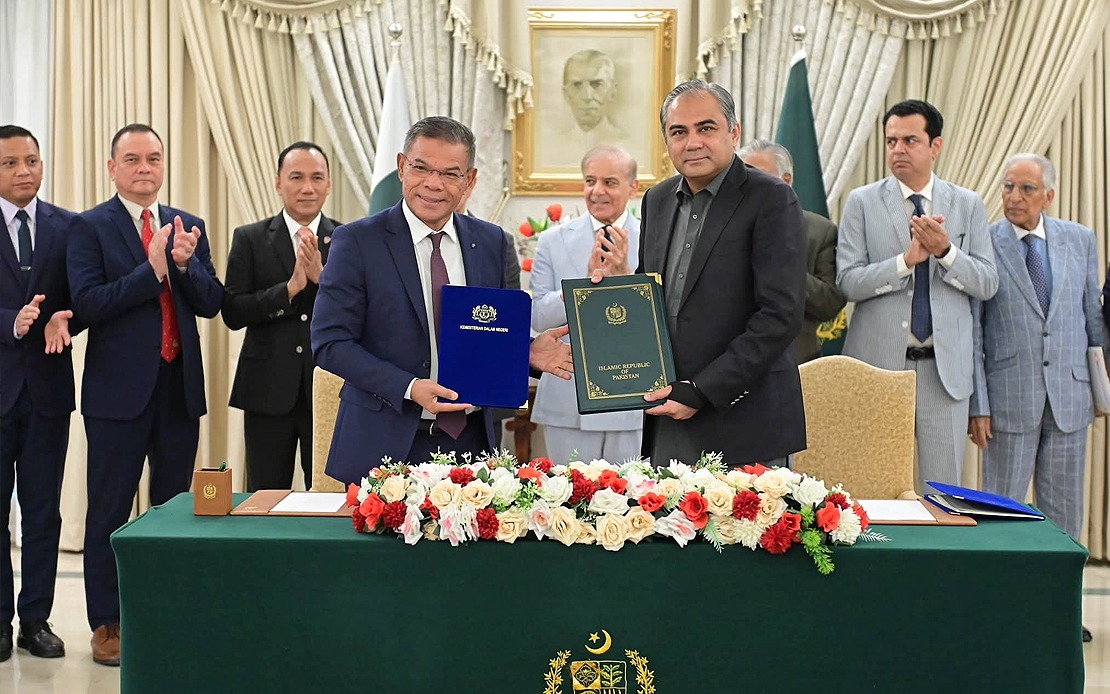
Malaysia and Pakistan have taken a major step in deepening their legal and security partnership by signing the International Transfer of Prisoners (ITOP) Treaty, a development that reflects expanding cooperation between the two nations on criminal justice matters. Home Minister Datuk Seri Saifuddin Nasution Ismail formalised the agreement in Islamabad during an official visit, with Pakistan's Interior and Narcotics Control Minister Syed Mohsin Raza Naqvi signing on behalf of his government. Pakistan Prime Minister Muhammad Shehbaz Sharif was present at the ceremony held at the Prime Minister's Office, underscoring the political significance of the accord.
The treaty represents the culmination of extensive diplomatic groundwork spanning multiple years. Malaysian authorities engaged in five separate rounds of negotiations beginning in September 2025, involving coordinated efforts across the Home Ministry, Foreign Ministry, Attorney General's Chambers, Malaysian Prisons Department, and Royal Malaysia Police. This lengthy process demonstrates the complexity of harmonising legal frameworks between two nations operating under different judicial systems. The Malaysian Cabinet formally approved the agreement on May 13, giving it the necessary governmental endorsement before the signing ceremony took place.
At its core, the ITOP arrangement allows Malaysian nationals detained and sentenced in Pakistan to transfer back to Malaysia to complete their remaining sentences, while simultaneously enabling Pakistani prisoners serving time in Malaysian facilities to return to their homeland for the same purpose. This mutual framework addresses a longstanding challenge in bilateral relations where citizens of either nation convicted abroad faced extended separation from family and cultural networks. The mechanism acknowledges that rehabilitation and prisoner welfare are enhanced when individuals serve sentences within their own communities and legal systems.
Beyond the practical logistics of prisoner movement, the treaty incorporates provisions enabling transferred inmates to participate in rehabilitation programmes tailored to their cultural and social contexts. Malaysian officials emphasised that repatriation creates opportunities for more culturally appropriate intervention and psychological support, recognising that rehabilitation effectiveness often depends on environmental familiarity and community engagement. This reflects contemporary thinking in criminal justice, where a one-size-fits-all approach to prisoner reform has given way to contextualised programmes addressing individual needs within culturally relevant frameworks.
From a bilateral relations perspective, the agreement constitutes yet another institutional layer in Malaysia-Pakistan cooperation that spans decades of diplomatic engagement. Both nations maintain strong historical ties rooted in shared Islamic heritage, similar developmental trajectories, and mutual interests in South and Southeast Asian stability. By creating additional legal instruments governing their relationship, Malaysia and Pakistan continue building comprehensive frameworks that transcend traditional political fluctuations and embed cooperation within formal treaty obligations.
The signing carries particular significance for Malaysian citizens currently incarcerated in Pakistan and Pakistani nationals serving time in Malaysia. For affected families in both countries, the treaty potentially reduces the financial and emotional burden of maintaining contact across international borders. Prisoners themselves gain the possibility of serving sentences in familiar environments where family visits become logistically and financially feasible, potentially supporting better rehabilitation outcomes and reducing recidivism risks.
From a regional security perspective, the agreement demonstrates how Southeast Asian nations and their South Asian partners can develop practical mechanisms for managing shared criminal justice challenges. As regional mobility increases and transnational crime becomes more sophisticated, bilateral prisoner transfer arrangements serve as critical tools for both nations to manage their respective prison systems efficiently. Malaysia's growing role as a regional hub brings increased responsibility for managing foreign nationals within its criminal justice system, making such arrangements operationally valuable.
The diplomatic initiative also reflects broader trends in how ASEAN members, particularly Malaysia, are deepening ties with South Asian countries including Pakistan. Beyond security cooperation, these expanding frameworks signal growing mutual recognition that regional stability depends on strengthening institutional links across multiple domains. For Malaysian policymakers, such agreements position the country as a sophisticated diplomatic actor capable of negotiating complex legal arrangements that benefit citizens while advancing national interests.
Implementing the treaty will require establishing practical protocols for prisoner assessments, transfer procedures, and coordination between Malaysian and Pakistani prison authorities. Both countries will need to develop standardised procedures ensuring that transferred prisoners' rights are protected throughout the process and that sentence calculations remain equivalent across different legal systems. The success of the arrangement ultimately depends on robust administrative mechanisms and genuine commitment from prison officials in both nations.
The agreement also carries implications for Malaysia's broader criminal justice modernisation agenda. By entering into reciprocal arrangements recognising prisoners' cultural and social needs, Malaysian authorities align with contemporary international standards emphasising humanised approaches to incarceration. This positions Malaysia as a country moving beyond purely punitive models toward rehabilitation-focused systems, potentially influencing regional discussions about criminal justice reform.
Looking forward, the ITOP treaty may serve as a template for similar arrangements between Malaysia and other countries where significant numbers of Malaysian citizens face incarceration or where Pakistani communities might benefit from comparable frameworks. As more nations recognise the practical and humanitarian advantages of prisoner transfer arrangements, bilateral partnerships like this one could proliferate throughout Asia, creating a more interconnected regional criminal justice landscape. For Malaysia-Pakistan relations specifically, the accord represents another investment in institutional depth that strengthens bonds regardless of short-term political changes in either country.

