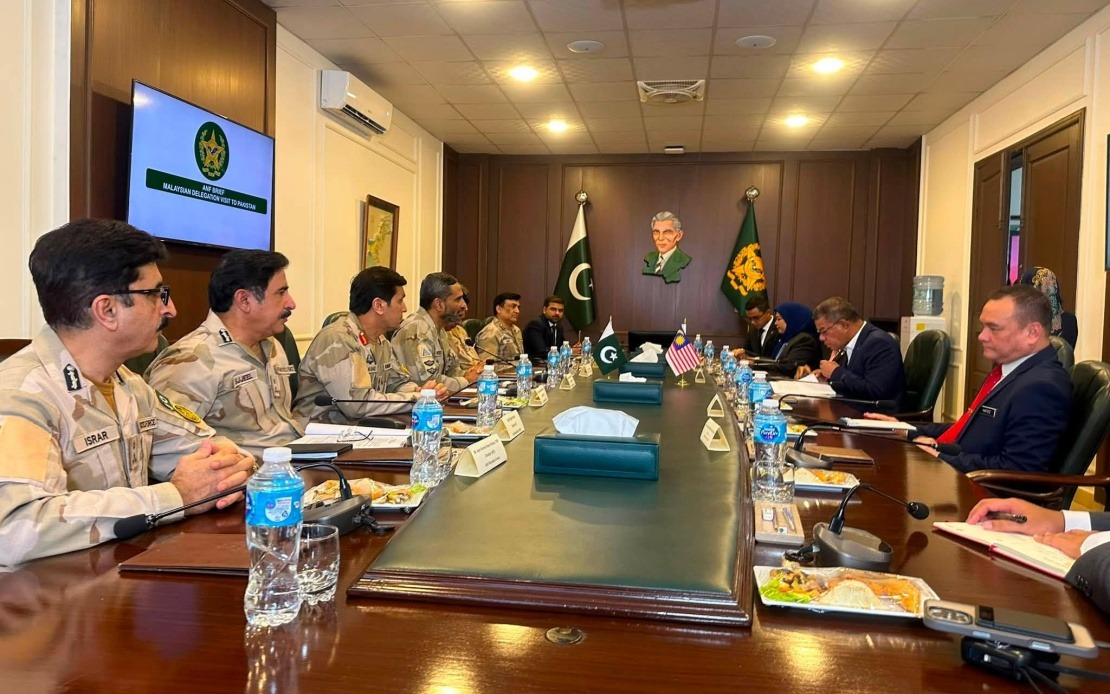
Malaysia and Pakistan are moving to formalize their drug enforcement partnership with a structured memorandum of understanding that will provide a more comprehensive framework for tackling shared narcotics challenges. Home Minister Datuk Seri Saifuddin Nasution Ismail made the announcement following discussions at the Anti-Narcotics Force (ANF) Pakistan headquarters in Islamabad, where he engaged with Director-General Major General Abdul Moeed to chart the future direction of bilateral cooperation.
The proposed agreement comes at a critical juncture when drug trafficking has evolved far beyond traditional patterns. Synthetic substances such as methamphetamine have emerged as particularly destabilizing forces across Asia, while trafficking operations have become increasingly sophisticated through the involvement of international organized crime networks that operate across multiple jurisdictions. For Southeast Asia and Malaysia specifically, these developments represent an urgent security concern that demands collaborative responses extending well beyond individual national capabilities.
Pakistan's strategic location directly along trafficking routes emanating from Afghanistan gives it unique visibility into regional drug flows. The country sits at a crucial choke point where narcotics are either consumed domestically, routed northward toward Central Asia, or increasingly diverted south and eastward toward the Indian subcontinent, Southeast Asia, and beyond. This geographical reality makes Pakistani cooperation essential for Malaysian authorities seeking to interdict drugs before they traverse shipping lanes and enter Malaysian territory. Saifuddin emphasized that confronting these threats requires engagement far beyond the Association of Southeast Asian Nations, recognizing that the scope of criminal enterprise has outpaced the traditional boundaries of regional cooperation mechanisms.
Historically, Malaysia and Pakistan have established practical working relationships that demonstrate mutual commitment to enforcement. Between 2012 and 2018, the two countries jointly coordinated investigations into more than 28 separate cases involving cross-border trafficking activities. This operational foundation provides a solid basis upon which to build deeper institutional arrangements. However, the Home Minister acknowledged that formal agreements alone prove insufficient when confronting adversaries who employ increasingly advanced methods for evading detection and moving illicit cargo across borders.
The anticipated framework emphasizes active intelligence sharing as a cornerstone of enhanced cooperation. Rather than maintaining parallel investigations that occasionally compare notes, the renewed partnership envisions coordinated, intelligence-led operations where both nations' enforcement agencies pool real-time information to disrupt supply chains at their source or in transit. This approach recognizes that synthetic drug production networks often operate with considerable sophistication, employing encrypted communications, cryptocurrency transactions, and distributed manufacturing across multiple locations to complicate law enforcement tracking.
Beyond operational coordination, the agreement contemplates systematic training and expertise exchanges between Malaysian and Pakistani enforcement personnel. Such programs enable officers from each country to learn operational methodologies, investigative techniques, and technological applications employed by their counterparts. The cross-pollination of professional experience proves particularly valuable in developing nations still building institutional capacity for combating evolving criminal methodologies. Pakistani agencies bring experience managing heroin trafficking flows from Afghanistan, while Malaysian authorities contribute expertise in transnational organized crime patterns specific to East and Southeast Asian markets.
During the Islamabad visit, Saifuddin also convened separately with Pakistan's Interior and Narcotics Control Minister Syed Mohsin Raza Naqvi, resulting in agreement to establish a Joint Working Group that will oversee development of security cooperation, narcotics control initiatives, and police training programs. This institutional mechanism ensures that bilateral engagement operates through structured channels with designated responsibilities and measurable outcomes, rather than relying on ad hoc coordination between individual officials. The working group structure also provides continuity when ministerial or agency leadership transitions occur.
The visit witnessed signature of the International Transfer of Prisoners Agreement, a practical instrument enabling both countries to facilitate prisoner exchanges for individuals convicted in either jurisdiction. Such agreements streamline extradition procedures and allow prisoners to serve sentences in their home countries, reducing complications that arise when transnational criminals remain incarcerated far from family and support systems. For Malaysia, this mechanism proves particularly relevant given the number of Malaysian nationals detained in Pakistani facilities and conversely.
Beyond narcotics cooperation, the ministerial engagement encompassed broader security and diplomatic concerns. Discussions with Pakistan's Deputy Prime Minister and Foreign Minister Mohammad Ishaq Dar touched upon regional geopolitical developments and the strengthening of cooperation among Islamic countries facing contemporary security and economic challenges. These conversations reflect Malaysia's interest in positioning itself within broader coalitions addressing transnational threats, recognizing that narcotics trafficking intersects with terrorism financing, money laundering, and other serious crimes requiring coordinated international response.
Trade and investment cooperation also featured prominently during the visit, with discussions exploring market access possibilities and food security arrangements involving potential supplies of rice and meat from Pakistan. These economic dimensions matter significantly for Malaysia, a country with substantial food import requirements that can leverage relationships with agricultural producers possessing surplus capacity. Visa facilitation proposals aim to reduce bureaucratic friction for businesspeople, investors, and professionals traveling between the countries, thereby supporting the people-to-people connections essential for sustained diplomatic relationships.
The delegation's visit to Pakistan's National Database and Registration Authority (NADRA) introduced Malaysian officials to advanced identity management and digital registration systems. NADRA chairman Lt Gen Muhammad Munir Afsar briefed the visitors on biometric technologies, digital identity solutions, and border management systems that support law enforcement operations. For Malaysia's Home Ministry, observing NADRA's implementation of technology-driven approaches to identity verification and government service delivery offers practical insights as the MADANI Government pursues digital transformation across the public sector.
The technological dimension of this cooperation extends beyond narcotics enforcement to encompass broader security infrastructure modernization. Digital identity systems, when properly implemented with appropriate privacy safeguards, enhance law enforcement's capacity to identify individuals, track document fraud, and prevent criminals from operating under false credentials. Cybersecurity cooperation becomes increasingly vital as criminal organizations employ digital tools and exploit gaps in governmental information security. Malaysia's exploration of Pakistani experience in these domains reflects pragmatic learning from a regional neighbour operating in a complex security environment that has necessitated rapid technological advancement.
Overall, the proposed memorandum of understanding represents recognition that modern narcotics trafficking cannot be combated through isolated national efforts or even regional mechanisms alone. The structured framework formalized between Malaysia and Pakistan acknowledges the transnational character of contemporary drug threats while providing institutional mechanisms for sustained cooperation extending beyond any single political administration. As synthetic drugs and organized crime networks continue evolving their operational methodologies, bilateral partnerships undergirded by regular intelligence sharing, coordinated enforcement operations, and institutional continuity through working groups offer Malaysia and Pakistan the best prospect of disrupting trafficking networks before drugs reach end markets and destabilize communities.

