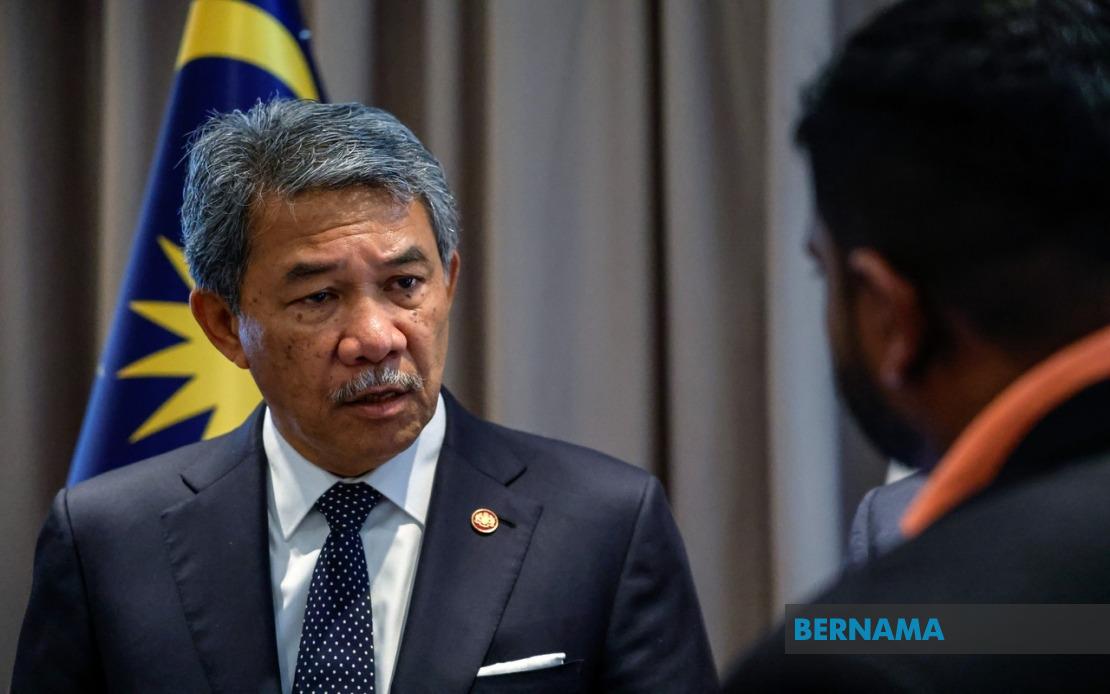
Malaysia and the Philippines have committed to fast-tracking the return of more than 5,000 undocumented Philippine migrants currently held in four immigration detention facilities across Sabah, following high-level talks between the two nations' foreign ministers in Manila. The agreement came as both countries acknowledged the urgent need to reduce the overwhelming population in the detention centres, which have far exceeded their intended capacity. The bilateral discussions, held during the ninth Malaysia-Philippines Joint Commission Meeting, represent a coordinated effort to address a longstanding humanitarian and administrative challenge in the region.
During the talks, Malaysian Foreign Minister Datuk Seri Mohamad Hasan outlined the scale of the immediate challenge, noting that preliminary screening conducted by the Philippine Embassy in Kuala Lumpur has already identified more than 1,000 individuals who are ready for deportation without further delays. These individuals have been processed and verified, removing bureaucratic obstacles that often complicate repatriation efforts. The identification of this substantial cohort represents significant progress in streamlining what has traditionally been a protracted process, allowing both governments to demonstrate concrete action on a matter that affects thousands of families.
The two nations discussed various operational pathways for executing the repatriations, including maritime routes and other logistical mechanisms suitable for returning large numbers of people efficiently. Mohamad emphasized Malaysia's expectation that the Philippine government would prioritise swift action in receiving its nationals, stressing that the detention centres cannot sustain their current occupancy levels. This frank acknowledgment of infrastructure limitations underscores the humanitarian urgency driving the initiative, as overcrowded detention facilities create dire conditions for those held within them and strain Malaysia's resources.
Beyond immediate deportation procedures, the two countries have also engaged in discussions regarding the welfare and education of the detainees' children currently in Sabah. Malaysia has agreed to conduct a comprehensive assessment of the educational needs of these minors and to evaluate what continued schooling provisions might be available to them prior to their repatriation alongside their families. This consideration reflects growing international standards regarding the treatment of migrant children and acknowledges the complications that arise when entire families remain in limbo within detention settings.
However, Mohamad established clear conditions regarding any educational arrangements, insisting that any such programmes must be directly administered and overseen by the Philippine government rather than left to private operators or unregulated institutions. This stipulation addresses concerns about accountability and quality in facilities serving vulnerable populations. Mohamad explicitly cautioned against the proliferation of informal schooling arrangements that might operate without proper oversight or standards, viewing such regulation as essential to protecting the rights and welfare of the children involved.
The repatriation talks proceed against a backdrop of broader bilateral tensions, particularly regarding historical territorial claims. When questioned about the Sabah sovereignty issue—recently revived in the Philippines by Senator Robin Padilla's appeal to President Ferdinand Marcos Jr to reconsider his country's dormant claim to the Malaysian state—Mohamad stated that this matter was not formally addressed during the Joint Commission Meeting. He used the occasion to reiterate Malaysia's legal position, pointing to United Nations recognition of Sabah as Malaysian territory through an official commission and the UN Secretary-General's endorsement.
Datuk Seri Mohamad's emphasis on international law and global recognition reflects Malaysia's strategy of depoliticizing the territorial question by anchoring it firmly in established legal frameworks and institutional precedent. By invoking the UN's role in the decolonization process and the international community's acceptance of Malaysia's sovereignty over Sabah, Malaysia seeks to foreclose discussion of the claim as a matter of legitimate debate. The Foreign Minister's statement signals that while Malaysia remains willing to cooperate with the Philippines on practical issues affecting both nations, it will not entertain concessions or ambiguity on matters of territorial integrity.
Malaysia had previously indicated its intention to lodge a formal diplomatic protest through an official note to the Philippines following Padilla's public remarks on the Sabah claim. The decision to pursue traditional diplomatic channels for addressing the territorial provocation, while simultaneously advancing cooperation on migration matters, demonstrates Malaysia's compartmentalization of bilateral relations—maintaining pressure on sensitive political issues while keeping channels open for practical cooperation.
The Joint Commission Meeting, co-chaired by Mohamad and Philippine Secretary of Foreign Affairs Ma. Theresa P. Lazaro, represents the ninth iteration of this institutional mechanism for managing bilateral affairs. The regularity of these high-level meetings provides a structured venue for addressing both immediate operational challenges and longer-term strategic considerations between two Asean neighbours with complex histories and overlapping interests. The success of the repatriation initiative will depend significantly on sustained political will from both capitals and the effective coordination of their respective bureaucracies.
For Malaysia, the acceleration of deportations addresses an acute domestic concern about irregular migration and detention centre capacity, issues that affect public resources and security considerations. The large undocumented population in Sabah has been a persistent policy challenge, with immigration enforcement agencies regularly reporting record apprehensions and detention figures. By securing Philippine commitment to faster repatriations, Malaysia aims to relieve pressure on its immigration system and redirect resources toward preventive measures and border management.
For the Philippines, the agreement acknowledges responsibility for its nationals abroad while providing a structured framework for their orderly return. The education provisions discussion also reflects emerging awareness among Southeast Asian governments regarding their obligations to citizens' children, even in irregular circumstances. As regional migration patterns continue evolving and the volume of undocumented migrants increases, how Malaysia and the Philippines implement this agreement may establish precedents affecting other bilateral migration challenges throughout Southeast Asia.
The timeline for implementing these repatriations remains unclear, though both nations' emphasis on urgency suggests that initial deportations could commence within months. The success of returning the first cohort of 1,000 identified individuals will likely determine the pace at which subsequent batches are processed and repatriated. Beyond the immediate humanitarian implications, the effectiveness of this bilateral effort will test the capacity of Asean nations to cooperate constructively on transnational migration challenges while managing competing national interests and historical tensions.

