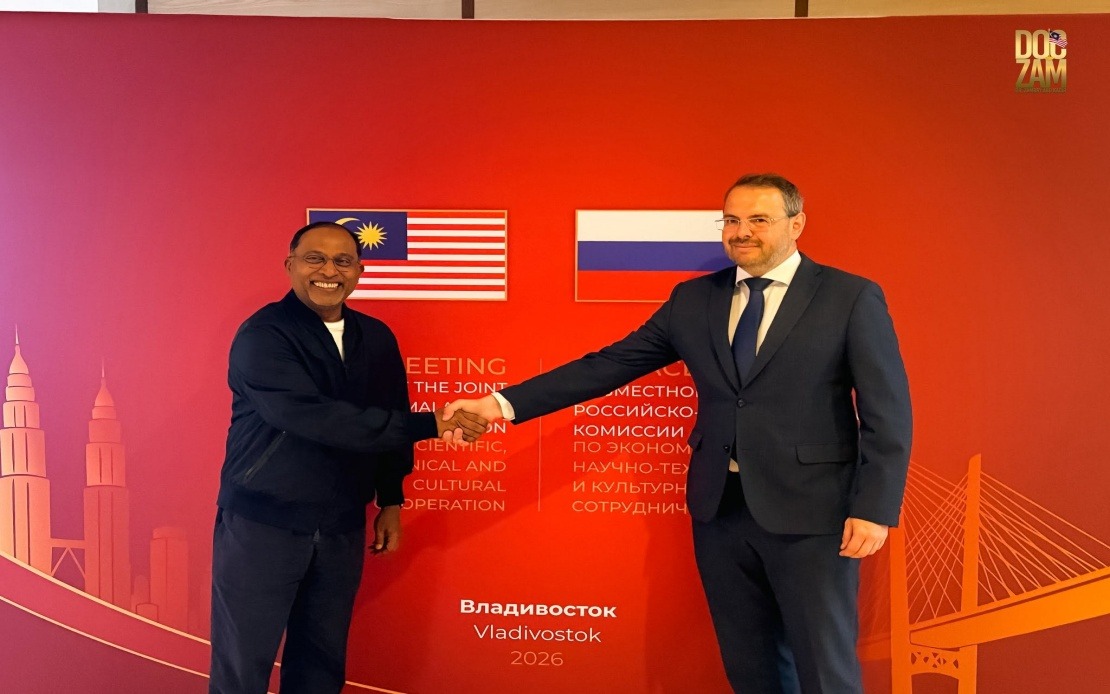
Malaysia's Higher Education Minister Datuk Seri Dr Zambry Abd Kadir is leading a delegation to the Fifth Malaysia-Russia JC-ESTC Meeting in Vladivostok from August 13 to 15, where both nations will chart new directions for bilateral cooperation spanning trade, investment, and emerging technologies. The gathering represents a significant opportunity to translate longstanding diplomatic relations into tangible economic and academic outcomes that benefit citizens and businesses in both countries.
The meeting agenda reflects the broadening scope of Malaysia-Russia engagement beyond traditional sectors. At the forefront of discussions will be mechanisms to expand commercial ties and attract mutual investment, particularly in areas where each nation possesses distinct competitive advantages. Both countries recognize that deepening economic interdependence creates stability and opens doors to prosperity for their respective populations, making trade and investment facilitation a cornerstone of the bilateral partnership.
Higher education and research collaboration occupy a central place in Malaysia's strategic approach to the relationship. Zambry outlined an ambitious vision that prioritizes increasing student exchanges between institutions, establishing joint research initiatives, and fostering direct university partnerships. These academic networks serve as crucial bridges for knowledge transfer and human capital development, positioning both nations to benefit from cross-border expertise in emerging scientific disciplines and professional fields that will shape economic competitiveness in coming decades.
Beyond academic pursuits, Malaysia and Russia are exploring cooperation in sectors that carry significant strategic weight globally. Science and technology advancement, energy security, agricultural innovation, and human capital development have been identified as priority domains where complementary strengths can be leveraged. This multi-sector approach acknowledges that modern bilateral relationships require coordination across numerous policy areas, and that isolated cooperation in single sectors limits mutual potential.
The involvement of representatives from 17 Malaysian ministries and agencies underscores the comprehensive nature of bilateral engagement. Such wide participation indicates that Malaysia views Russia as a partner across its entire governance spectrum, not merely in traditional areas like trade or diplomacy. This inclusive approach suggests serious intent to operationalize cooperation across economic, social, cultural, and technological dimensions, creating multiple channels through which both societies can benefit.
Zambry emphasized that Malaysia seeks to transform the Malaysia-Russia JC-ESTC, established in 2015, into a results-driven platform rather than merely a talking shop for officials. The minister's insistence on moving from agreements to implementation reflects growing recognition that signed memoranda of understanding alone generate limited value without subsequent action and resource allocation. For Malaysian stakeholders—businesses, researchers, and students—this reorientation means greater likelihood of accessing Russian opportunities and partnerships.
The meeting occurs amid a broader Southeast Asian recalibration of international partnerships. Malaysia has long maintained pragmatic relations with Russia, balancing these ties alongside commitments to Western partners and regional organizations. Deepening cooperation with Moscow in higher education and technology reflects Malaysia's strategy of diversifying its engagement to prevent over-reliance on any single power, while accessing distinctive Russian expertise in specific domains where Moscow maintains technological leadership.
Zambry's description of mutual complementarity highlights practical synergies worth noting for Malaysian readers. Russia possesses considerable strength in advanced technologies, space science, and energy sectors, while Malaysia brings experience in tropical agriculture, Islamic finance, and strategic Southeast Asian positioning. These differing but overlapping capacities suggest genuine potential for collaboration rather than rivalry, making the partnership attractive for private sector actors seeking international expansion.
The higher education dimension carries particular relevance for Malaysia's long-term development trajectory. Strengthening research networks and student mobility with Russia can expose Malaysian academics and learners to alternative scientific traditions and technological approaches, enriching Malaysia's innovation ecosystem. Similarly, Malaysian contributions to joint research may introduce Russian institutions to tropical science, Islamic perspectives on technology governance, and Southeast Asian market insights.
For Malaysia's business community, expanded cooperation frameworks create immediate opportunities. Infrastructure in both nations, renewable energy projects, technology transfer agreements, and joint ventures in third markets become more feasible when bilateral relationships operate on institutional foundations of trust and sustained engagement. The meeting's focus on translating agreements into investments and expertise exchanges suggests that Malaysian companies should monitor emerging opportunities for participation in Russia-Malaysia joint initiatives.
The establishment of this high-level engagement demonstrates both nations' commitment to moving beyond rhetoric. By securing Russian Deputy Minister Konstantin Mogilevsky's greeting and ensuring co-chairmanship between Zambry and Russian Minister Valery Falkov, Malaysia signaled respect for the relationship while maintaining balanced partnership terms. Such diplomatic choreography facilitates smoother negotiations and strengthens the likelihood of reaching substantive agreements that outlive individual political administrations.
Moving forward, observers should track whether outcomes from this meeting translate into concrete mechanisms—whether new research centers emerge, funding flows for joint projects materialize, or student exchange numbers increase measurably. Malaysia's insistence on action-oriented results suggests that follow-up mechanisms will include accountability measures and timelines, distinguishing this engagement from previous bilateral discussions that sometimes lapsed into inactivity.
The Fifth JC-ESTC Meeting ultimately reflects Malaysia's evolving approach to great power engagement: neither aligned nor adversarial, but strategically selective. By deepening ties with Russia in education and technology while maintaining its anchoring relationships, Malaysia pursues a foreign policy that maximizes opportunities for development and innovation. The meeting's outcomes will reveal whether both nations can indeed transform diplomatic goodwill into sustainable partnerships benefiting their economies and citizens.

