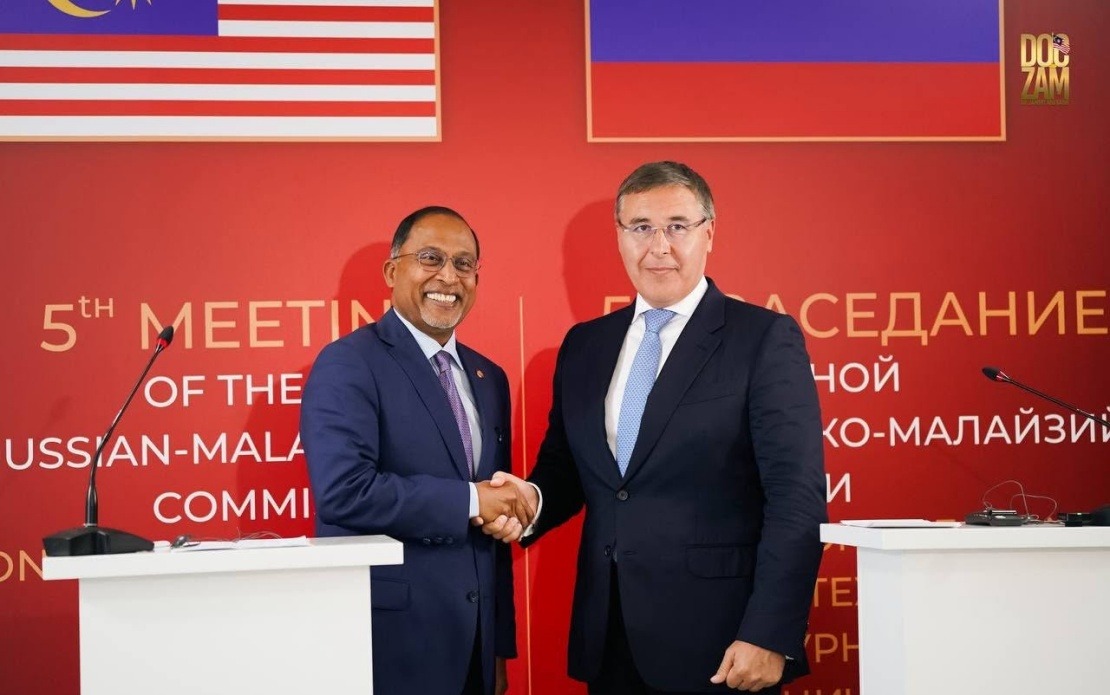
Malaysia and Russia have pledged to complete their 2027 Joint Action Plan before the year concludes, marking a significant step towards deepening institutional cooperation between the two nations. Higher Education Minister Datuk Seri Dr Zambry Abd Kadir announced the agreement following the Fifth Meeting of the Malaysia-Russia Joint Commission for Economic, Scientific, Technical and Cultural Cooperation, held in Vladivostok and co-chaired with Russian Minister of Science and Higher Education Valery Falkov. The timing of this commitment underscores both nations' intention to align their strategic objectives more systematically and ensure that collaborative efforts yield measurable outcomes across multiple sectors.
The bilateral relationship has gained momentum at the highest political levels, with recent engagements involving His Majesty Sultan Ibrahim, King of Malaysia, Russian President Vladimir Putin, and Prime Minister Datuk Seri Anwar Ibrahim. This high-level political foundation provides the necessary backing for translating diplomatic goodwill into practical cooperation frameworks. By structuring their partnership around a comprehensive action plan, Malaysia and Russia aim to move beyond ceremonial exchanges towards substantive programmes that create tangible benefits for both societies. The focus on completing the document within this calendar year suggests an accelerated timeline driven by genuine commitment rather than routine diplomatic protocol.
In the realm of higher education and human capital development, Russia's contribution remains substantial. The nation will continue offering 40 Russian Government scholarships annually to Malaysian students, a longstanding commitment that facilitates knowledge exchange and builds interpersonal networks essential for sustained bilateral relations. Beyond maintaining current scholarship levels, both countries have embraced innovative proposals including the inaugural Malaysia-Russia Rectors' Forum scheduled for 2027, which will bring together university leadership from both nations to discuss collaborative research and institutional partnerships. The expansion of the MAI-UniKL Russian Aerospace Programme represents a concrete opportunity for Malaysian students and researchers to engage with advanced technical training in a strategically important field.
Youth development initiatives have emerged as a priority in the renewed cooperation framework. The Malaysia-Russia Youth Leadership Summer Camp will create platforms for young leaders from both countries to build networks, exchange perspectives, and develop mutual understanding at a formative stage of their careers. Such programmes carry long-term significance for bilateral relations, as relationships forged among emerging leaders often evolve into professional collaborations and deeper cultural bridges spanning decades. These educational and youth-focused initiatives collectively address human capital development, a cornerstone of contemporary bilateral partnerships that extends beyond traditional trade and political dimensions.
Trade, agriculture, and investment cooperation form another crucial pillar of the expanded partnership. Malaysia and Russia have identified opportunities to enhance market access and strengthen trading mechanisms, acknowledging the complementary nature of their economies. Notably, discussions have centred on fertiliser supply arrangements, particularly urea exports, which carry direct implications for Malaysia's agricultural sector and food security objectives. As global supply chains for essential agricultural inputs remain volatile, securing reliable sources of fertilisers from established partners like Russia provides strategic stability for Malaysia's farming communities and food production capacity. This cooperation addresses practical, immediate needs while reinforcing broader economic interdependence.
Strategic sectors have received particular attention within the revamped cooperation framework, reflecting both nations' recognition of technological and energy-related challenges shaping the 21st century. Artificial intelligence, digital technology, and smart city development represent frontier areas where Malaysian expertise in digital innovation and Russian technological sophistication can converge productively. Telecommunications, information security, renewable energy, and liquefied natural gas cooperation address Malaysia's energy transition requirements whilst leveraging Russian resources and technical capabilities. Additionally, both nations have signalled openness to exploring peaceful applications of nuclear energy, contingent upon respective legal and regulatory frameworks—a development that acknowledges nuclear energy's role in future energy portfolios whilst maintaining appropriate safeguards.
Financial cooperation between Malaysia and Russia has entered a new phase involving central banking authorities. Bank Negara Malaysia and the Bank of Russia are exploring mechanisms to deepen financial ties, including potential roles for Labuan as an international financial centre and gateway to ASEAN markets. This institutional-level engagement suggests movement beyond bilateral arrangements towards regional economic integration frameworks. Discussions regarding Islamic finance cooperation reflect recognition of Malaysia's global leadership in Islamic financial instruments, whilst exploration of digital assets cooperation addresses emerging fintech opportunities. Such financial sector initiatives establish infrastructure for expanded trade settlements and investment flows between the two nations.
Beyond traditional cooperation domains, Malaysia and Russia have broadened their partnership scope to encompass healthcare, industrial development, green technology, climate change mitigation, creative economy, transport, and space sectors. This comprehensive approach reflects modern bilateral relationships' complexity, acknowledging that contemporary partnerships must address multifaceted challenges from environmental sustainability to technological innovation. The inclusion of climate change and green technology signals both nations' commitment to participating in global efforts towards environmental stewardship, whilst creative economy cooperation taps into cultural industries offering economic diversification opportunities.
The exchange of three cooperation agreements between Malaysian and Russian higher education institutions during the joint commission meeting demonstrates institutional commitment translating political intentions into educational partnerships. Universiti Teknologi MARA's agreements with the National Research University Moscow Power Engineering Institute and the Institute of Experimental Medicine, alongside Universiti Tun Hussein Onn Malaysia's partnership with the State University of Land Use Planning, establish formal channels for academic collaboration. These institutional arrangements create durable frameworks for sustained engagement that persists beyond individual administrators or political cycles, embedding bilateral cooperation within educational structures.
Malaysia's hosting of the sixth Malaysia-Russia Joint Commission for Economic, Scientific, Technical and Cultural Cooperation in 2027 carries symbolic significance beyond procedural logistics. The meeting will coincide with the 60th anniversary of Malaysia-Russia diplomatic relations, providing an opportune moment to reflect on six decades of engagement whilst charting directions for future cooperation. This milestone anniversary, combined with comprehensive action plans and multiple sectoral initiatives, positions the Malaysia-Russia relationship as a growing partnership with increasing structural depth. For Malaysian policymakers, deepening ties with Russia across education, technology, energy, and finance represents strategic diversification of bilateral relationships, reducing over-reliance on traditional partners whilst accessing Russian expertise and resources across complementary sectors. As both nations navigate multipolar geopolitical realities, their expanding partnership reflects pragmatic recognition of mutual interests transcending ideological or geopolitical divisions.

